Catalog / fish / Phoenix rasbora
fish · Cyprinidae
Phoenix rasbora
Boraras merah
Wild range: Southeast Asia (Asia)
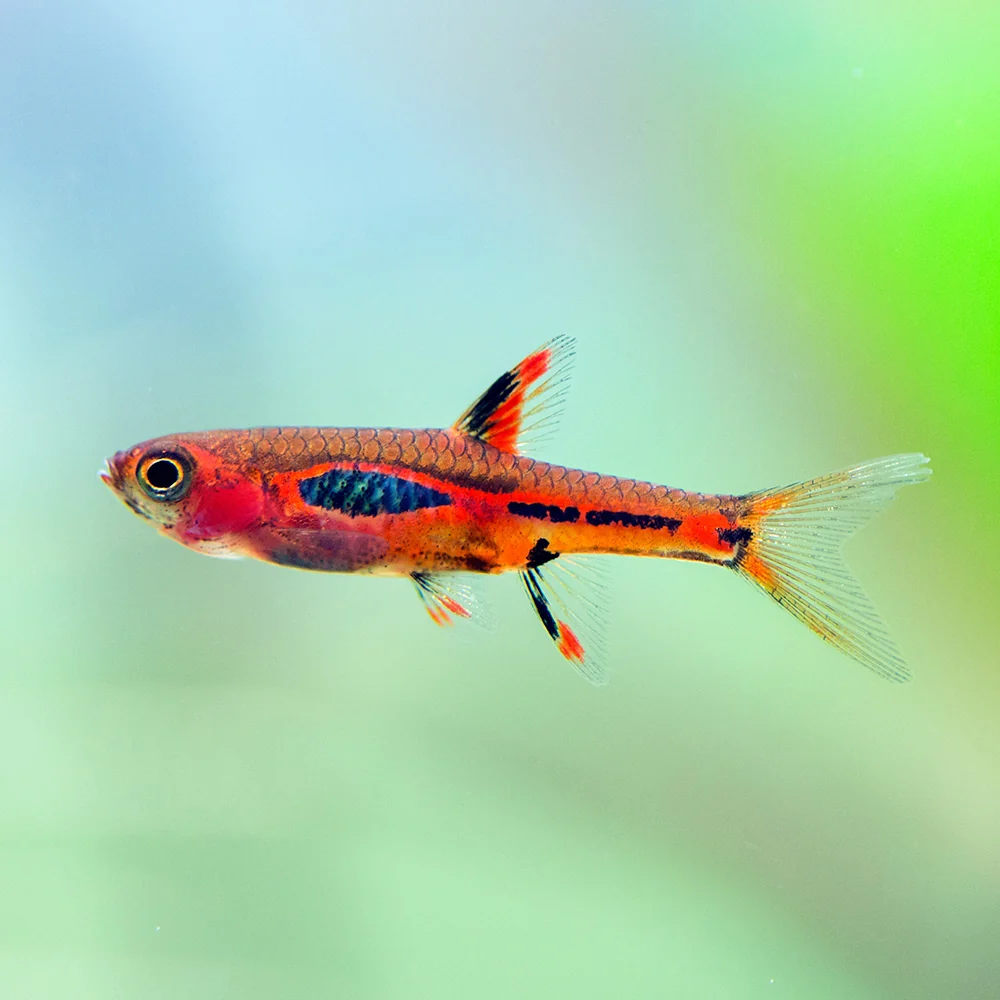
At a glance: Phoenix rasbora care
Compiled reference information. Review the care notes and original sources below.
What temperature is listed for Phoenix rasbora?
The compiled profile lists 22.0–28.0 °C for Phoenix rasbora (Boraras merah). Check the original sources below for context and differing recommendations.
What tank size is listed for Phoenix rasbora?
The profile lists a minimum tank volume of 5.0 US gallons (19.0 liters). Volume alone does not establish suitability; consider dimensions, group size and other inhabitants alongside the full care notes.
What pH is listed for Phoenix rasbora?
The compiled profile lists a pH of 5.5–8.5. Review the cited care sources alongside the other water parameters in this profile.
Natural habitat
Phoenix Rasboras are native to the slow-moving waters of Southeast Asia, primarily found in Indonesia, Malaysia, and Thailand. Their natural habitat consists of shallow streams and rivers where the water is soft and slightly acidic.
Where they are found
This species is native to southern Borneo, Indonesia, specifically thriving in shaded areas rich in leaf litter.
Aquarium care
Phoenix Rasboras are best suited for well-planted nano tanks with gentle water flow. They are not picky eaters, but prefer a varied diet that includes both quality dry foods and live or frozen options such as brine shrimp. Maintaining stable water parameters is key to their health.
Feeding
Phoenix Rasboras have small mouths and require small food items. Their diet can include crushed flake food, fine granules, and occasional treats of small frozen or live foods like daphnia or baby brine shrimp. Avoid larger food items as they may be ignored or go uneaten.
Compatibility
Phoenix Rasboras are peaceful and can be kept in community setups. However, care should be taken when selecting tank mates to avoid more aggressive fish that may outcompete them for food. Keeping them in groups of at least six enhances their social behavior and reduces stress.
Breeding
For successful breeding, provide soft, acidic water with ample live plants like Java moss. Use a dimly lit spawning tank to encourage spawning behavior, and remove adults post-spawning to prevent them from eating the eggs. The fry require infusoria for their initial feeding.
Sources
Compiled from multiple independent care sheets — not copied from a single site.