fish · Osphronemidae
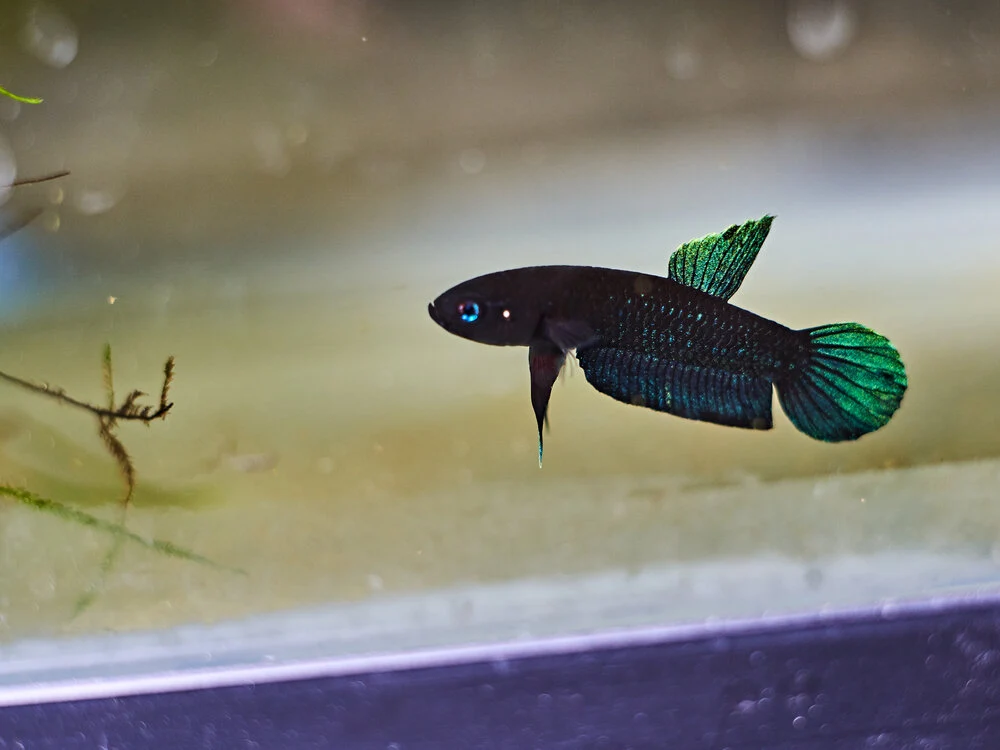
Black betta
Betta persephone
Wild range: Southeast Asia (Asia)
At a glance: Black betta care
Compiled reference information. Review the care notes and original sources below.
What temperature is listed for Black betta?
The compiled profile lists 22.0–28.0 °C for Black betta (Betta persephone). Check the original sources below for context and differing recommendations.
What tank size is listed for Black betta?
The profile lists a minimum tank volume of 3.0 US gallons (11.4 liters). Volume alone does not establish suitability; consider dimensions, group size and other inhabitants alongside the full care notes.
What pH is listed for Black betta?
The compiled profile lists a pH of 4.0–8.0. Review the cited care sources alongside the other water parameters in this profile.
Natural habitat
Bettas inhabit shallow waters in Southeast Asia, often found in rice paddies, floodplains, and canals. They thrive in environments that contain dense vegetation, which offers both protection and optimal hunting grounds for natural prey.
Where they are found
Native to Thailand, Vietnam, and surrounding regions, Betta fish inhabit shallow waters where they can easily hunt for prey and find shelter from predators.
Aquarium care
To replicate its natural habitat, an aquarium should include plenty of cover using driftwood, leaves, and low-light plants such as Microsorum or Cryptocoryne species. Water should be maintained at low hardness and slightly acidic, utilizing gentle filtration to prevent excessive water movement. Cover should be provided for hiding and nesting, and tanks should be kept covered to prevent jumping.
Feeding
Bettas are primarily carnivorous in the wild, feeding on small insects and crustaceans. In captivity, they should be offered a diet of high-quality floating pellets, flakes, and frozen food 2-3 times per week, taking care not to overfeed them as it can lead to health issues.
Compatibility
Persephone Betta is best kept alone or with very peaceful fish due to its specific care requirements. While it can coexist with similar small species from its natural habitat, extensive research on tank mates is necessary. It is generally recommended to house it alone or in pairs for breeding.
Breeding
Breeding Bettas requires a separate breeding tank with appropriate water conditions. Males build bubble nests, and after spawning, females should be removed to avoid aggression. Offspring are dependent on the male for care until they can swim on their own.
Sources
Compiled from multiple independent care sheets — not copied from a single site.