Catalog / fish / Peppered corydoras
fish · Callichthyidae
Peppered corydoras
Corydoras paleatus
Wild range: Argentina, Brazil, Paraguay, Suriname, Uruguay (South America)
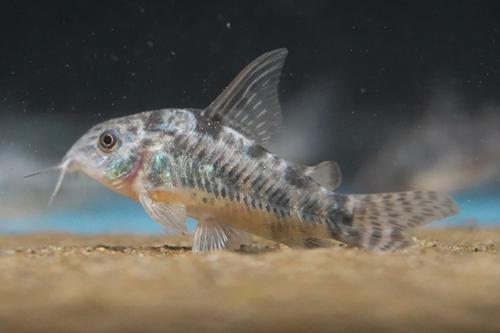
At a glance: Peppered corydoras care
Compiled reference information. Review the care notes and original sources below.
What temperature is listed for Peppered corydoras?
The compiled profile lists 15.6–26.0 °C for Peppered corydoras (Corydoras paleatus). Check the original sources below for context and differing recommendations.
What tank size is listed for Peppered corydoras?
The profile lists a minimum tank volume of 20.0 US gallons (76.0 liters). Volume alone does not establish suitability; consider dimensions, group size and other inhabitants alongside the full care notes.
What pH is listed for Peppered corydoras?
The compiled profile lists a pH of 5.5–8.5. Review the cited care sources alongside the other water parameters in this profile.
Natural habitat
The Peppered Corydoras thrives in calm, clear waters of South American streams and rivers, particularly favoring sandy substrates which allow them to forage effectively. This environmental preference is essential for their health and behavior.
Where they are found
Found primarily in the Río de la Plata basin across southern Brazil, Argentina, and Uruguay, this species is adapted to colder waters than most other corydoras.
Aquarium care
In an aquarium setting, it’s crucial to maintain a sandy substrate and provide ample hiding spots with rocks or bogwood. Regular water changes and a stable environment help in reducing stress and enhancing their wellbeing.
Feeding
Peppered Corys are omnivores but prefer a meat-based diet. They thrive on sinking pellets and wafers supplemented with live or frozen foods like bloodworms and daphnia. They may also scavenge leftovers.
Compatibility
They are generally peaceful and can be kept with other gentle fish species, as well as with small shrimps and snails. However, smaller tankmates should be chosen carefully to avoid predation.
Breeding
Breeding can be straightforward with the right conditions. A drop in temperature through a cold water change can trigger spawning behavior. The female will deposit eggs on clean surfaces, which should then be removed to prevent them from being eaten.
Sources
Compiled from multiple independent care sheets — not copied from a single site.