Catalog / fish / Pearl cichlid
fish · Cichlidae
Pearl cichlid
Geophagus brasiliensis
Wild range: Amazon (South America)
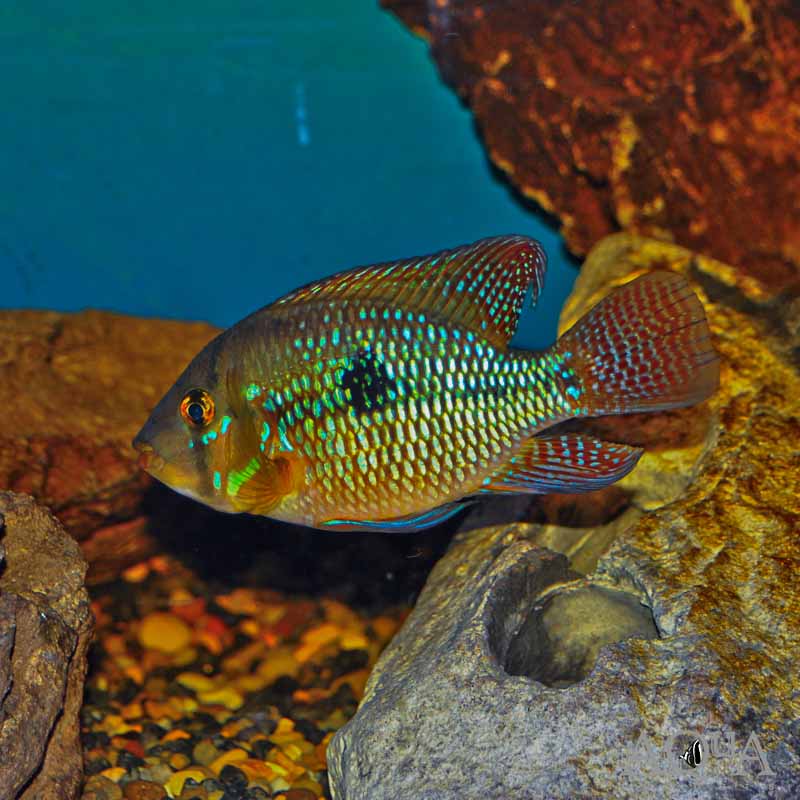
At a glance: Pearl cichlid care
Compiled reference information. Review the care notes and original sources below.
What temperature is listed for Pearl cichlid?
The compiled profile lists 22.0–28.0 °C for Pearl cichlid (Geophagus brasiliensis). Check the original sources below for context and differing recommendations.
What tank size is listed for Pearl cichlid?
The profile lists a minimum tank volume of 75.0 US gallons (283.9 liters). Volume alone does not establish suitability; consider dimensions, group size and other inhabitants alongside the full care notes.
What pH is listed for Pearl cichlid?
The compiled profile lists a pH of 6.0–8.0. Review the cited care sources alongside the other water parameters in this profile.
Natural habitat
The Pearl Cichlid is native to the Amazon River basin, where it inhabits slow-moving waters with sandy or muddy bottoms. They often prefer areas with ample hiding spots provided by rocks and plants.
Where they are found
Their natural habitat includes various geographical regions within Brazil, Paraguay, and Argentina, characterized by warm, freshwater rivers with a sandy bottom.
Aquarium care
To maintain optimal health, Pearl Cichlids require a spacious aquarium (at least 75 gallons) with a gentle water flow, stable water parameters, and a suitable substrate for digging. Provide plenty of hiding spots to minimize territorial aggression during breeding.
Feeding
As omnivores, Pearl Cichlids thrive on a varied diet that includes high-quality flakes, pellets, freeze-dried, and live foods. Providing a mix of protein-rich food is essential for their growth and health.
Compatibility
While generally semi-aggressive, Pearl Cichlids can be maintained with other medium to large cichlids. Careful selection of tank mates is essential to avoid stress and territorial disputes. Avoid pairing them with smaller fish or sensitive species like shrimp.
Breeding
Breeding Pearl Cichlids is achievable in a well-maintained aquarium. Males can become territorial during breeding, so it's essential to provide ample space and hiding spots. They are mouthbrooders, where the female incubates the eggs in her mouth until they are ready to swim.
Sources
Compiled from multiple independent care sheets — not copied from a single site.