Catalog / fish / Peacock gudgeon
fish · Eleotridae
Peacock gudgeon
Tateurndina ocellicauda
Wild range: Papua New Guinea (Australia)
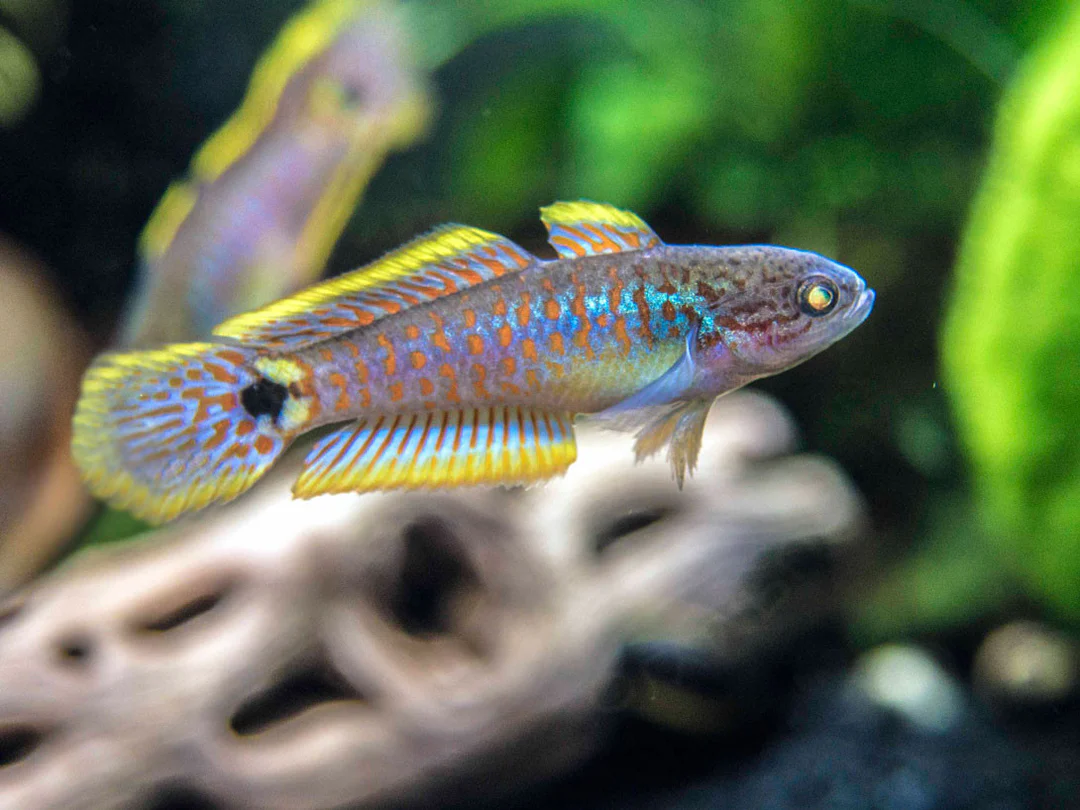
At a glance: Peacock gudgeon care
Compiled reference information. Review the care notes and original sources below.
What temperature is listed for Peacock gudgeon?
The compiled profile lists 22.2–27.8 °C for Peacock gudgeon (Tateurndina ocellicauda). Check the original sources below for context and differing recommendations.
What tank size is listed for Peacock gudgeon?
The profile lists a minimum tank volume of 15.0 US gallons (56.8 liters). Volume alone does not establish suitability; consider dimensions, group size and other inhabitants alongside the full care notes.
What pH is listed for Peacock gudgeon?
The compiled profile lists a pH of 6.0–7.8. Review the cited care sources alongside the other water parameters in this profile.
Natural habitat
The Peacock Gudgeon inhabits shallow bodies of water in Papua New Guinea, New Zealand, and Australia. They are typically found in still ponds or very slow-moving streams filled with vegetation, thriving in warm waters.
Where they are found
The species is endemic to Papua New Guinea, often found in groups near the substrate of their native habitat.
Aquarium care
Peacock Gudgeons require a well-maintained aquarium with a minimum size of 15 gallons for a pair and more for larger groups. Regular water changes and efficient filtration are essential to keep water quality optimal, as this species is sensitive to ammonia and nitrite spikes. Aquascaping should include dark substrates, rocks, driftwood, and live plants to create a natural habitat.
Feeding
A diet consisting mostly of high-quality dried foods along with live or frozen snacks like brine shrimp, bloodworms, and daphnia is ideal for maintaining health and vibrancy in Peacock Gudgeons. They generally prefer protein-rich live foods.
Compatibility
Peacock Gudgeons are extremely peaceful and can coexist with other similar temperament species. Ideal tank mates include nano fish like Celestial Pearl Danios and Neon Blue Danios, while larger aggressive species should be avoided. They can live harmoniously even in community setups as long as water conditions are properly managed.
Breeding
Breeding peacock gudgeons is relatively straightforward; they need a breeding tank with plenty of hiding spots. The male displays courtship behaviors to attract the female, and after spawning, the male guards the eggs until they hatch after about 8-10 days.
Sources
Compiled from multiple independent care sheets — not copied from a single site.