Catalog / fish / Paskai's blue-eye
fish · Pseudomugilidae
Paskai's blue-eye
Pseudomugil paskai
Wild range: Australia, Papua New Guinea (Oceania)
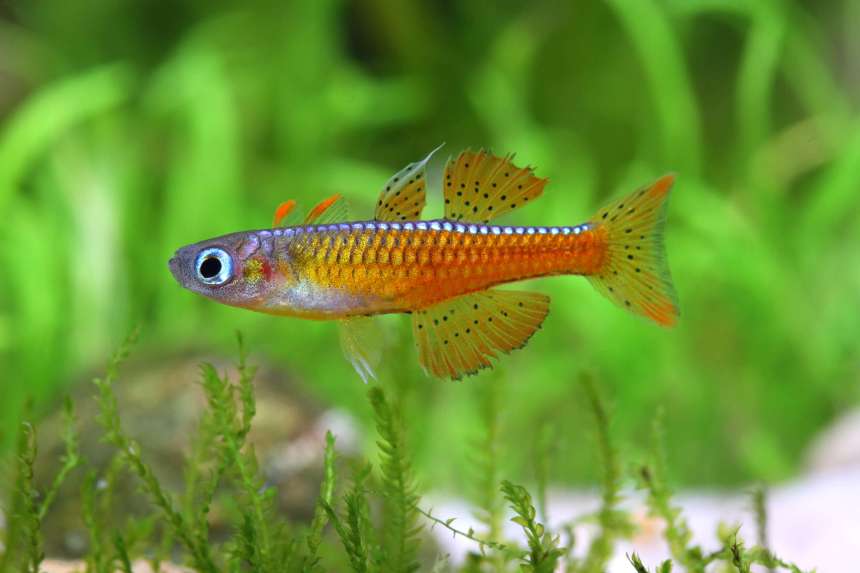
At a glance: Paskai's blue-eye care
Compiled reference information. Review the care notes and original sources below.
What temperature is listed for Paskai's blue-eye?
The compiled profile lists 24.0–28.0 °C for Paskai's blue-eye (Pseudomugil paskai). Check the original sources below for context and differing recommendations.
What tank size is listed for Paskai's blue-eye?
The profile lists a minimum tank volume of 14.3 US gallons (54.0 liters). Volume alone does not establish suitability; consider dimensions, group size and other inhabitants alongside the full care notes.
What pH is listed for Paskai's blue-eye?
The compiled profile lists a pH of 6.5–7.0. Review the cited care sources alongside the other water parameters in this profile.
Natural habitat
Pseudomugil luminatus inhabits acidic rainforest streams characterized by dense vegetation. It thrives in soft water with low pH, which mirrors its natural habitat conditions. These streams provide hiding spots that are critical for breeding and protection from predators.
Where they are found
This species is endemic to regions including Australia and Papua New Guinea, particularly in areas like Timika with rich plant life, which supports their breeding activities.
Aquarium care
In a home aquarium, Pseudomugil luminatus requires well-planted areas with dark substrate to enhance its coloration and create a comfortable environment. They prefer gentle water flow and should be kept in groups of at least ten to exhibit their natural behavior.
Feeding
Pseudomugil luminatus is an omnivorous fish that readily accepts a variety of foods, including finely crushed granulated food, live foods like black mosquito larvae, and frozen options such as Daphnia and Artemia. This diversity in their diet ensures proper growth and vibrant coloration.
Compatibility
Pseudomugil luminatus pairs well with other peaceful species like tetras and dwarf shrimp, avoiding larger or territorial species that may pose a threat. It's best to keep them with similarly sized or smaller fish to ensure harmony in the aquarium.
Breeding
Breeding is possible with proper conditions; this species lays adhesive eggs that should be placed in spawning substrates like moss. Males display courtship behaviors to attract females for spawning. The eggs should be separated from adults to prevent predation.
Sources
Compiled from multiple independent care sheets — not copied from a single site.