Catalog / fish / Paradise fish
fish · Anabantidae
Paradise fish
Macropodus opercularis
Wild range: East and Southeast Asia (Asia)
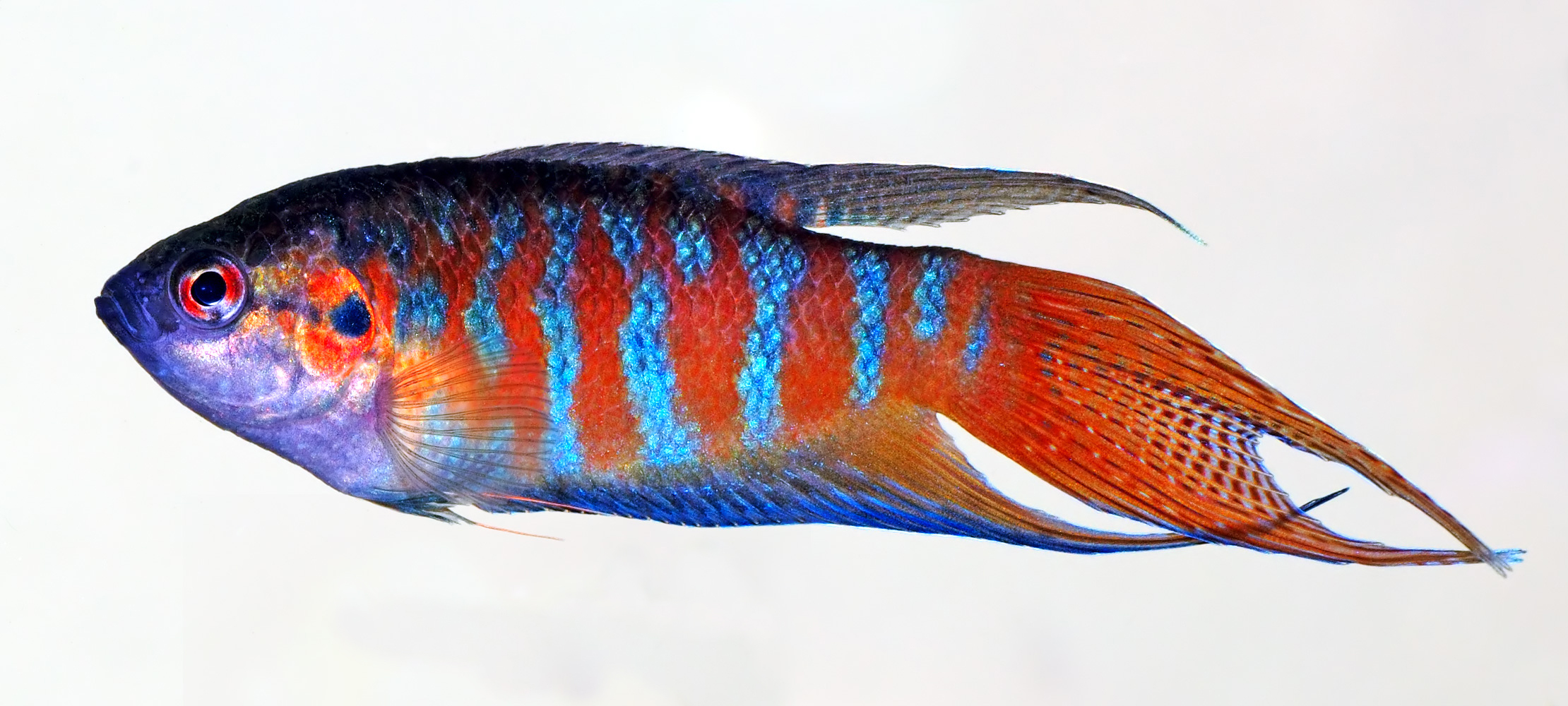
At a glance: Paradise fish care
Compiled reference information. Review the care notes and original sources below.
What temperature is listed for Paradise fish?
The compiled profile lists 20.0–28.0 °C for Paradise fish (Macropodus opercularis). Check the original sources below for context and differing recommendations.
What tank size is listed for Paradise fish?
The profile lists a minimum tank volume of 10.6 US gallons (40.0 liters). Volume alone does not establish suitability; consider dimensions, group size and other inhabitants alongside the full care notes.
What pH is listed for Paradise fish?
The compiled profile lists a pH of 6.0–8.0. Review the cited care sources alongside the other water parameters in this profile.
Natural habitat
Paradise fish thrive in warm, stagnant waters with low dissolved oxygen levels. They are often found in rice paddies and other shallow areas where their labyrinth organ allows them to survive despite the challenging conditions.
Where they are found
The natural range of the Paradise Gourami extends across Southeast Asia, primarily in freshwater bodies such as swamps and canals. They are commonly found in areas with abundant vegetation.
Aquarium care
To maintain Paradise Gourami, ensure a minimum tank size of 30 gallons with a gentle flow. Provide a well-planted environment with hiding spots to reduce aggression, especially during breeding.
Feeding
Their diet should include a variety of protein and plant-based foods, such as live or frozen foods, high-quality flakes, and occasional vegetable supplements to ensure vibrant coloration and health.
Compatibility
Paradise Gourami can be aggressive, particularly towards other gouramis and small fish. Compatible tank mates include larger tetras and some peaceful catfish, avoiding long-finned species.
Breeding
Breeding occurs when the male constructs a bubble nest and attracts a female. After spawning, the male guards the nest, aggressively defending it from any perceived threats. Ensure the breeding tank is spacious and heavily planted.
Sources
Compiled from multiple independent care sheets — not copied from a single site.