Catalog / fish / Panduro apistogramma
fish · Cichlidae
Panduro apistogramma
Apistogramma panduro
Wild range: Amazon (South America)
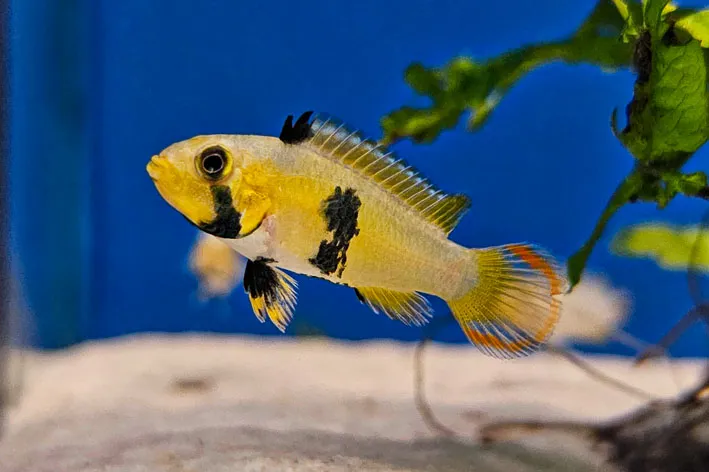
At a glance: Panduro apistogramma care
Compiled reference information. Review the care notes and original sources below.
What temperature is listed for Panduro apistogramma?
The compiled profile lists 22.0–28.0 °C for Panduro apistogramma (Apistogramma panduro). Check the original sources below for context and differing recommendations.
What tank size is listed for Panduro apistogramma?
The profile lists a minimum tank volume of 20.0 US gallons (76.0 liters). Volume alone does not establish suitability; consider dimensions, group size and other inhabitants alongside the full care notes.
What pH is listed for Panduro apistogramma?
The compiled profile lists a pH of 4.0–7.0. Review the cited care sources alongside the other water parameters in this profile.
Natural habitat
Apistogramma panduro is found in soft, acidic waters typically with a pH below 6.0, in blackwater streams like the Río Tahuayo drainage. These areas have less seasonal water level variation compared to other Apistogramma habitats, maintaining stable conditions throughout the year. The species prefers sandy substrates dotted with plant matter and other structures providing hiding spots.
Where they are found
They inhabit specific regions, such as the Napo River, Ucayali River, Nanay River, and Marañon River, where the water is dense and acidic, with pH levels typically between 4.0 to 6.0.
Aquarium care
A heavily planted tank with ample hiding places like driftwood, caves, and flower pots will mimic their natural environment and promote natural behaviors. Regular water changes are crucial to maintain optimal water quality and parameters.
Feeding
Apistogramma panduro is not picky and can adapt to various high-quality prepared foods but thrives on live foods. Regular feeding of live food is particularly beneficial for breeding success, as it promotes health and vitality in the breeding pairs.
Compatibility
Apistogramma panduro can be kept with peaceful community fish, although care should be taken as they may exhibit aggressive behavior during breeding. Keeping them in groups with more females than males can help mitigate aggression.
Breeding
When breeding, Apistogramma panduro should be kept in pairs or small groups. Males can display territorial aggression, especially during breeding periods, so providing ample hiding spaces is vital for the females.
Sources
Compiled from multiple independent care sheets — not copied from a single site.