Catalog / fish / Panda dwarf cichlid
fish · Cichlidae
Panda dwarf cichlid
Apistogramma nijsseni
Wild range: Amazon Basin (South America)
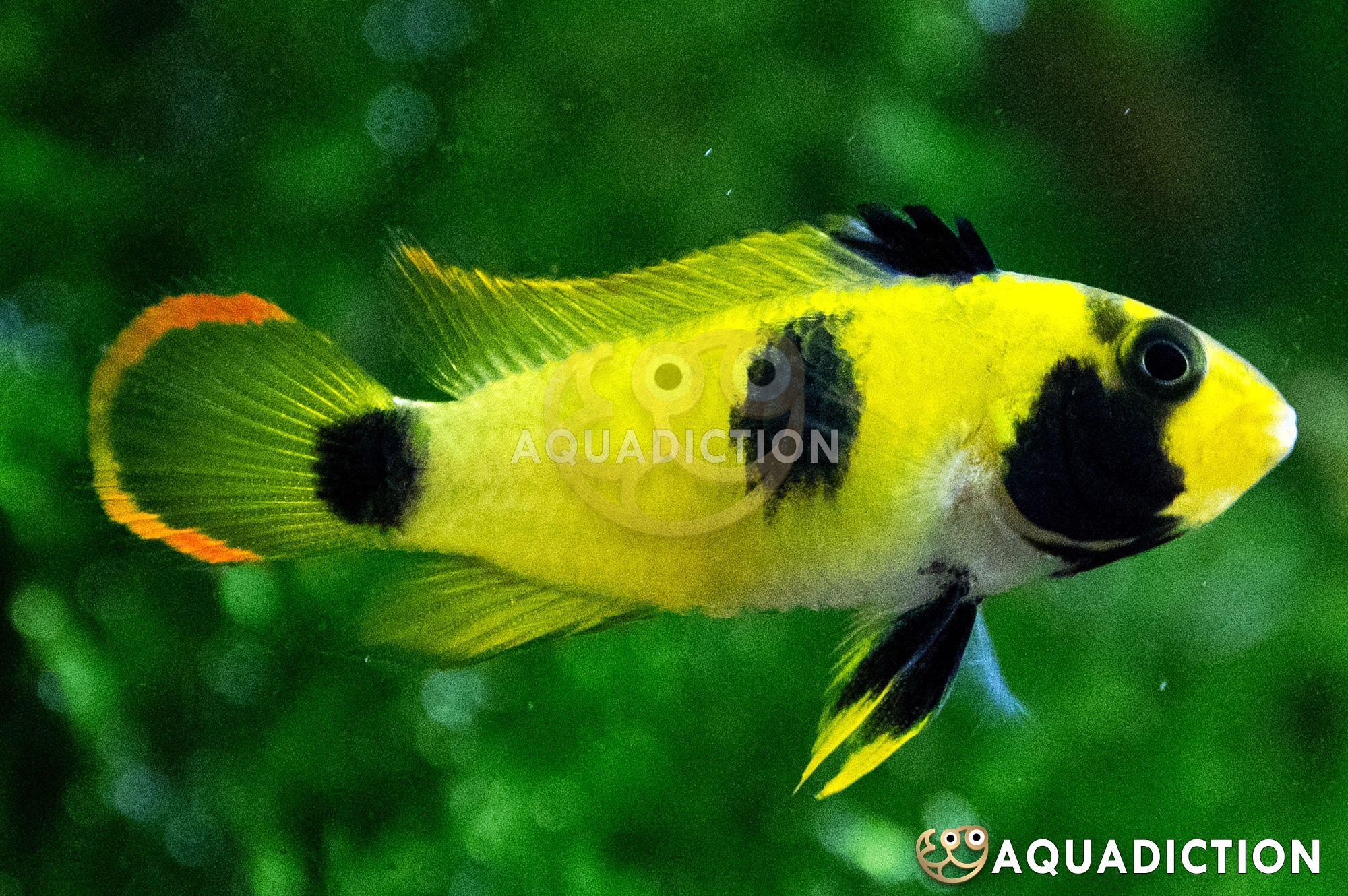
At a glance: Panda dwarf cichlid care
Compiled reference information. Review the care notes and original sources below.
What temperature is listed for Panda dwarf cichlid?
The compiled profile lists 23.0–29.0 °C for Panda dwarf cichlid (Apistogramma nijsseni). Check the original sources below for context and differing recommendations.
What tank size is listed for Panda dwarf cichlid?
The profile lists a minimum tank volume of 15.0 US gallons (60.0 liters). Volume alone does not establish suitability; consider dimensions, group size and other inhabitants alongside the full care notes.
What pH is listed for Panda dwarf cichlid?
The compiled profile lists a pH of 5.0–7.0. Review the cited care sources alongside the other water parameters in this profile.
Natural habitat
Panda Dwarf Cichlids are native to the Carahuayte River drainage in Peru, thriving in slow-moving, shallow blackwater streams beneath dense forest canopies. The substrate is rich in leaf litter, providing essential conditions for their natural behaviors and survival.
Where they are found
The species is known from the Carahuayte River drainage which is a tributary of the Ucayali River in Peru.
Aquarium care
To care for Apistogramma nijsseni, maintain a warm and slightly acidic environment with stable water parameters. Providing plenty of plants, driftwood, and hiding spots will help mimic their natural habitat, reduce stress, and prevent aggression.
Feeding
A balanced diet replicating their natural intake is vital, consisting of high-quality, protein-rich live or frozen foods such as brine shrimp and bloodworms. It's important to regulate feeding to avoid overfeeding, with small quantities offered once or twice daily.
Compatibility
Apistogramma nijsseni is compatible with small, peaceful fish like tetras and pencilfish, making them suitable for community tanks. Avoid larger or aggressive species that may outcompete or harass them.
Breeding
Breeding requires very soft and acidic water. Provide caves or flower pots for spawning. The female will guard the eggs, which hatch in 2-3 days. Be prepared to separate the male if aggression occurs post-spawning.
Sources
Compiled from multiple independent care sheets — not copied from a single site.