fish · Cichlidae
Oscar
Astronotus ocellatus
Wild range: Amazon basin (South America)
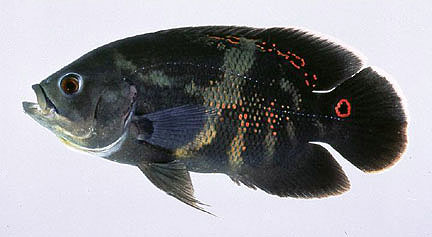
At a glance: Oscar care
Compiled reference information. Review the care notes and original sources below.
What temperature is listed for Oscar?
The compiled profile lists 22.0–30.0 °C for Oscar (Astronotus ocellatus). Check the original sources below for context and differing recommendations.
What tank size is listed for Oscar?
The profile lists a minimum tank volume of 50.0 US gallons (189.0 liters). Volume alone does not establish suitability; consider dimensions, group size and other inhabitants alongside the full care notes.
What pH is listed for Oscar?
The compiled profile lists a pH of 6.0–8.0. Review the cited care sources alongside the other water parameters in this profile.
Natural habitat
Oscars are native to the slow-moving waters of the Amazon basin, where they inhabit areas with dense vegetation and ample cover. They prefer warm, acidic waters that are rich in organic material.
Where they are found
Oscars are commonly found in various water habitats throughout the Amazon, including lagoons and rivers, where they demonstrate adaptable feeding behaviors.
Aquarium care
For Oscars, a minimum tank size of 200 liters is recommended, with adequate filtration to manage their heavy waste load. Tank decorations should be sturdy, as Oscars are known to rearrange their environments. Regular water changes and testing are crucial for maintaining good water quality.
Feeding
Oscars are known to be opportunistic feeders, consuming a varied diet that includes pellets, live foods, and frozen options. It is beneficial to maintain consistency in their diet to avoid health issues.
Compatibility
Oscars are territorial and aggressive, particularly as they mature. Suitable tankmates include larger, non-aggressive fish such as Silver Dollars and Plecos. Avoid smaller fish, as they may be seen as prey.
Breeding
Breeding Oscars can be challenging; they are egg layers and require stable water conditions. Providing a breeding site, like flat rocks or smooth surfaces, can facilitate reproduction. The parents may display aggressive behavior during breeding, so a separate breeding tank is often recommended.
Sources
Compiled from multiple independent care sheets — not copied from a single site.