Catalog / fish / Orange-finned danio
fish · Cyprinidae
Orange-finned danio
Danio kyathit
Wild range: Sri Lanka (Asia)
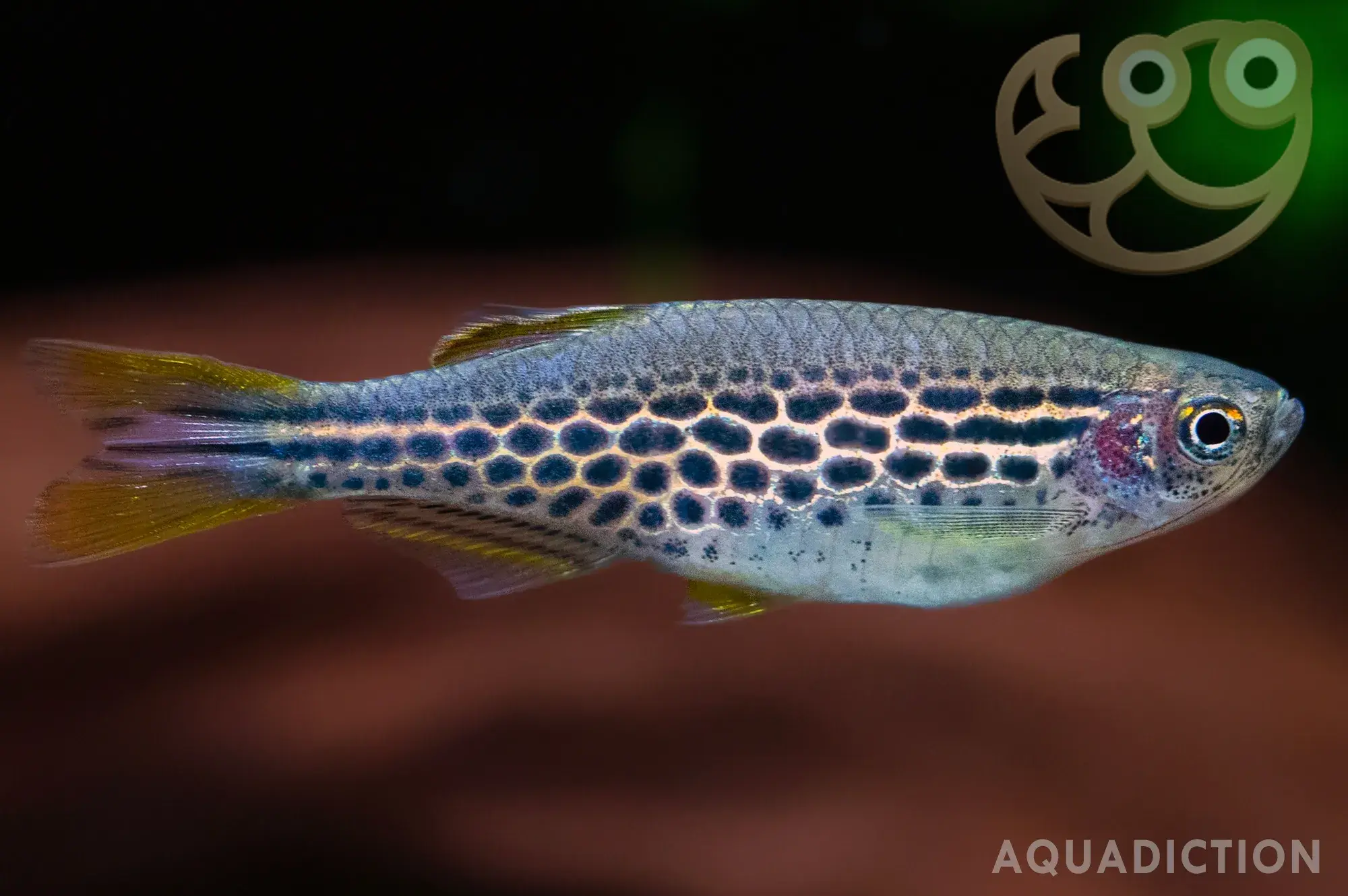
At a glance: Orange-finned danio care
Compiled reference information. Review the care notes and original sources below.
What temperature is listed for Orange-finned danio?
The compiled profile lists 18.0–27.0 °C for Orange-finned danio (Danio kyathit). Check the original sources below for context and differing recommendations.
What tank size is listed for Orange-finned danio?
The profile lists a minimum tank volume of 14.0 US gallons (65.0 liters). Volume alone does not establish suitability; consider dimensions, group size and other inhabitants alongside the full care notes.
What pH is listed for Orange-finned danio?
The compiled profile lists a pH of 5.5–7.5. Review the cited care sources alongside the other water parameters in this profile.
Natural habitat
The Black ruby barb originates from freshwater streams and rivers in Sri Lanka where it thrives in soft to moderately hard water conditions. It is commonly found in areas with abundant vegetation and structures that provide hiding spots.
Where they are found
This species is primarily found in freshwater river systems across Myanmar, suggesting a habitat characterized by gentle currents, and abundant aquatic vegetation.
Aquarium care
Kyathit Danios are relatively easy to care for, making them suitable for beginner aquarists. It's essential to maintain stable water parameters with a pH of 6 to 7.5 and temperatures ranging between 18 to 25°C. They appreciate being kept in a group for social interaction, and aquarists should ensure they have enough space to swim freely.
Feeding
The Black ruby barb is omnivorous and will accept a varied diet consisting of high-quality flake foods, pellets, and occasional live or frozen foods such as brine shrimp and daphnia. It is important to ensure a balanced diet to maintain their health and vibrant coloration.
Compatibility
Kyathit Danios are peaceful community fish and can be kept with various species, including other small fish. They thrive in groups, so it's best to keep them in schools of at least five or more to ensure they exhibit their natural behaviors.
Breeding
Breeding these fish is feasible in a community tank setup with ample hiding spots. They are egg scatterers and require a separate breeding tank for best results, where the parents can be removed after spawning to prevent them from eating the eggs.
Sources
Compiled from multiple independent care sheets — not copied from a single site.