Catalog / fish / One-lined pencilfish
fish · Lebiasinidae
One-lined pencilfish
Nannostomus unifasciatus
Wild range: Amazon Basin (South America)
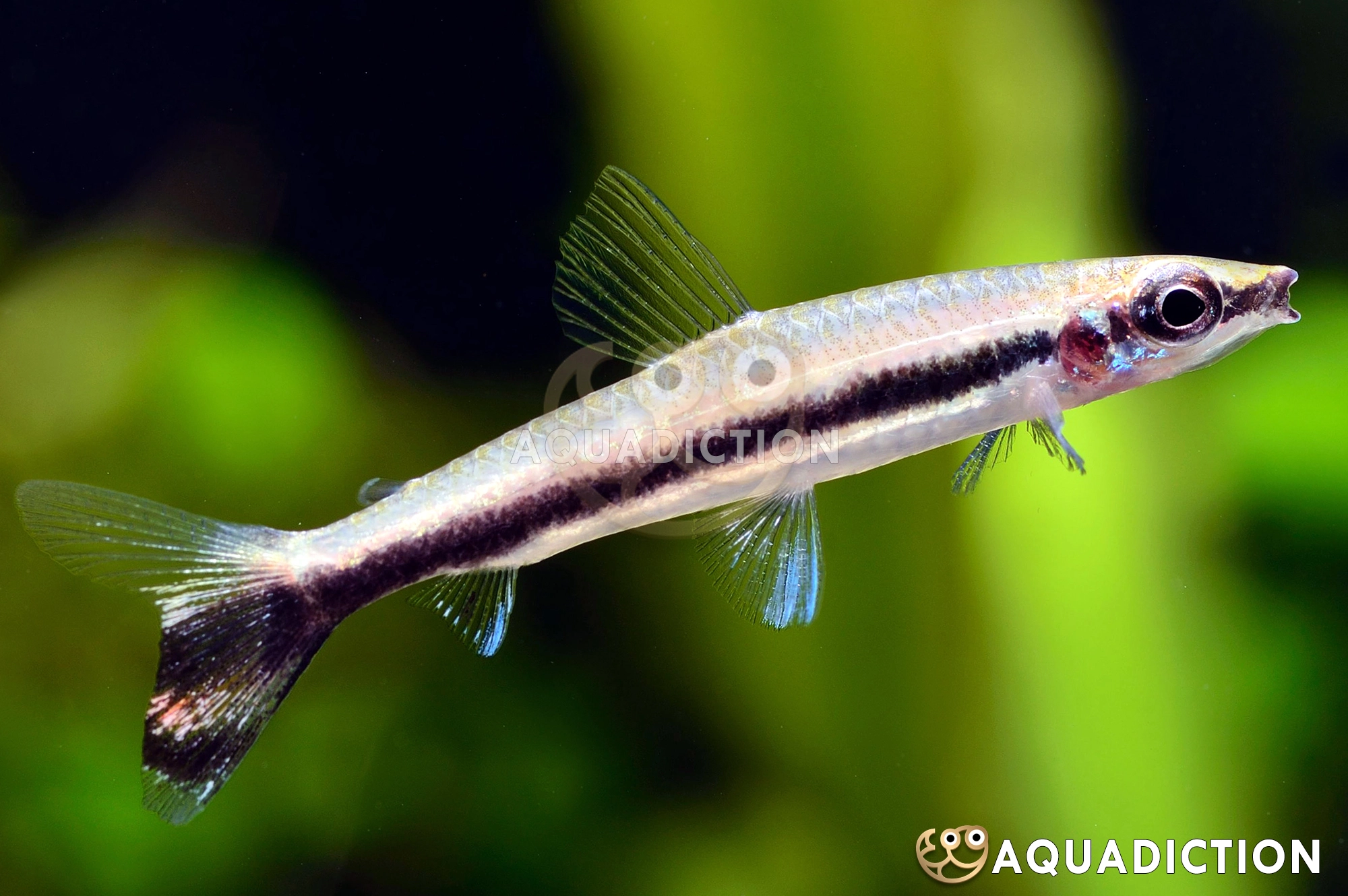
At a glance: One-lined pencilfish care
Compiled reference information. Review the care notes and original sources below.
What temperature is listed for One-lined pencilfish?
The compiled profile lists 22.0–28.0 °C for One-lined pencilfish (Nannostomus unifasciatus). Check the original sources below for context and differing recommendations.
What tank size is listed for One-lined pencilfish?
The profile lists a minimum tank volume of 17.9 US gallons (68.0 liters). Volume alone does not establish suitability; consider dimensions, group size and other inhabitants alongside the full care notes.
What pH is listed for One-lined pencilfish?
The compiled profile lists a pH of 4.0–7.5. Review the cited care sources alongside the other water parameters in this profile.
Natural habitat
The one-lined pencilfish is typically found in the blackwater streams and rivers of the Amazon Basin, residing in areas with plenty of vegetation, which provides shelter and feeding opportunities. These habitats are characterized by slow-moving waters that are slightly acidic, often rich in decomposed organic material, contributing to the nutrient cycle within these ecosystems.
Where they are found
This species is distributed throughout the upper Amazon Basin in Brazil and Bolivia, and parts of Colombia and Venezuela, showcasing a preference for habitats with significant aquatic vegetation and low water currents. An introduced population exists in Trinidad and Tobago. It is commonly found alongside various other fish species in its natural habitat, often in rich ecosystems with diverse aquatic flora.
Aquarium care
When maintaining the one-lined pencilfish in a home aquarium, it’s crucial to provide a well-planted environment with gentle filtration to mimic their natural habitat. This species thrives in groups; hence, keeping them in schools of at least six will promote natural social behaviors and reduce stress. Regular water changes and monitoring of water parameters, particularly temperature and pH, are necessary to ensure a healthy environment.
Feeding
In captivity, this fish readily accepts a variety of small dry foods but thrives on a diet that includes live and frozen options such as Artemia nauplii and other tiny invertebrates. Regular feeding will help in mimicking their natural diet and ensuring optimal health.
Compatibility
This species is generally very peaceful and is best kept with similarly-sized fish. However, due to its timid nature, it is advisable to avoid larger, more aggressive fish. It can live harmoniously with small characins and catfish and serves well as a dither fish for dwarf cichlids, promoting confidence and natural behavior in the tank.
Breeding
Breeding the one-lined pencilfish can be achieved in a separate breeding tank with slightly acidic water conditions. They are egg layers, laying their eggs among fine-leaved plants. It’s essential to remove the parents after spawning to prevent them from eating the eggs. The eggs typically hatch within a few days, and the fry should be fed infusoria or finely crushed flake food until they mature.
Sources
Compiled from multiple independent care sheets — not copied from a single site.