fish · Osphronemidae
Betta obscura
Betta obscura
Wild range: Southeast Asia (Asia)
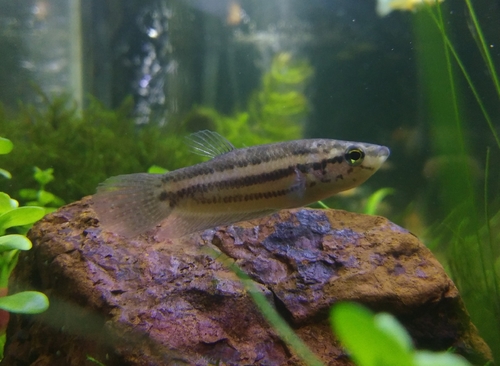
At a glance: Betta obscura care
Compiled reference information. Review the care notes and original sources below.
What temperature is listed for Betta obscura?
The compiled profile lists 21.0–26.0 °C for Betta obscura (Betta obscura). Check the original sources below for context and differing recommendations.
What tank size is listed for Betta obscura?
The profile lists a minimum tank volume of 8.0 US gallons (30.0 liters). Volume alone does not establish suitability; consider dimensions, group size and other inhabitants alongside the full care notes.
What pH is listed for Betta obscura?
The compiled profile lists a pH of 5.5–6.0. Review the cited care sources alongside the other water parameters in this profile.
Natural habitat
Betta obscura is known only from the Barito basin in Central Kalimantan (Kalimantan Tengah), Indonesian Borneo.
Where they are found
This species is endemic to the Borneo region and primarily located in the Kalimantan Tengah province, specifically in the Sungai Lahei tributaries. Its distribution is limited to specific freshwater systems within this area, which may be under threat from habitat degradation.
Aquarium care
In the aquarium, maintain soft, low-mineral water with a pH around neutral or slightly acidic, and temperatures between 23 to 26°C. Good but gentle filtration is essential to avoid strong surface turbulence. Providing ample cover with plants and driftwood mimics their natural habitat.
Feeding
A micropredator that feeds on small invertebrates. Offer live and frozen foods such as bloodworm, brine shrimp and daphnia, along with good-quality small pellets.
Compatibility
This species is relatively peaceful but territorial; only one male should be kept per tank unless the aquarium is sufficiently large to provide hiding spots. Suitable tank mates include other small, peaceful fish that tolerate similar water conditions.
Breeding
The breeding of Betta obscura involves paternal mouthbrooding, where males incubate the eggs in their mouth until hatching. Providing appropriate breeding tanks with lots of cover is essential to increase fry survival rates.
Sources
Compiled from multiple independent care sheets — not copied from a single site.