fish · Acestrorhamphidae
Neon tetra
Paracheirodon innesi
Wild range: Amazon Basin (South America)
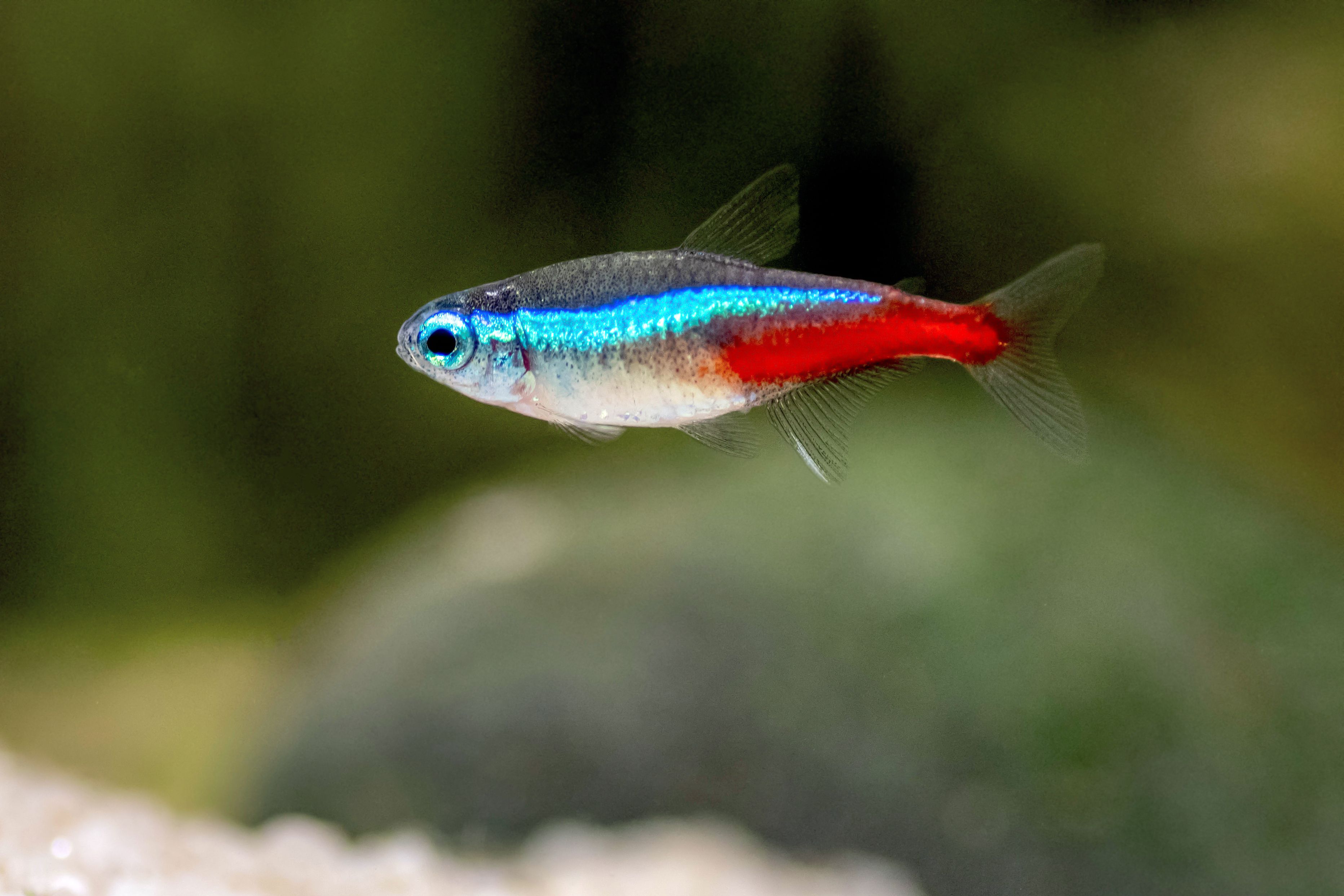
At a glance: Neon tetra care
Compiled reference information. Review the care notes and original sources below.
What temperature is listed for Neon tetra?
The compiled profile lists 20.0–25.0 °C for Neon tetra (Paracheirodon innesi). Check the original sources below for context and differing recommendations.
What tank size is listed for Neon tetra?
The profile lists a minimum tank volume of 10.0 US gallons (38.0 liters). Volume alone does not establish suitability; consider dimensions, group size and other inhabitants alongside the full care notes.
What pH is listed for Neon tetra?
The compiled profile lists a pH of 5.0–7.5. Review the cited care sources alongside the other water parameters in this profile.
Natural habitat
Neon Tetras are found in the warm, turbid waters of the Amazon River basin, particularly in slow-moving blackwater streams and flooded forests. They thrive in densely planted environments that mimic their natural habitat, where they can find shelter and foraging opportunities.
Where they are found
Native to blackwater and clearwater tributaries of the Solimões (upper Amazon) drainage in Brazil, Colombia and Peru.
Aquarium care
In aquariums, Neon Tetras require a spacious tank decorated with plants, driftwood, and rocks to provide ample hiding spots. The tank should have a gentle filter system to maintain water quality without creating strong currents. Regular water changes and monitoring of water parameters are essential for their health.
Feeding
Eats worms, small insects, crustaceans and some plant matter. In the aquarium, offer fine flakes, micro-pellets and small live or frozen foods such as brine shrimp and daphnia.
Compatibility
A peaceful shoaling fish. Keep at least six with other small, calm species such as rasboras, small tetras, corydoras and dwarf shrimp, and avoid large fish that could eat them.
Breeding
Breeding Neon Tetras requires a separate breeding tank with soft, acid water conditions. They are egg layers and will scatter their eggs among plants. Once breeding is complete, the adult fish should be removed to prevent them from eating the eggs. The eggs hatch in about 24-36 hours.
Sources
Compiled from multiple independent care sheets — not copied from a single site.