Catalog / fish / Murray River rainbowfish
fish · Melanotaeniidae
Murray River rainbowfish
Melanotaenia fluviatilis
Wild range: Murray-Darling Basin (Australia)
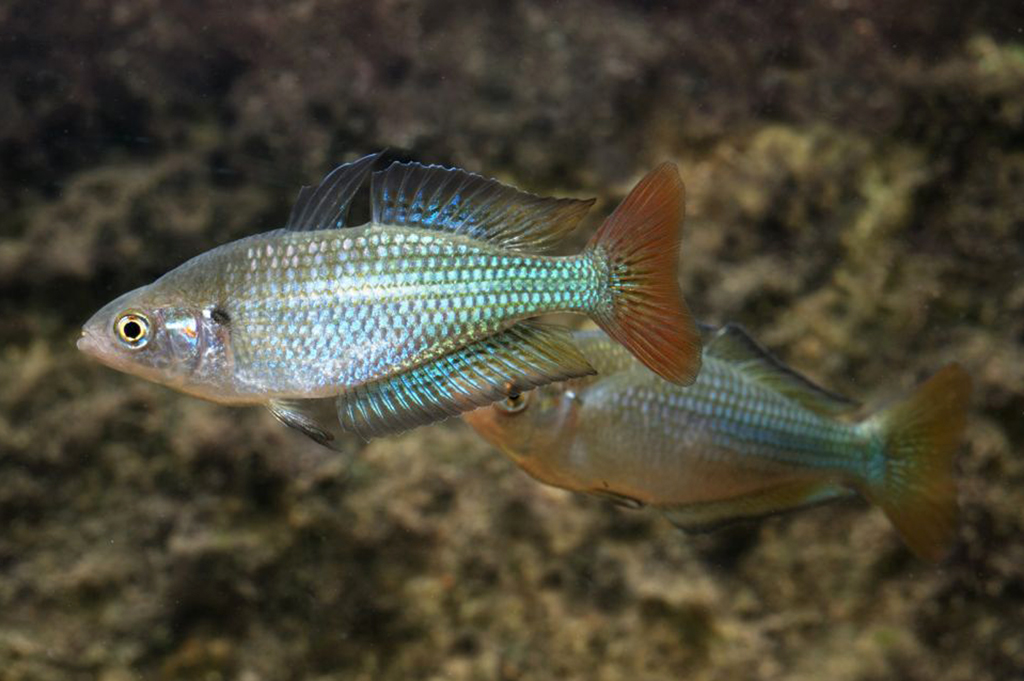
At a glance: Murray River rainbowfish care
Compiled reference information. Review the care notes and original sources below.
What temperature is listed for Murray River rainbowfish?
The compiled profile lists 20.0–26.0 °C for Murray River rainbowfish (Melanotaenia fluviatilis). Check the original sources below for context and differing recommendations.
What tank size is listed for Murray River rainbowfish?
The profile lists a minimum tank volume of 30.0 US gallons (113.6 liters). Volume alone does not establish suitability; consider dimensions, group size and other inhabitants alongside the full care notes.
What pH is listed for Murray River rainbowfish?
The compiled profile lists a pH of 6.0–8.5. Review the cited care sources alongside the other water parameters in this profile.
Natural habitat
The Murray-Darling rainbowfish is typically found in the lowland areas of the Murray-Darling Basin, preferring slow-flowing rivers, wetlands, and billabongs. It thrives in environments with open sandy substrates and often utilizes vegetation for spawning and cover. Schools of these fish are commonly seen just below the water surface.
Where they are found
Populations are concentrated around grassy riverbanks and floating logs, showing adaptability to various water conditions, although wild populations are declining due to drought.
Aquarium care
To maintain healthy conditions, it is important to provide a well-planted aquarium with gentle water flow, temperate conditions, and suitable substrate. Regular water changes and monitoring of water parameters are essential to mimic their natural habitat.
Feeding
A balanced diet consisting of high-quality flake or pellet foods, supplemented with live or frozen foods like brine shrimp or blood worms, is vital for their health.
Compatibility
Australian Rainbowfish are very compatible in community tanks, preferring to be in schools of six or more. They should not be kept with overly aggressive or very shy species.
Breeding
Breeding typically occurs during spring to summer when temperatures exceed 20°C. Males display elaborate courtship that encourages females to lay their eggs attached to aquatic plants. Eggs hatch in about a week, and the larvae are approximately 2.0–3.7 mm long at hatching.
Sources
Compiled from multiple independent care sheets — not copied from a single site.