fish · Poeciliidae
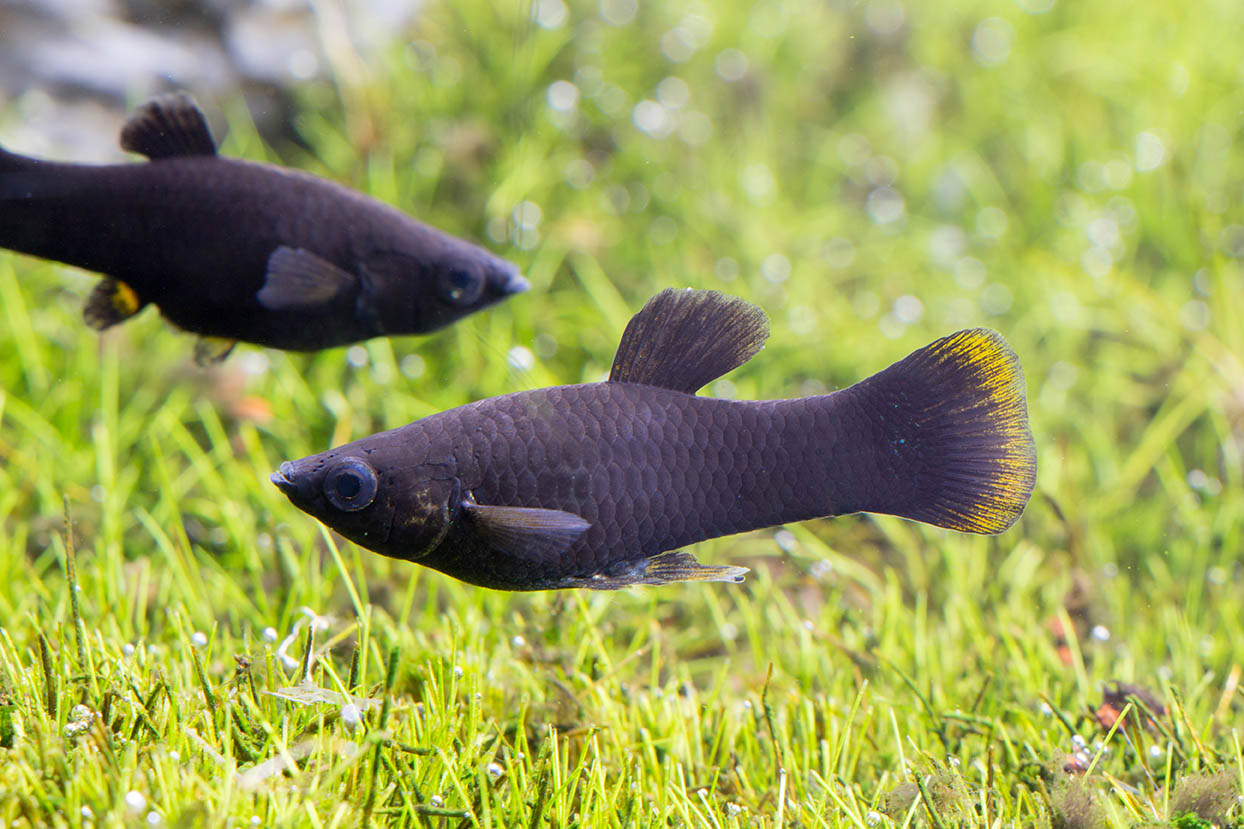
Molly
Poecilia sphenops
Wild range: Central America (North America)
At a glance: Molly care
Compiled reference information. Review the care notes and original sources below.
What temperature is listed for Molly?
The compiled profile lists 18.0–28.0 °C for Molly (Poecilia sphenops). Check the original sources below for context and differing recommendations.
What tank size is listed for Molly?
The profile lists a minimum tank volume of 10.0 US gallons (38.0 liters). Volume alone does not establish suitability; consider dimensions, group size and other inhabitants alongside the full care notes.
What pH is listed for Molly?
The compiled profile lists a pH of 7.0–8.5. Review the cited care sources alongside the other water parameters in this profile.
Natural habitat
Mollies thrive in freshwater and brackish environments in North, Central, and South America. They prefer well-oxygenated waters with gentle to moderate flow and stable parameters. Keeping them in groups promotes their social behavior, enhancing their coloration and overall well-being.
Where they are found
Mollies are frequently found in freshwater systems from Mexico to Colombia.
Aquarium care
The Sphenops Molly is a hardy fish that adapts well to various water conditions, making it suitable for beginner aquarists. Maintaining a stable environment with a gentle flow and adequate filtration is essential for their health. It's recommended to keep them in groups with more females than males to reduce aggression.
Feeding
Mollies require a varied diet consisting of flakes, pellets, freeze-dried or frozen foods. They also benefit from the inclusion of algae and spirulina in their diet. Feed them small portions 1-3 times daily, ensuring they eat within a couple of minutes to prevent overfeeding.
Compatibility
Sphenops Mollies are community-friendly fish that can be kept with a variety of other species. However, they may exhibit some aggression if kept in insufficient numbers, especially males. To maintain harmony, ensure adequate group sizes.
Breeding
Breeding is straightforward as they are livebearers. The females can become pregnant quickly after giving birth, necessitating a good ratio of males to females to reduce stress on females.
Sources
Compiled from multiple independent care sheets — not copied from a single site.