Catalog / invertebrates / Mississippi grass shrimp
invertebrate · Palaemonidae
Mississippi grass shrimp
Palaemonetes kadiakensis
Wild range: Great Lakes, Mississippi River, Gulf Coast (North America)
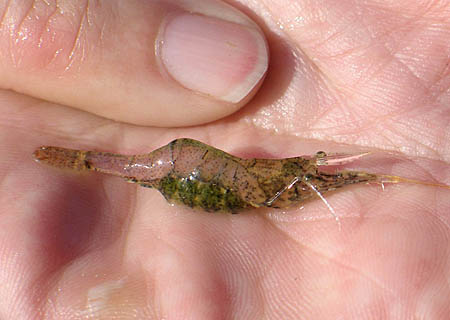
At a glance: Mississippi grass shrimp care
Compiled reference information. Review the care notes and original sources below.
What temperature is listed for Mississippi grass shrimp?
The compiled profile lists 10.0–28.0 °C for Mississippi grass shrimp (Palaemonetes kadiakensis). Check the original sources below for context and differing recommendations.
What tank size is listed for Mississippi grass shrimp?
The profile lists a minimum tank volume of 5.0 US gallons (19.0 liters). Volume alone does not establish suitability; consider dimensions, group size and other inhabitants alongside the full care notes.
What pH is listed for Mississippi grass shrimp?
The compiled profile lists a pH of 6.5–8.0. Review the cited care sources alongside the other water parameters in this profile.
Natural habitat
The Mississippi grass shrimp is commonly found in slow-moving lowland streams and pools, favoring areas with abundant aquatic vegetation. This environment provides both food and shelter, allowing them to thrive and evade predators.
Where they are found
They are found primarily in the southeastern United States, making them suitable for hobbyists interested in native species.
Aquarium care
To house Ghost Shrimp, provide a minimum tank size of 19 liters with water conditions of pH between 6.5-8 and temperatures ranging from 18-27°C. Ensure the substrate is suitable for burrowing and maintain a gentle water flow. Regular feedings with sinking pellets or algae wafers will help keep them healthy and well-fed.
Feeding
These shrimp are not picky eaters and should be fed a diet of finely crushed flakes, algae tablets, and small live or frozen foods such as brine shrimp and plankton that replicate their natural diet.
Compatibility
Ghost Shrimp are generally peaceful and do well with smaller, non-aggressive fish. However, they can be prey for larger fish. Careful selection of tank mates is necessary to prevent them from being eaten. Community tanks with livebearers, tetras, and similar-sized fish are ideal.
Breeding
While females carry eggs, successful breeding is challenging since newly hatched larvae typically require brackish water to thrive. Most hobbyists may not succeed in raising larvae in a pure freshwater setup.
Sources
Compiled from multiple independent care sheets — not copied from a single site.