fish · Cichlidae
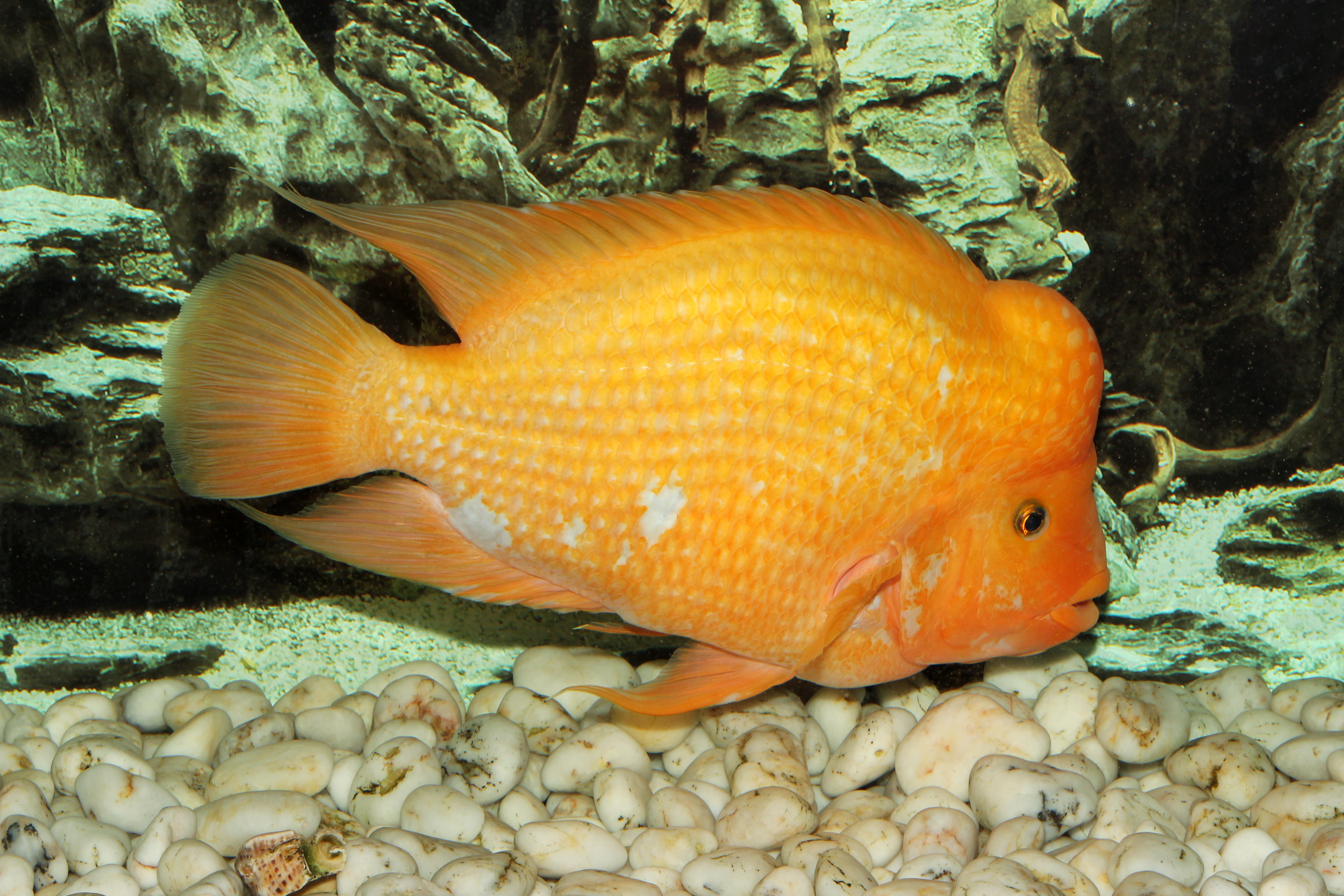
Midas cichlid
Amphilophus citrinellus
Wild range: Atlantic slope of Nicaragua and Costa Rica (San Juan River drainage, including Lakes Nicaragua, Managua, Masaya, and Apoyo); prefers lakes and slow/tranquil lower river valleys. Introduced/established in parts of Florida, Puerto Rico, and elsewhere (FishBase, CoF). (Central America)

At a glance: Midas cichlid care
Compiled reference information. Review the care notes and original sources below.
What temperature is listed for Midas cichlid?
The compiled profile lists 21.0–26.0 °C for Midas cichlid (Amphilophus citrinellus). Check the original sources below for context and differing recommendations.
What tank size is listed for Midas cichlid?
The profile lists a minimum tank volume of 90.0 US gallons (340.0 liters). Volume alone does not establish suitability; consider dimensions, group size and other inhabitants alongside the full care notes.
What pH is listed for Midas cichlid?
The compiled profile lists a pH of 6.0–8.0. Review the cited care sources alongside the other water parameters in this profile.
Natural habitat
Large permanent lakes, ponds, and slow river sections; forages among rocky walls, banks, and crevices used for spawning and fry shelter (Seriously Fish, FishBase). Digs heavily — sand or fine gravel with immovable rock/wood; rooted plants usually fail.
Where they are found
Catalog primary locked as Amphilophus citrinellus (Günther, 1864) per inventory/trade lock; ITIS Current Standing valid (TSN 648192); Eschmeyer Catalog of Fishes Current status Valid as Amphilophus citrinellus (Günther 1864) (spid 16422; originally Heros citrinellus); FishBase accepted name Amphilophus citrinellus (Günther, 1864). Older combinations / synonyms: Heros citrinellus Günther 1864, Heros basilaris Gill 1877, Cichlasoma citrinellum, Cichlasoma citrinella, Cichlasoma granadense Meek 1907, Archocentrus citrinellus, Herichthys citrinellus, Amphilophus citrinellum (gender spelling). Trade names: Midas cichlid, lemon cichlid, Zitronenbuntbarsch. LFS caution: frequently confused with / hybridized with Amphilophus labiatus (red devil) — A. citrinellus typically thicker-set with a larger nuchal hump; A. labiatus often has more pronounced lips (variable); unlabeled 'Middevil' crosses are common (Seriously Fish, fishkeeper.co.uk). Parent lineage of many parrot-cichlid and flowerhorn hybrids. IUCN Least Concern (assessed 2019-11-07; FishBase / IUCN).
Aquarium care
Large, extremely aggressive Central American cichlid — one of the most belligerent New World species in the hobby. Plan at least a 90 US gallon (~340 L) tank for one adult (Aquarium Domain 90 gal; Seriously Fish ~150×45 cm base ≈80 gal single floor rounded up; Tropical Fish Keeping 100 gal; pairs or tankmates need substantially more — ≥125–180 gal, and Seriously Fish / fishkeeper cite >1000 L for mixed robust cichlid communities). Soft-to-hard tropical water ~21–26°C, pH ~6.0–8.0, GH ~5–25 dGH (Seriously Fish 21–26°C / 6.0–8.0 / 5–25; fishkeeper 23–26°C / 6.5–8.0 / ≤25; Tropical Fish Keeping ~21–26°C / 6.0–8.0 / 5–25; Aquarium Domain 21–27°C / 6.0–7.9 / 5–25; FishBase wild absolute 23–33°C — locked aquarium overlap 21–26°C, 6.0–8.0, 5–25 with fishkeeper pH from 6.5, AD temp to ~27°C, and FishBase 33°C noted). Soft sand/fine gravel, immovable rocks/driftwood/flowerpots; protect heaters and filter fittings; huge canister filtration and frequent large water changes; heavy cover (expert jumpers). Digs constantly; planted setups fail. Advanced difficulty due to size, bioload, and aggression.
Feeding
Omnivore — aufwuchs, snails, insect larvae, worms, plant matter, and small fishes in nature (FishBase, Seriously Fish). In aquaria: quality cichlid sticks/pellets as staple plus live/frozen prawns (shells on for carotenoids), mussels, earthworms, mysis/krill; include vegetable matter (peas, spinach, spirulina). Avoid beefheart/red meats (digestive harm). Unfussy feeder; vary diet for color. Little benefit to live feeder fish; disease risk.
Compatibility
Extremely territorial and aggressive — best kept singly or as an established pair in a species tank (Seriously Fish, fishkeeper, Aquarium Domain, Tropical Fish Keeping). Not community-safe with small or peaceful fish. Possible tankmates only in very large systems (≥1000 L / ~250+ gal) with similarly large, hard-line Central/South American cichlids, large loricariids/ariids, or robust fast swimmers (tinfoil barbs, silver sharks) and abundant visual barriers. Do not confuse with A. labiatus (red devil) or Middevil hybrids.
Breeding
Readily bred once a compatible pair is obtained (Seriously Fish, fishkeeper, Tropical Fish Keeping). Grow out ≥6 juveniles; remove extras when a pair forms — random adult pairing often kills the female. Courtship includes lip-locking, tail-slapping, and heavy digging; have a clear divider ready. Eggs on vertical rock/cave/flowerpot; hatch 2–3 days; free-swim after further 5–7 days on Artemia nauplii; biparental care excellent but male may turn on female after fry remove. Tankmates are not safe once spawning starts.
Sources
Compiled from multiple independent care sheets — not copied from a single site.