fish · Osphronemidae
Golden betta
Betta midas
Wild range: Southeast Asia (Asia)
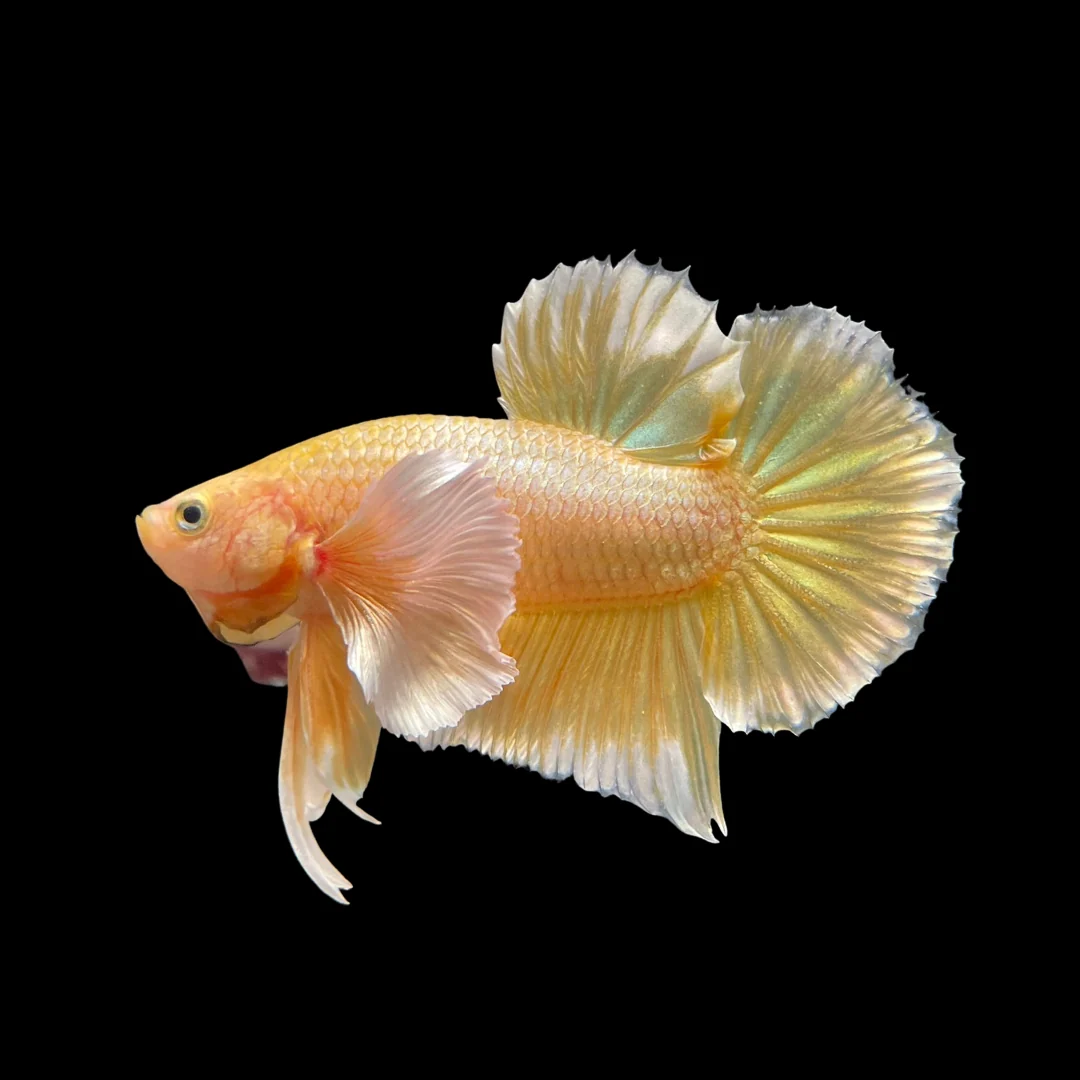
At a glance: Golden betta care
Compiled reference information. Review the care notes and original sources below.
What temperature is listed for Golden betta?
The compiled profile lists 24.0–28.0 °C for Golden betta (Betta midas). Check the original sources below for context and differing recommendations.
What tank size is listed for Golden betta?
The profile lists a minimum tank volume of 15.0 US gallons (56.8 liters). Volume alone does not establish suitability; consider dimensions, group size and other inhabitants alongside the full care notes.
What pH is listed for Golden betta?
The compiled profile lists a pH of 5.0–5.5. Review the cited care sources alongside the other water parameters in this profile.
Natural habitat
Betta midas lives in blackwater streams running through peat swamp and heath forest. The type series came from a river with a pH of about 4.1.
Where they are found
Known from the lower Kapuas basin in West Kalimantan, Indonesia, possibly also the Sambas basin, and from heath-forest streams near Lundu in far western Sarawak, Malaysia. It belongs to the Betta anabatoides group.
Aquarium care
Keep in a spacious, covered tank with wood, leaf litter and floating plants. It needs soft, acidic, tannin-stained water and gentle filtration. Change water in small amounts, matching its chemistry.
Feeding
A balanced diet for Betta fish includes high-quality pellets, freeze-dried foods, and occasional live or frozen foods such as bloodworms or brine shrimp, which provide essential protein.
Compatibility
While Bettas can coexist in community tanks, caution is needed as they can display aggression, especially males towards each other and towards long-finned fish. Monitoring their behavior and having a backup tank available is recommended in mixed species setups.
Breeding
A paternal mouthbrooder. The male carries the eggs in his mouth until he releases free-swimming fry. It does not build bubble nests. Leave the brooding male undisturbed.
Sources
Compiled from multiple independent care sheets — not copied from a single site.