Catalog / plants / Dwarf four-leaf clover
plant · Marsileacea
Dwarf four-leaf clover
Marsilea hirsuta
Wild range: Oceania (Australia)
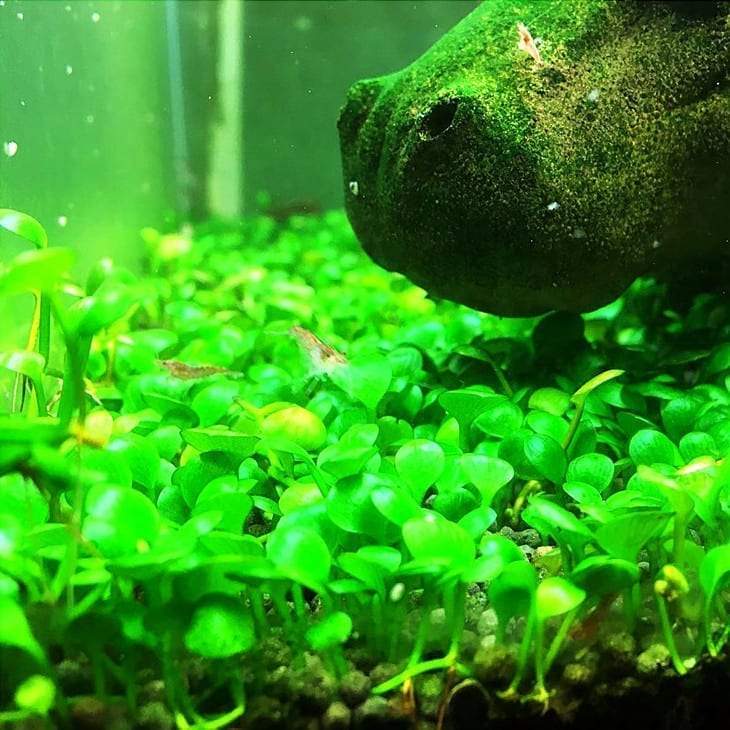
At a glance: Dwarf four-leaf clover care
Compiled reference information. Review the care notes and original sources below.
What temperature is listed for Dwarf four-leaf clover?
The compiled profile lists 18.0–28.0 °C for Dwarf four-leaf clover (Marsilea hirsuta). Check the original sources below for context and differing recommendations.
What tank size is listed for Dwarf four-leaf clover?
The profile lists a minimum tank volume of 5.0 US gallons (20.0 liters). Volume alone does not establish suitability; consider dimensions, group size and other inhabitants alongside the full care notes.
What pH is listed for Dwarf four-leaf clover?
The compiled profile lists a pH of 5.0–7.5. Review the cited care sources alongside the other water parameters in this profile.
Natural habitat
Marsilea hirsuta, commonly known as Dwarf Four Leaf Clover, is found primarily in marshy areas of Australia. This species thrives in both submerged and emersed conditions, adapting its leaf shape to the environment. Underwater, it develops ovate leaflets that mimic the appearance of Glossostigma, while above water, it presents with clover-shaped leaflets. The plant is deemed easy to cultivate and minimal maintenance is required once established.
Where they are found
Indigenous to Australia, Marsilea hirsuta is commonly found in temperate regions. It flourishes in areas with soft water, demonstrating its adaptation to naturally occurring freshwater environments where water hardness does not exceed moderate levels.
Aquarium care
In aquarium settings, providing a well-lit area along with nutrients in the substrate will aid in the growth of this plant, though it is not required to use supplemental CO2. Regular maintenance includes trimming to control growth and remove any decaying leaves.
Feeding
Marsilea hirsuta does not have specific dietary needs as it primarily absorbs nutrients through its roots and leaves from the water column. To keep the plant healthy, it is beneficial to maintain balanced water conditions, including adequate CO2 and nutrient levels, to promote moderate growth rates.
Compatibility
This plant is considered community safe and pairs well with a variety of freshwater species, providing a lush, green foreground that complements many tank setups.
Breeding
Marsilea hirsuta propagates effectively through runners or stolons, which extend across the substrate, creating new clover-shaped leaves. To enhance its spread, ensure adequate spacing between initial clumps to allow runners to connect naturally over time.
Sources
Compiled from multiple independent care sheets — not copied from a single site.