Catalog / plants / Marimo moss ball
plant
Marimo moss ball
Aegagropila linnaei
Wild range: East Asia (Asia)
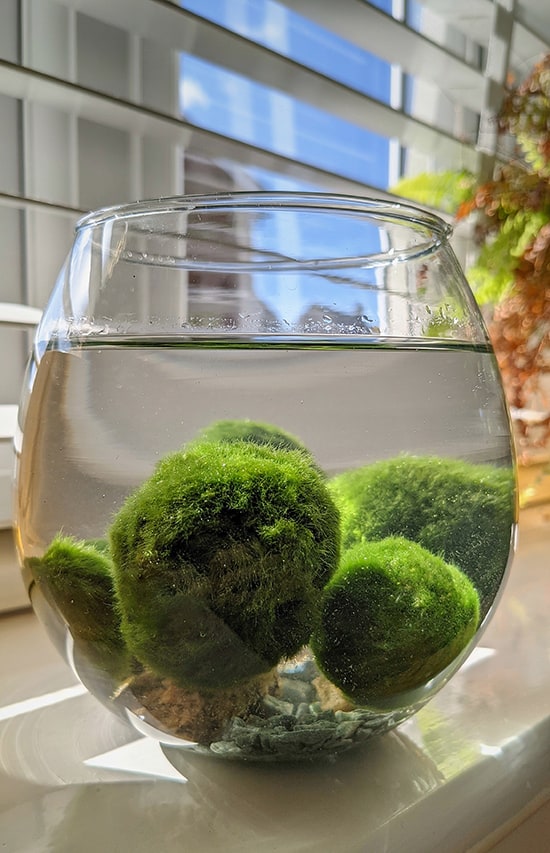
At a glance: Marimo moss ball care
Compiled reference information. Review the care notes and original sources below.
What temperature is listed for Marimo moss ball?
The compiled profile lists 10.0–25.0 °C for Marimo moss ball (Aegagropila linnaei). Check the original sources below for context and differing recommendations.
What tank size is listed for Marimo moss ball?
The profile lists a minimum tank volume of 1.3 US gallons (5.0 liters). Volume alone does not establish suitability; consider dimensions, group size and other inhabitants alongside the full care notes.
What pH is listed for Marimo moss ball?
The compiled profile lists a pH of 6.0–8.0. Review the cited care sources alongside the other water parameters in this profile.
Natural habitat
Marimo moss balls thrive in cold, clear, nutrient-poor oligotrophic lakes, particularly in Lake Akan, Japan. They form dense, spherical clumps due to natural tumbling in lakebed currents and are protected as a national treasure in their native habitat.
Where they are found
These moss balls are native to Lake Akan in Japan and can also be found in parts of Iceland and Europe. They are culturally significant in Japan, having been designated as a national treasure, and in Iceland, they are protected due to their endangered status.
Aquarium care
For optimal care in aquariums, Marimo Moss Balls need clean, oxygen-rich water with minimal currents. Weekly water changes with dechlorinated water can help maintain their health. They should be protected from direct sunlight as it can cause browning and damage. Marimo can be kept floating or placed on a substrate like gravel or sand, but they thrive best without soil.
Feeding
Marimo do not require fertilizers or nutrient-rich water; they absorb nutrients directly from the water. Elevated levels of nitrates and phosphates can harm their health and encourage algae growth.
Compatibility
Marimo Moss Balls are compatible with most freshwater fish and invertebrates. Their gentle nature and low light requirements make them suitable tank mates in community aquariums. However, care should be taken not to introduce heavy current fish or aggressive species that might disturb their placement or shape.
Breeding
Marimos can reproduce through fragmentation, where larger balls may divide into smaller ones or form baby balls that later detach. This natural propagation can help create a colony of marimos in an aquarium setting.
Sources
Compiled from multiple independent care sheets — not copied from a single site.