Catalog / fish / Marbled hatchetfish
fish · Gasteropelecidae
Marbled hatchetfish
Carnegiella strigata
Wild range: Amazon Basin (South America)
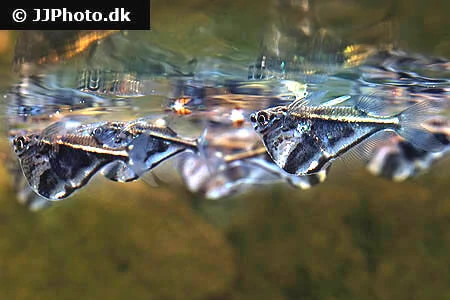
At a glance: Marbled hatchetfish care
Compiled reference information. Review the care notes and original sources below.
What temperature is listed for Marbled hatchetfish?
The compiled profile lists 24.0–28.0 °C for Marbled hatchetfish (Carnegiella strigata). Check the original sources below for context and differing recommendations.
What tank size is listed for Marbled hatchetfish?
The profile lists a minimum tank volume of 20.0 US gallons (75.0 liters). Volume alone does not establish suitability; consider dimensions, group size and other inhabitants alongside the full care notes.
What pH is listed for Marbled hatchetfish?
The compiled profile lists a pH of 5.8–7.5. Review the cited care sources alongside the other water parameters in this profile.
Natural habitat
Hatchetfish inhabit shallow waters in the Amazon Basin, typically found in slow-moving streams and rivers. They prefer areas with plenty of submerged vegetation, which helps to provide cover and places to hide from predators.
Where they are found
Found primarily in the Amazon basin, the Marbled Hatchetfish is typically encountered in locations such as Brazil, Guyana, and Suriname, often in areas with vegetation that offers surface coverage.
Aquarium care
To care for Marbled Hatchetfish, it is essential to maintain a stable environment that replicates their natural habitat. This includes ensuring that the water is soft, slightly acidic, and has a gentle flow. A tight-fitting lid is crucial to prevent these active swimmers from jumping out.
Feeding
Feeding hatchetfish involves providing a varied diet that includes high-protein flake food, freeze-dried worms, and small live foods like daphnia or brine shrimp. They should be fed small amounts twice a day to avoid overfeeding.
Compatibility
Marbled Hatchetfish are best kept in a peaceful community tank with species that occupy different levels of the aquarium. Suitable tank mates include similar-sized tetras and corydoras catfish. Avoid aggressive or fast-swimming fish to ensure the hatchetfish are not outcompeted for food.
Breeding
Breeding can be quite challenging. They spawn by scattering eggs among fine-leaved plants near the water's surface. Once spawning occurs, adults should be removed to prevent them from consuming the eggs, which will hatch in a few days. Fry will require very small foods initially.
Sources
Compiled from multiple independent care sheets — not copied from a single site.