Catalog / invertebrates / Marbled dwarf shrimp
invertebrate · Atyidae
Marbled dwarf shrimp
Neocaridina palmata
Wild range: Southeast Asia (Asia)
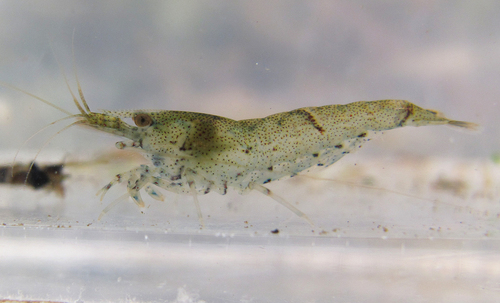
At a glance: Marbled dwarf shrimp care
Compiled reference information. Review the care notes and original sources below.
What temperature is listed for Marbled dwarf shrimp?
The compiled profile lists 18.0–29.0 °C for Marbled dwarf shrimp (Neocaridina palmata). Check the original sources below for context and differing recommendations.
What tank size is listed for Marbled dwarf shrimp?
The profile lists a minimum tank volume of 5.0 US gallons (19.0 liters). Volume alone does not establish suitability; consider dimensions, group size and other inhabitants alongside the full care notes.
What pH is listed for Marbled dwarf shrimp?
The compiled profile lists a pH of 6.5–8.0. Review the cited care sources alongside the other water parameters in this profile.
Natural habitat
Neocaridina shrimp thrive in a variety of water conditions, making them a hardy choice for beginners. They tolerate a wide range of pH levels, hardness, and temperatures, allowing them to be kept in standard tap water as long as it is dechlorinated.
Where they are found
The species is highly adaptable and can thrive in a variety of water conditions, although it originates from soft, slightly acidic water environments.
Aquarium care
Maintain at least 20 liters of water. Regular water changes of 15-20% every week are recommended. Avoid soft water by ensuring sufficient calcium content for shell health. Use live plants for better water quality and shrimp comfort.
Feeding
Neocaridina shrimp are primarily scavengers that feed on biofilm and algae. It’s advised to supplement their diet with high-quality sinking pellets, blanched vegetables, and other specialized foods 2-3 times a week to ensure they get adequate nutrition.
Compatibility
Cherry shrimp are best kept with small, peaceful fish or in species-only tanks. Avoid larger or aggressive fish as they can pose a threat to shrimp.
Breeding
Breeding Neocaridina shrimp requires a mature tank with stable water conditions. Females will carry eggs under their tails and require safe spaces to avoid predation from tank mates. A ratio of one male to several females is recommended for successful breeding.
Sources
Compiled from multiple independent care sheets — not copied from a single site.