Catalog / plants / Needle-leaf ludwigia
plant · Onagraceae
Needle-leaf ludwigia
Ludwigia arcuata
Wild range: Central America (North America)
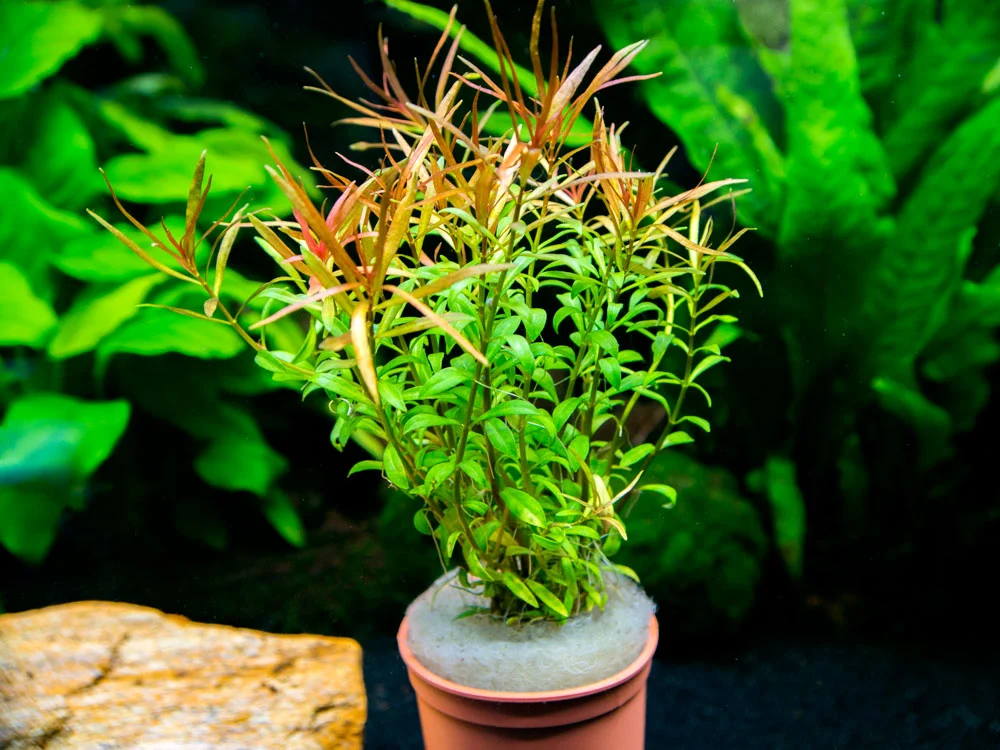
At a glance: Needle-leaf ludwigia care
Compiled reference information. Review the care notes and original sources below.
What temperature is listed for Needle-leaf ludwigia?
The compiled profile lists 20.0–28.0 °C for Needle-leaf ludwigia (Ludwigia arcuata). Check the original sources below for context and differing recommendations.
What tank size is listed for Needle-leaf ludwigia?
The profile lists a minimum tank volume of 13.2 US gallons (50.0 liters). Volume alone does not establish suitability; consider dimensions, group size and other inhabitants alongside the full care notes.
What pH is listed for Needle-leaf ludwigia?
The compiled profile lists a pH of 6.0–7.5. Review the cited care sources alongside the other water parameters in this profile.
Natural habitat
Needle Leaf Ludwigia prefers shallow waters with moderate-light exposure. It thrives in nutrient-rich substrates and can often be found in areas where water is still or gently flowing.
Where they are found
This species is present in a variety of freshwater ecosystems across Central and South America, favoring habitats with ample light and stable temperatures.
Aquarium care
In an aquarium setting, regular pruning is necessary to promote bushiness and maintain height. Placing the plant in mid to background positions will ensure its growth stays manageable and visually appealing.
Feeding
As a photoautotrophic plant, Ludwigia arcuata primarily derives nutrients from light and water. It can benefit from liquid fertilizers that cater to aquatic plants, especially those high in iron, potassium, and nitrogen.
Compatibility
Ludwigia arcuata is suitable for community tanks due to its peaceful nature. It can be kept with a variety of other freshwater species that prefer similar water parameters.
Breeding
Propagation is easily done through cuttings. Simply trim the shoots and replant them to encourage new growth.
Sources
Compiled from multiple independent care sheets — not copied from a single site.