Catalog / plants / Dwarf ambulia
plant
Dwarf ambulia
Limnophila sessiliflora
Wild range: Southeast Asia (Asia)
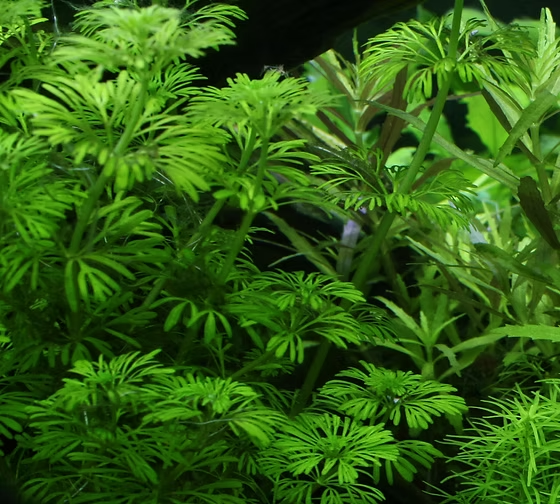
At a glance: Dwarf ambulia care
Compiled reference information. Review the care notes and original sources below.
What temperature is listed for Dwarf ambulia?
The compiled profile lists 20.0–28.0 °C for Dwarf ambulia (Limnophila sessiliflora). Check the original sources below for context and differing recommendations.
What tank size is listed for Dwarf ambulia?
The profile lists a minimum tank volume of 2.6 US gallons (10.0 liters). Volume alone does not establish suitability; consider dimensions, group size and other inhabitants alongside the full care notes.
What pH is listed for Dwarf ambulia?
The compiled profile lists a pH of 5.5–7.5. Review the cited care sources alongside the other water parameters in this profile.
Natural habitat
Limnophila sessiliflora typically thrives in freshwater environments in Southeast Asia. It can grow abundantly in slow-moving water bodies like rivers and marshes, often forming lush underwater meadows.
Where they are found
This plant is commonly found in freshwater habitats across Southeast Asia, particularly in regions of Thailand and Vietnam, and is favored for its adaptability to varying water conditions and lighting levels.
Aquarium care
Limnophila sessiliflora requires a well-lit aquarium with a nutrient-rich substrate for optimal growth. Adding CO2 can enhance its growth rates and prevent legginess. Regular trimming will help maintain the shape and promote fuller growth. It prefers gentle water flow and can adapt to a variety of freshwater conditions, making it suitable for community tanks with many peaceful species.
Feeding
Nutrient-rich substrates or regular applications of fertilizers can greatly enhance the growth and color of this plant. It is also capable of absorbing nitrates, which helps in controlling algae.
Compatibility
Limnophila sessiliflora is a peaceful plant that can coexist well with various community fish, shrimp, and snails. It is important to avoid placing it alongside aggressive species that may uproot or damage it during foraging.
Breeding
Propagation is achieved through cutting or by allowing it to send out runners. Cuttings can be re-planted for further growth, making it easy to propagate in an aquarium setting.
Sources
Compiled from multiple independent care sheets — not copied from a single site.