Catalog / fish / Leopard betta
fish · Osphronemidae
Leopard betta
Betta pardalotos
Wild range: Southeast Asia (Asia)
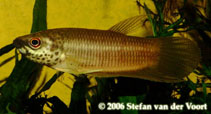
At a glance: Leopard betta care
Compiled reference information. Review the care notes and original sources below.
What temperature is listed for Leopard betta?
The compiled profile lists 22.0–28.0 °C for Leopard betta (Betta pardalotos). Check the original sources below for context and differing recommendations.
What tank size is listed for Leopard betta?
The profile lists a minimum tank volume of 2.5 US gallons (9.5 liters). Volume alone does not establish suitability; consider dimensions, group size and other inhabitants alongside the full care notes.
What pH is listed for Leopard betta?
The compiled profile lists a pH of 4.0–7.8. Review the cited care sources alongside the other water parameters in this profile.
Natural habitat
Betta fish are native to the shallow waters of Southeast Asia, commonly found in rice paddies, floodplains, and slow-moving streams. They thrive in warm conditions with a variety of aquatic plants that provide hiding spots and security.
Where they are found
This species appears to be endemic to the Musi River basin, which is characterized by a network of small, slow-flowing rivers. Its habitat is likely influenced by the surrounding rainforest, providing a rich environment filled with decaying leaves and other organic materials that contribute to water quality.
Aquarium care
This species thrives in a well-decorated aquarium with light filtration and plants that can adapt to low light. The tank should contain hiding spots and be well-covered, allowing for humid air above the water surface.
Feeding
Betta fish are carnivorous and require a diet high in protein. Specialized betta pellets or frozen foods like bloodworms and brine shrimp are excellent choices for their diet.
Compatibility
This species is best kept alone or with very peaceful companions to avoid bullying from more aggressive fish. Subdued tankmates that inhabit similar environments are recommended.
Breeding
Breeding Betta pardalotos involves the male constructing a bubble nest at the water's surface. The female is best introduced after the nest is built. The male will display and entice the female to spawn, during which fertilized eggs will be collected in the nest. After spawning, the female should be removed to prevent aggression.
Sources
Compiled from multiple independent care sheets — not copied from a single site.