Catalog / fish / Least killifish
fish · Poeciliidae
Least killifish
Heterandria formosa
Wild range: Southeast United States (North America)
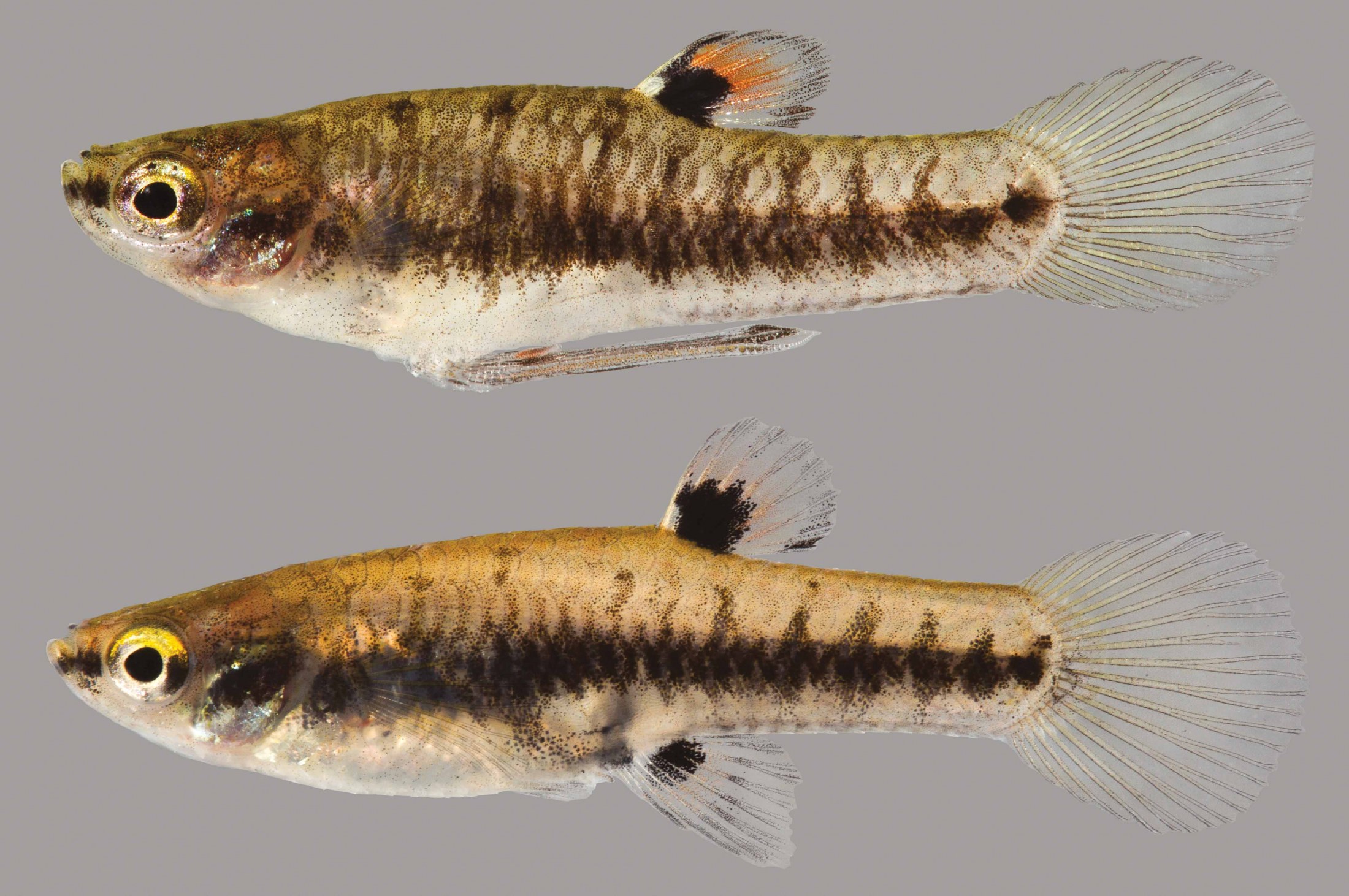
At a glance: Least killifish care
Compiled reference information. Review the care notes and original sources below.
What temperature is listed for Least killifish?
The compiled profile lists 18.9–26.0 °C for Least killifish (Heterandria formosa). Check the original sources below for context and differing recommendations.
What tank size is listed for Least killifish?
The profile lists a minimum tank volume of 10.0 US gallons (37.9 liters). Volume alone does not establish suitability; consider dimensions, group size and other inhabitants alongside the full care notes.
What pH is listed for Least killifish?
The compiled profile lists a pH of 6.5–8.0. Review the cited care sources alongside the other water parameters in this profile.
Natural habitat
The Least Killifish is native to freshwater habitats in Florida and its nearby regions. It thrives in shallow waters with plenty of vegetation, often found in ditches, marshes, and swamps.
Where they are found
This species is common throughout the southeastern United States, including states like Florida, North Carolina, and Louisiana. It thrives in subtropical climates and occasionally inhabits brackish waters, although it prefers freshwater conditions.
Aquarium care
In aquarium settings, the least killifish should be kept in groups of at least five in a spacious tank of at least 40 liters. A ratio of three females to every male is recommended to balance the polygamous behavior of the males, which can become oppressive to females. Stressed individuals can be prone to illness, so providing a densely planted environment is essential to allow for retreat and breeding.
Feeding
These fish accept a variety of foods, including flake food, powdered fry food, frozen foods, and live food like microworms and baby brine shrimp. They are not picky eaters and will readily consume whatever is offered.
Compatibility
Suitable for community tanks, the least killifish cohabitate well with other peaceful species of similar size. However, they should not be kept with larger fish or aggressive species that could prey upon them. Their peaceful demeanor creates no significant behavioral issues in community settings.
Breeding
This species reproduces easily in home aquariums and is a superfetative livebearer, allowing females to carry multiple broods of embryos simultaneously. The fry are typically born in small clutches at intervals, and caring for both adults and young can enhance breeding success.
Sources
Compiled from multiple independent care sheets — not copied from a single site.