fish · Cichlidae
Kribensis
Pelvicachromis pulcher
Wild range: West Africa (Africa)
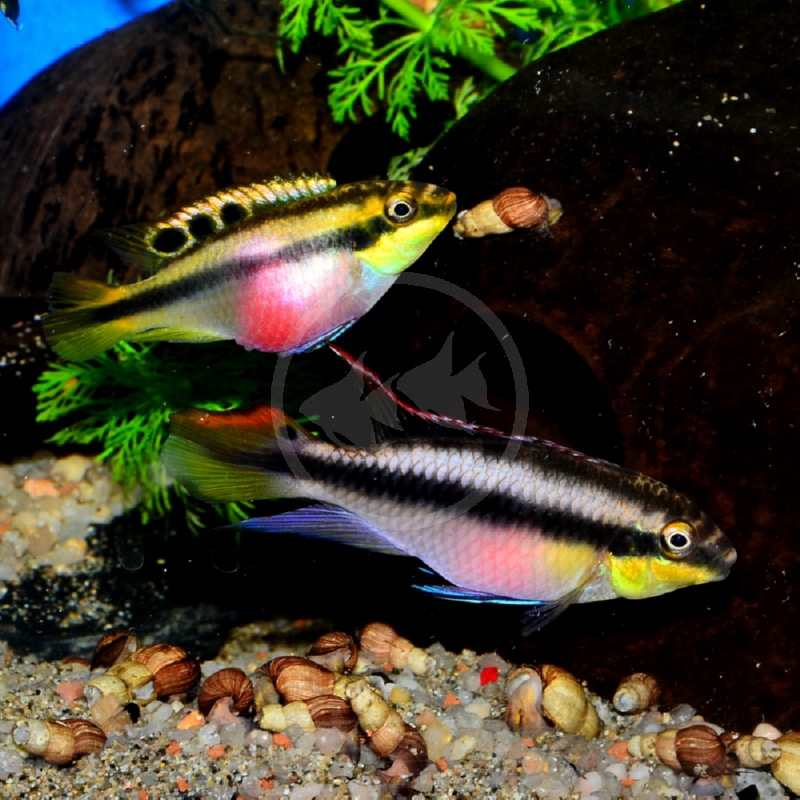
At a glance: Kribensis care
Compiled reference information. Review the care notes and original sources below.
What temperature is listed for Kribensis?
The compiled profile lists 24.0–28.0 °C for Kribensis (Pelvicachromis pulcher). Check the original sources below for context and differing recommendations.
What tank size is listed for Kribensis?
The profile lists a minimum tank volume of 26.4 US gallons (100.0 liters). Volume alone does not establish suitability; consider dimensions, group size and other inhabitants alongside the full care notes.
What pH is listed for Kribensis?
The compiled profile lists a pH of 6.0–8.0. Review the cited care sources alongside the other water parameters in this profile.
Natural habitat
The krib, or Pelvicachromis pulcher, is commonly found in the freshwater environments of the Niger Delta and surrounding areas. They thrive in regions with dense vegetation, where they can find cover and breeding sites.
Where they are found
This species is commonly found in Nigeria and parts of Cameroon, typically in habitats rich in aquatic vegetation that help provide cover and breeding spaces.
Aquarium care
Kribs are adaptable but thrive best in a densely planted aquarium that includes driftwood and rocks for hiding. Regular water changes and a varied diet will keep them healthy.
Feeding
Kribensis are omnivorous and should be fed a varied diet consisting of quality flakes, pellets, and occasional live or frozen foods such as brine shrimp and daphnia to ensure optimal health and coloration.
Compatibility
Kribensis can be kept with other non-aggressive species of similar size. Avoid smaller species like Guppies, which may be seen as food. Suitable tank mates include smaller cichlids and livebearers like Mollies and Platies—just be cautious of the water salinity needs of livebearers.
Breeding
Breeding requires a cave-like structure for the female to lay eggs. Post-hatching, both parents share the burden of guarding and caring for their fry, which usually emerge as free-swimming individuals around four days after hatching.
Sources
Compiled from multiple independent care sheets — not copied from a single site.