plant · Hypnaceae
Java moss
Taxiphyllum barbieri
Wild range: Southeast Asia (Asia)
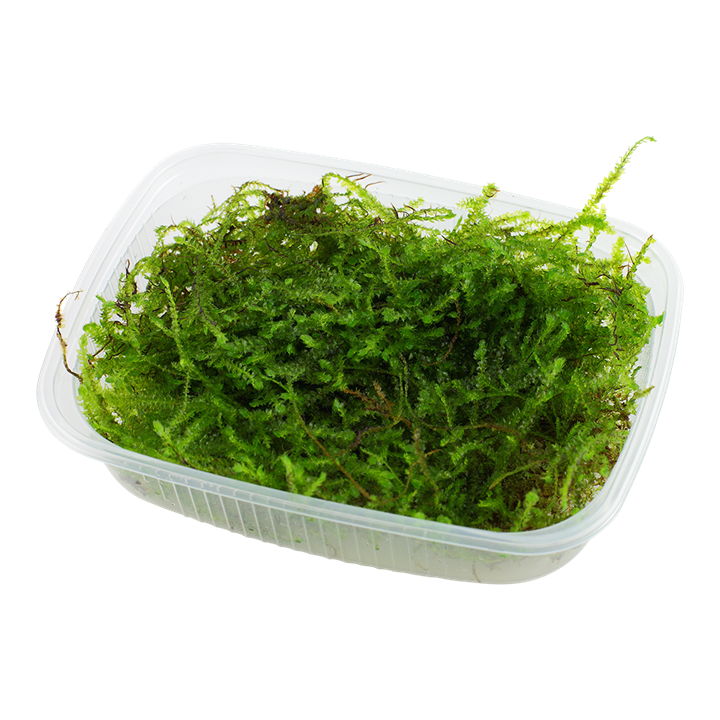
At a glance: Java moss care
Compiled reference information. Review the care notes and original sources below.
What temperature is listed for Java moss?
The compiled profile lists 15.0–30.0 °C for Java moss (Taxiphyllum barbieri). Check the original sources below for context and differing recommendations.
What tank size is listed for Java moss?
The profile lists a minimum tank volume of 2.6 US gallons (10.0 liters). Volume alone does not establish suitability; consider dimensions, group size and other inhabitants alongside the full care notes.
What pH is listed for Java moss?
The compiled profile lists a pH of 5.5–8.0. Review the cited care sources alongside the other water parameters in this profile.
Natural habitat
Java Moss (Taxiphyllum barbieri) thrives in various environments and is commonly found attached to hard surfaces in freshwater rivers and streams. Its adaptability allows it to flourish in both cold and tropical water settings.
Where they are found
Commonly found in slow-moving rivers and streams, Java moss can adapt to a range of water conditions, making it highly versatile for aquarists.
Aquarium care
Java Moss is one of the easiest aquatic plants to care for. It can be trimmed to control growth and should be cleaned regularly to prevent debris accumulation.
Feeding
Java Moss does not require direct feeding as it absorbs nutrients from the water. It provides excellent habitat for microorganisms, which serve as a food source for shrimp and fry.
Compatibility
Java Moss is safe for all types of fish and invertebrates, making it a perfect addition to community tanks. Its structure provides excellent cover for fry and shrimp.
Breeding
This moss is excellent for breeding fish, as it protects eggs from predation and offers a safe environment for fry to grow in.
Sources
Compiled from multiple independent care sheets — not copied from a single site.