Catalog / plants / Windelov java fern
plant · Polypodiaceae
Windelov java fern
Microsorum pteropus 'Windelov'
Wild range: Southeast Asia (Asia)
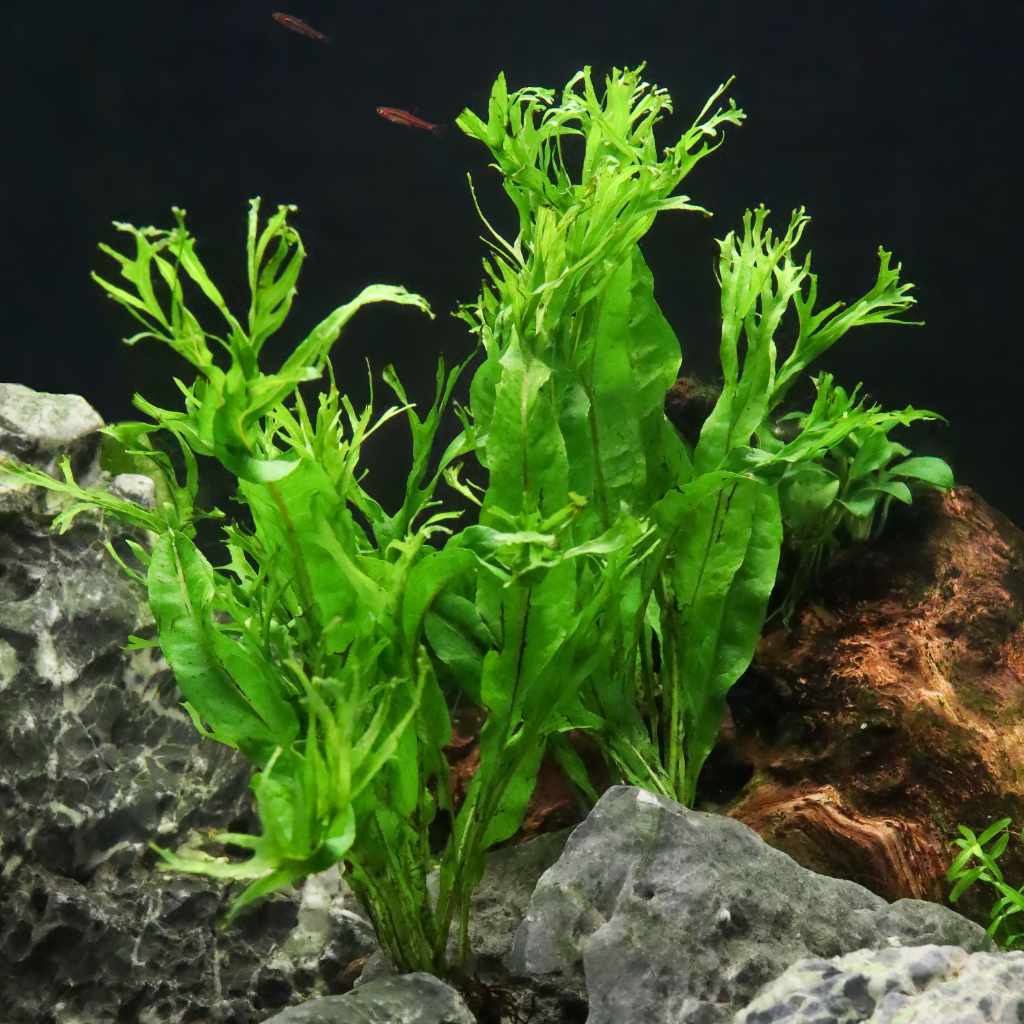
At a glance: Windelov java fern care
Compiled reference information. Review the care notes and original sources below.
What temperature is listed for Windelov java fern?
The compiled profile lists 20.0–28.0 °C for Windelov java fern (Microsorum pteropus 'Windelov'). Check the original sources below for context and differing recommendations.
What tank size is listed for Windelov java fern?
The profile lists a minimum tank volume of 5.0 US gallons (20.0 liters). Volume alone does not establish suitability; consider dimensions, group size and other inhabitants alongside the full care notes.
What pH is listed for Windelov java fern?
The compiled profile lists a pH of 6.0–8.0. Review the cited care sources alongside the other water parameters in this profile.
Natural habitat
Java Fern Lace Windelov is commonly found in tropical freshwater environments, particularly in Southeast Asia. It often grows attached to submerged wood or rocks in rivers and streams, where it thrives under a range of water conditions.
Where they are found
This cultivar is bred in cultivation and not found in the wild as a unique entity, though its parent species is commonly found in tropical freshwater habitats across Southeast Asia.
Aquarium care
This plant is undemanding and requires minimal care. It can be attached to decorations in the aquarium, but its rhizome should never be buried beneath the substrate. Regular water changes and occasional fertilization will support its growth, although it can survive in a range of conditions.
Feeding
Fertilization is not critical for Java Fern, but a liquid fertilizer may be added occasionally to promote growth. Care should be taken to ensure that any fertilizer does not leach into the water in excess, as it may lead to algae blooms.
Compatibility
Java Fern Windelov is a peaceful plant that is compatible with almost all freshwater species, including community fish. Its chemical defenses against herbivorous fish make it less likely to be damaged.
Breeding
Propagation occurs naturally through vegetative means—new plantlets form on the mature plant, which can then be removed and replanted in the aquarium.
Sources
Compiled from multiple independent care sheets — not copied from a single site.