fish · Osphronemidae
Howong betta
Betta unimaculata
Wild range: Southeast Asia (Asia)
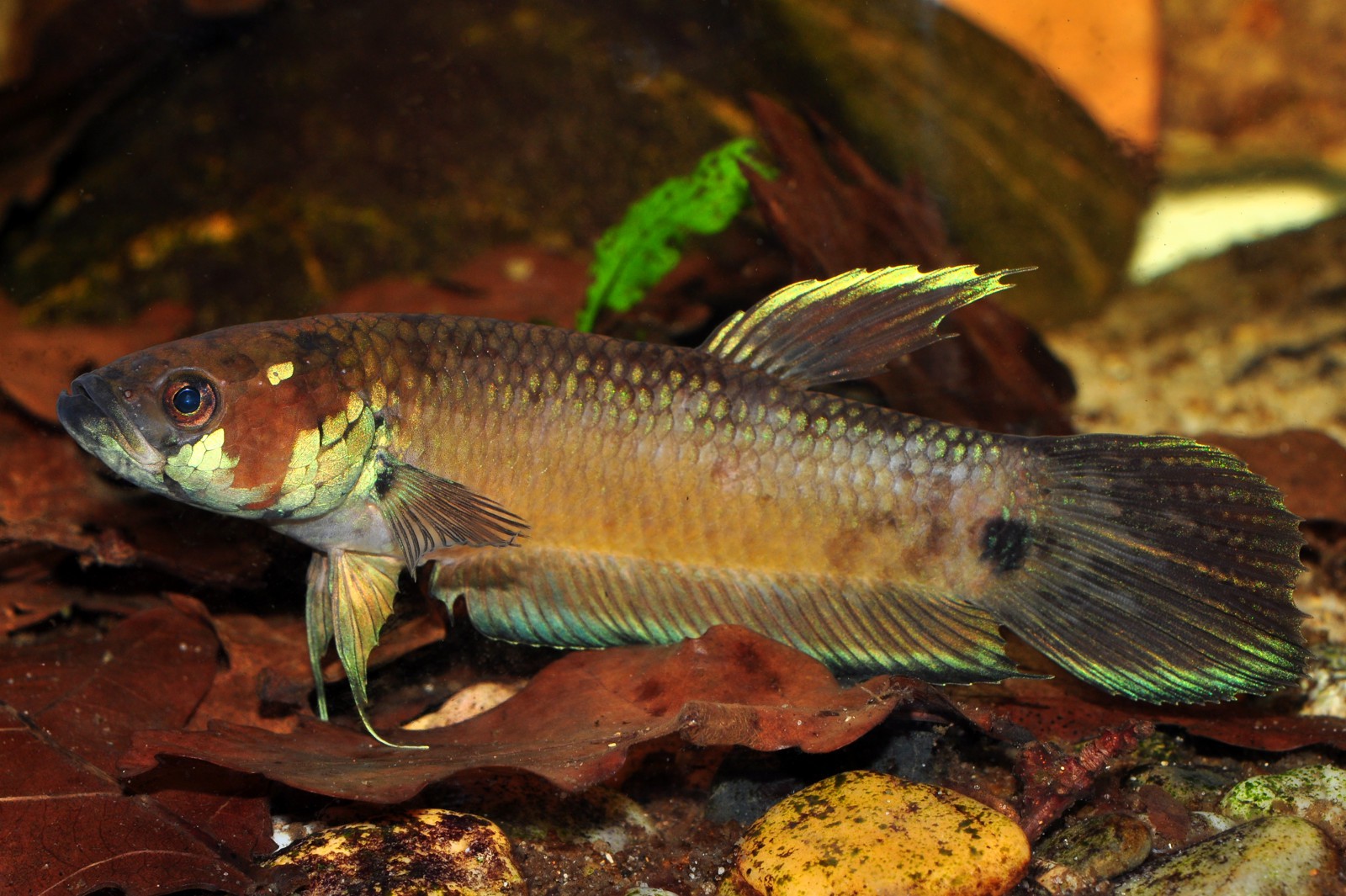
At a glance: Howong betta care
Compiled reference information. Review the care notes and original sources below.
What temperature is listed for Howong betta?
The compiled profile lists 21.0–30.0 °C for Howong betta (Betta unimaculata). Check the original sources below for context and differing recommendations.
What tank size is listed for Howong betta?
The profile lists a minimum tank volume of 5.0 US gallons (19.0 liters). Volume alone does not establish suitability; consider dimensions, group size and other inhabitants alongside the full care notes.
What pH is listed for Howong betta?
The compiled profile lists a pH of 6.0–8.0. Review the cited care sources alongside the other water parameters in this profile.
Natural habitat
Betta splendens is native to the shallow waters of Southeast Asia, particularly in regions such as Thailand, Cambodia, and Vietnam. They thrive in slow-moving waters like rice paddies, floodplains, and swamps, where there is ample vegetation and a substrate that allows for hiding.
Where they are found
This species is endemic to Indonesia, specifically limited to the upper Kayan and Howong drainages in Borneo, indicating a restricted geographic distribution that could be vulnerable to environmental changes and habitat degradation.
Aquarium care
Provide a minimum of a 5-gallon tank with a proper lid, heater, and a gentle filter. Regular water changes (25% weekly) are essential. Use dechlorinated water and maintain stable temperature and pH.
Feeding
Betta fish are omnivorous and should be fed a varied diet that includes high-quality pellets, flakes, and live or frozen foods such as bloodworms, brine shrimp, and daphnia. Overfeeding can lead to health issues, so portion control is important.
Compatibility
Bettas are aggressive towards their own kind, especially males. They can coexist with non-aggressive species that do not resemble them, such as Corydoras or Tetras.
Breeding
This species exhibits mouth brooding behavior, where the female carries fertilized eggs in her mouth until they become free-swimming fry. Suitable spawning conditions include a spacious and well-planted aquarium with soft, acidic water.
Sources
Compiled from multiple independent care sheets — not copied from a single site.