Catalog / invertebrates / Horned armour snail
invertebrate · Planorbidae
Horned armour snail
Brotia pagodula
Wild range: Southeast Asia (Asia)
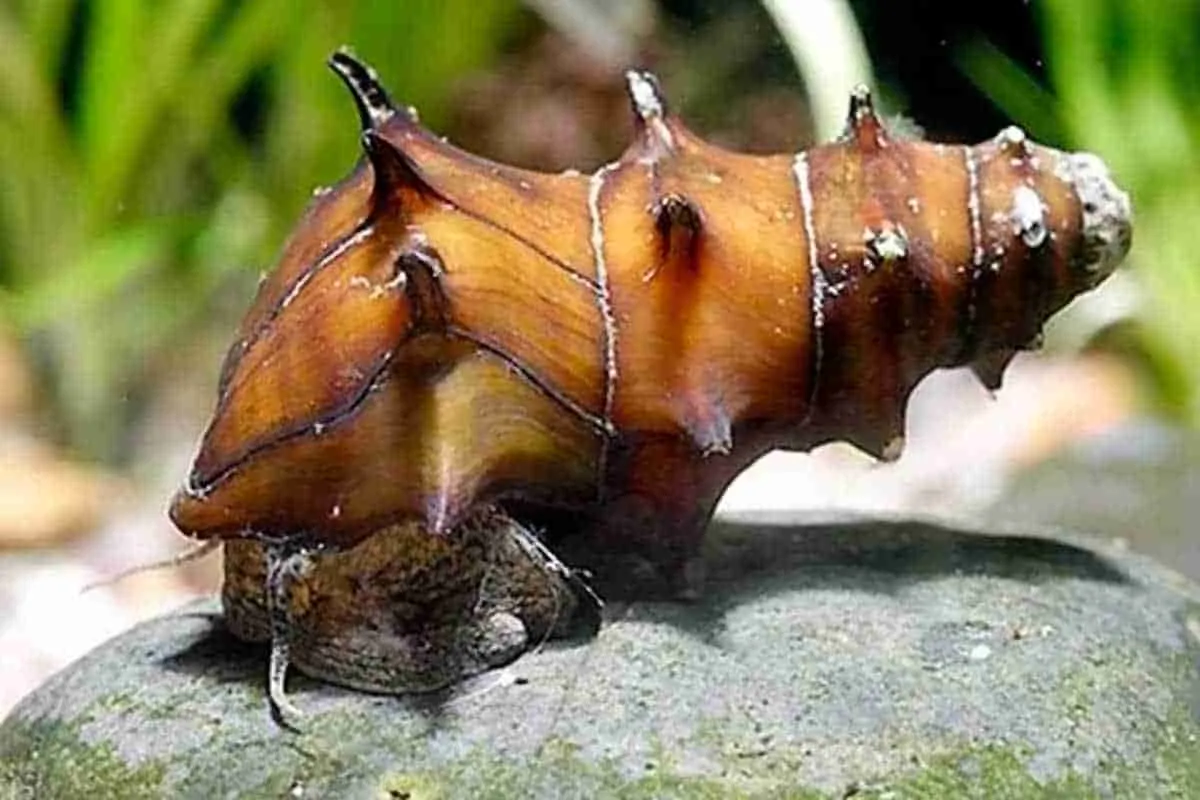
At a glance: Horned armour snail care
Compiled reference information. Review the care notes and original sources below.
What temperature is listed for Horned armour snail?
The compiled profile lists 20.0–31.1 °C for Horned armour snail (Brotia pagodula). Check the original sources below for context and differing recommendations.
What tank size is listed for Horned armour snail?
The profile lists a minimum tank volume of 5.0 US gallons (19.0 liters). Volume alone does not establish suitability; consider dimensions, group size and other inhabitants alongside the full care notes.
What pH is listed for Horned armour snail?
The compiled profile lists a pH of 6.5–8.0. Review the cited care sources alongside the other water parameters in this profile.
Natural habitat
Pagoda Snails inhabit freshwater rivers and streams in Southeast Asia, thriving in environments rich in aquatic plants that provide both food and shelter. They play a crucial role in the ecosystem by aiding in the decomposition of detritus and algae, fostering a healthy aquatic environment.
Where they are found
This species exhibits variation in shell appearance due to possible interbreeding within its genus, making it an interesting subject for study.
Aquarium care
Care for Horned Pagoda Snails is straightforward. Ensure the water parameters are suitable, and that they are provided with sufficient algae and other food sources to thrive.
Feeding
Pagoda Snails are herbivores, predominantly feeding on algae and decaying plant matter. Providing high-quality sinking pellets and blanched vegetables like zucchini and spinach enhances their diet. It's important to avoid overfeeding by providing small amounts they can consume within a few hours.
Compatibility
They are safe with most aquarium inhabitants and do not pose a threat to tank dynamics.
Breeding
Pagoda snails are viviparous, giving live birth rather than laying eggs. Breeding requires keeping several snails together due to a skewed male-to-female ratio.
Sources
Compiled from multiple independent care sheets — not copied from a single site.