Catalog / fish / Honey gourami
fish · Osphronemidae
Honey gourami
Trichogaster chuna
Wild range: South Asia (Asia)
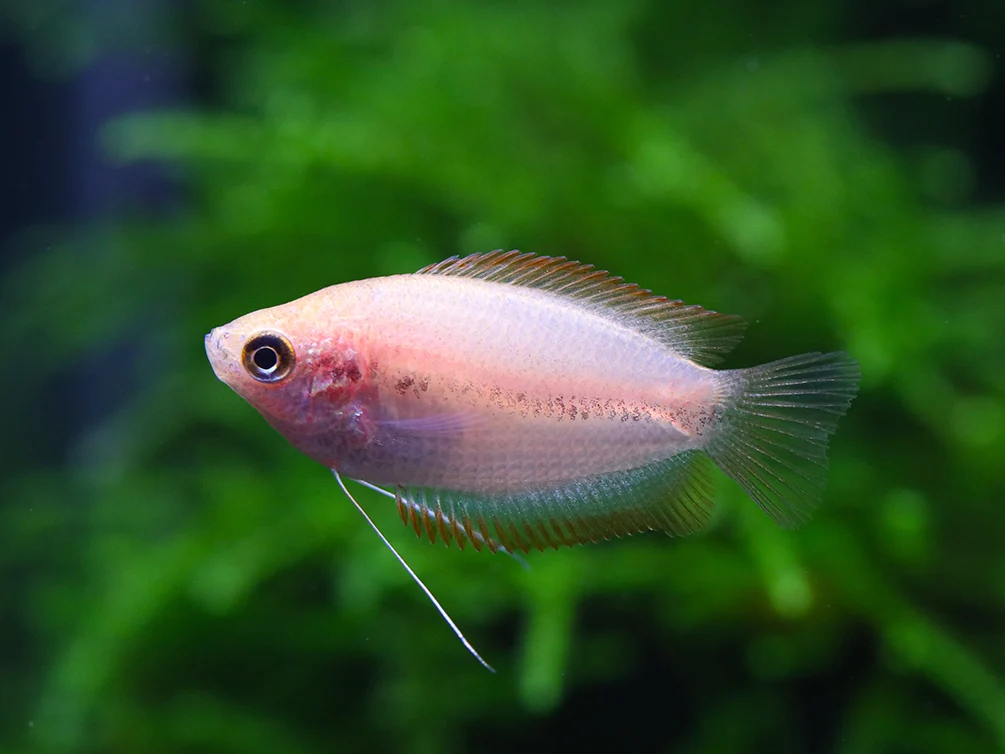
At a glance: Honey gourami care
Compiled reference information. Review the care notes and original sources below.
What temperature is listed for Honey gourami?
The compiled profile lists 22.0–28.0 °C for Honey gourami (Trichogaster chuna). Check the original sources below for context and differing recommendations.
What tank size is listed for Honey gourami?
The profile lists a minimum tank volume of 10.0 US gallons (37.9 liters). Volume alone does not establish suitability; consider dimensions, group size and other inhabitants alongside the full care notes.
What pH is listed for Honey gourami?
The compiled profile lists a pH of 6.0–8.0. Review the cited care sources alongside the other water parameters in this profile.
Natural habitat
Inhabits areas with dense vegetation found in stagnant and slow-moving waters, including ponds and ditches, often experiencing seasonal flooding. Wild Honey Gourami are usually found in water bodies with rich plant life, where they can find refuge and breed safely.
Where they are found
These fish are common in tranquil waters with ample plant coverage, which provides them with the security to breed and thrive.
Aquarium care
Honey Gouramis thrive in well-planted setups with plenty of surface cover. It's recommended to use a gentle filter and provide hiding places, like driftwood and plants, to create a shaded environment. Additionally, using dried leaf litter can help create a more natural habitat and support microbe colonies for fry.
Feeding
A varied diet consisting of quality flakes or pellets, supplemented with live, frozen, or freeze-dried foods, along with fresh vegetables, will ensure optimal health. This species is flexible and will accept a range of prepared foods but thrives on diversity.
Compatibility
This species is peaceful but should be kept with similarly-sized or less vigorous tankmates to prevent them from being bullied. It is recommended to keep groups of 4-6 individuals to encourage natural behavior and reduce stress.
Breeding
For breeding, raise the water temperature slightly and ensure plenty of surface cover for bubble nest building. After spawning, the female should be removed to prevent her from being harassed by the guarding male.
Sources
Compiled from multiple independent care sheets — not copied from a single site.