Catalog / fish / Glowlight rasbora
fish · Cyprinidae
Glowlight rasbora
Trigonostigma hengeli
Wild range: Southeast Asia (Asia)
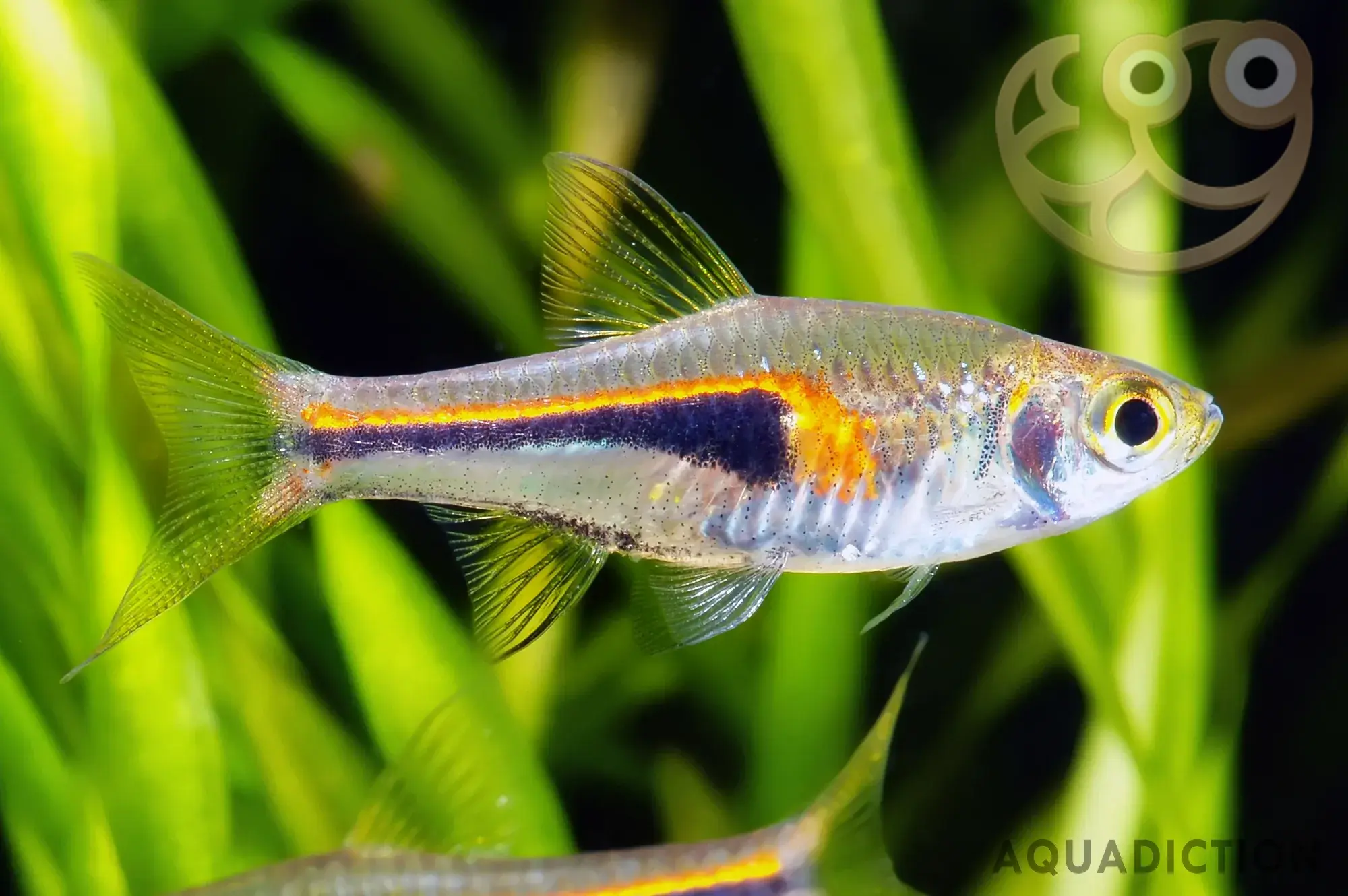
At a glance: Glowlight rasbora care
Compiled reference information. Review the care notes and original sources below.
What temperature is listed for Glowlight rasbora?
The compiled profile lists 21.7–28.0 °C for Glowlight rasbora (Trigonostigma hengeli). Check the original sources below for context and differing recommendations.
What tank size is listed for Glowlight rasbora?
The profile lists a minimum tank volume of 13.2 US gallons (50.0 liters). Volume alone does not establish suitability; consider dimensions, group size and other inhabitants alongside the full care notes.
What pH is listed for Glowlight rasbora?
The compiled profile lists a pH of 6.0–7.8. Review the cited care sources alongside the other water parameters in this profile.
Natural habitat
Hengeli Narrow Rasbora inhabit still, heavily vegetated waters in Southeast Asia, particularly in Thailand and Malaysia. These environments provide ample cover and food sources, supporting a diet that includes small live or frozen food.
Where they are found
Trigonostigma hengeli is native to Malaysia and Borneo, often inhabiting forested areas with shaded waters that are rich in leaf litter and plant matter.
Aquarium care
To care for Hengeli Narrow Rasbora, maintain a well-planted aquarium with stable water conditions, including a pH between 6.5 and 7.5. Use gentle filtration and create an environment similar to their natural habitat with driftwood and fine substrate.
Feeding
Glowlight Rasboras will thrive on a varied diet that includes high-quality flakes, pellet food, and occasional offerings of live or frozen foods such as daphnia or brine shrimp.
Compatibility
These fish are peaceful and best kept in community tanks with other small, non-aggressive species. Compatible species include other small rasboras, tetras, and corydoras. Avoid keeping them with larger, more aggressive fish, as they can become stressed.
Breeding
Breeding this species is a bit challenging as they scatter their eggs on the undersides of leaves, similar to Harlequin Rasboras. Ensure good water conditions and the right environment to encourage breeding.
Sources
Compiled from multiple independent care sheets — not copied from a single site.