Catalog / fish / Head-and-tail-light tetra
fish · Characidae
Head-and-tail-light tetra
Hemigrammus ocellifer
Wild range: Amazon Basin (South America)
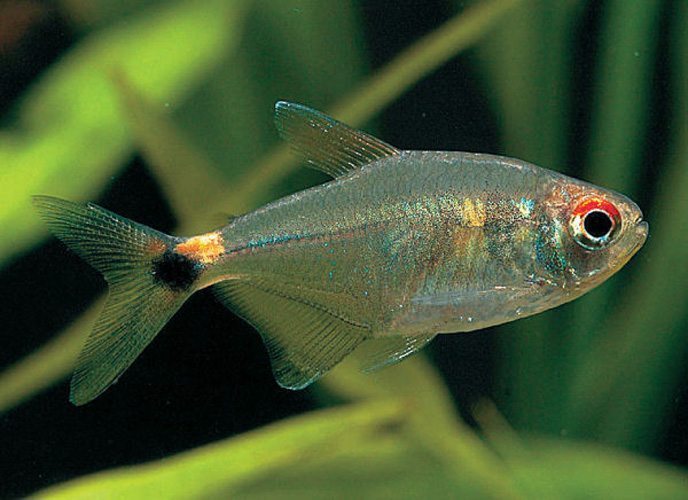
At a glance: Head-and-tail-light tetra care
Compiled reference information. Review the care notes and original sources below.
What temperature is listed for Head-and-tail-light tetra?
The compiled profile lists 22.0–27.0 °C for Head-and-tail-light tetra (Hemigrammus ocellifer). Check the original sources below for context and differing recommendations.
What tank size is listed for Head-and-tail-light tetra?
The profile lists a minimum tank volume of 20.0 US gallons (75.0 liters). Volume alone does not establish suitability; consider dimensions, group size and other inhabitants alongside the full care notes.
What pH is listed for Head-and-tail-light tetra?
The compiled profile lists a pH of 5.0–7.5. Review the cited care sources alongside the other water parameters in this profile.
Natural habitat
The head-and-taillight tetra inhabits coastal regions of slow-moving freshwater rivers, streams, lagoons, and floodplain lakes in South America. They prefer areas with sandy substratum and plant cover, often found in groups, benefiting from natural hiding places like driftwood and leaf litter.
Where they are found
This species is widely distributed throughout the Amazon River and its tributaries. The presence of floating plants and fine substrate is essential for their natural habitat.
Aquarium care
Not Available
Feeding
As omnivores, head-and-taillight tetras require a varied diet that includes high-quality flake foods as well as occasional live or frozen foods like daphnia, brine shrimp, and blackworms, ensuring a balanced nutrient intake for good health.
Compatibility
Not Available
Breeding
They are egg-layers that spawn in pairs or groups. Providing a well-planted breeding tank with a fine substrate can help in spawning. After spawning, remove adults as they may eat the eggs.
Sources
Compiled from multiple independent care sheets — not copied from a single site.