Catalog / invertebrates / Harlequin Sulawesi shrimp
invertebrate
Harlequin Sulawesi shrimp
Caridina woltereckae
Wild range: Sulawesi (Asia)
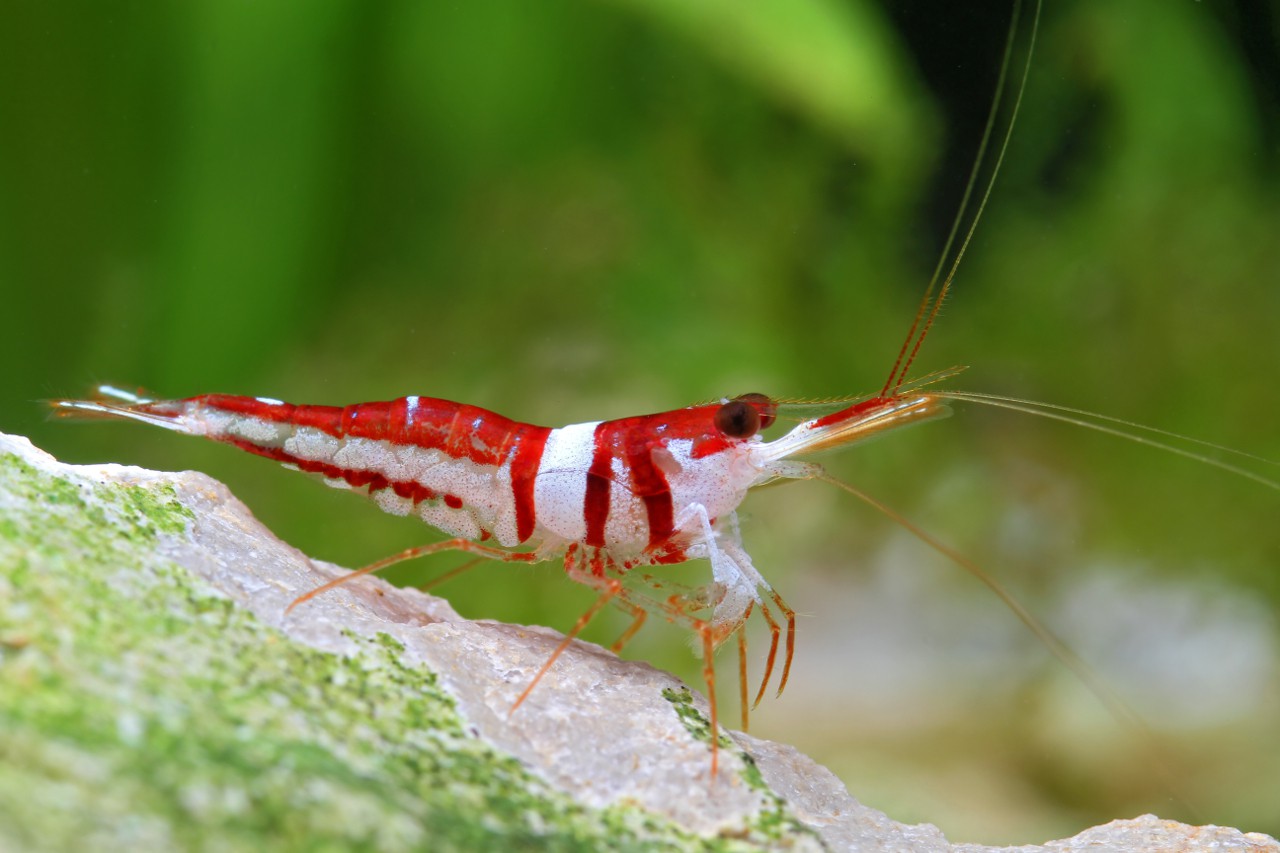
At a glance: Harlequin Sulawesi shrimp care
Compiled reference information. Review the care notes and original sources below.
What temperature is listed for Harlequin Sulawesi shrimp?
The compiled profile lists 26.0–30.0 °C for Harlequin Sulawesi shrimp (Caridina woltereckae). Check the original sources below for context and differing recommendations.
What tank size is listed for Harlequin Sulawesi shrimp?
The profile lists a minimum tank volume of 4.0 US gallons (15.0 liters). Volume alone does not establish suitability; consider dimensions, group size and other inhabitants alongside the full care notes.
What pH is listed for Harlequin Sulawesi shrimp?
The compiled profile lists a pH of 7.5–9.0. Review the cited care sources alongside the other water parameters in this profile.
Natural habitat
The Sulawesi Harlequin shrimp is native to the warm, alkaline lakes of Sulawesi, Indonesia. Its survival relies heavily on stable conditions similar to its natural habitat, which features high oxygen levels and minimal waste. These shrimp thrive in specific water parameters, making them unsuitable for casual aquarium setups.
Where they are found
The natural range of Sulawesi shrimp is limited to specific volcanic lakes in Sulawesi, where the unique mineral composition of the water supports their biological needs. The water is typically well-filtered and has a moderate to strong flow, allowing for oxygenation through natural currents.
Aquarium care
Setting up an aquarium for Cardinal shrimps involves preparing a tank that maintains stable high temperatures (27-28°C) and suitable water parameters (pH around 8.5, soft GH). It’s important to seed the aquarium with diatoms and algae prior to introducing the shrimps, as they rely heavily on biofilm for nourishment. Regular maintenance and careful water changes using a drip method are critical to prevent abrupt parameter shifts.
Feeding
Feeding should primarily consist of naturally occurring biofilm, algae films, and microorganisms. Supplementation with very small amounts of controlled food is necessary, but overfeeding must be avoided to prevent rapid degradation of water quality.
Compatibility
Cardinal shrimps are generally peaceful and can cohabit with other species that share similar water and dietary requirements. They thrive better in groups, encouraging social behaviors, but caution should be taken when introducing them to potential predators or overly aggressive tankmates.
Breeding
Successful breeding of Sulawesi shrimp depends on maintaining consistent water parameters, particularly temperature and pH. Berried females must be kept in a calm tank environment, away from aggressive tankmates, to facilitate the hatching of eggs into larvae that thrive in similar water conditions.
Sources
Compiled from multiple independent care sheets — not copied from a single site.