Catalog / fish / Harlequin rasbora
fish · Cyprinidae
Harlequin rasbora
Trigonostigma heteromorpha
Wild range: Southeast Asia (Asia)
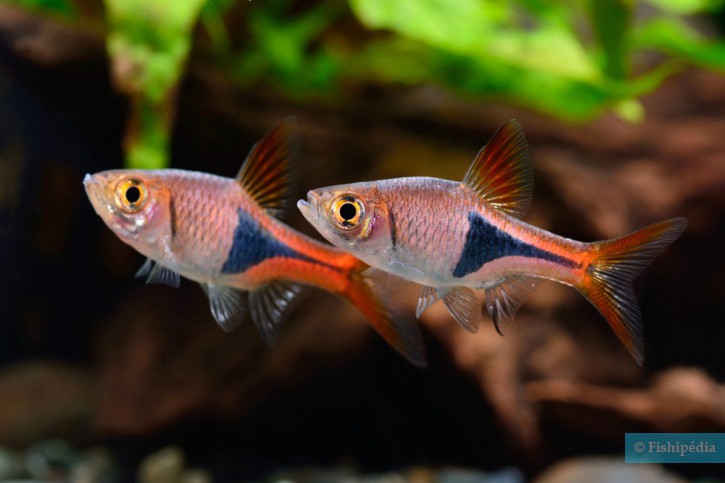
At a glance: Harlequin rasbora care
Compiled reference information. Review the care notes and original sources below.
What temperature is listed for Harlequin rasbora?
The compiled profile lists 22.0–26.0 °C for Harlequin rasbora (Trigonostigma heteromorpha). Check the original sources below for context and differing recommendations.
What tank size is listed for Harlequin rasbora?
The profile lists a minimum tank volume of 13.2 US gallons (50.0 liters). Volume alone does not establish suitability; consider dimensions, group size and other inhabitants alongside the full care notes.
What pH is listed for Harlequin rasbora?
The compiled profile lists a pH of 5.0–7.0. Review the cited care sources alongside the other water parameters in this profile.
Natural habitat
Harlequin rasboras thrive in dark, slightly acidic black-water environments. In the wild, they live in large shoals and rely on specific conditions of soft water, typically less than 3 °dH. They are often found among dense vegetation in their natural habitats.
Where they are found
This species is distributed across various regions including Indonesia, Malaysia, Singapore, and Thailand, where they inhabit slow-moving waters with abundant vegetation.
Aquarium care
To keep harlequin rasboras, ensure an aquarium of at least 54 liters with gentle water movement. They thrive in dark conditions with some vegetation for hiding. A layer of peat or the addition of peat extracts can help maintain their preferred water quality.
Feeding
Harlequin Rasboras thrive on a varied diet that includes high-quality flake food, granules, and small frozen options like mosquito larvae, brine shrimp, and daphnia. Feeding should be done multiple times a day with small portions to prevent overfeeding.
Compatibility
Harlequin Rasboras are peaceful and can be housed in a community tank. They coexist well with other small to medium-sized species that share similar water requirements. Keeping them in groups of at least six enhances their natural behavior and reduces stress among individuals.
Breeding
Breeding requires a carefully monitored environment, as harlequin rasboras lay their eggs on the underside of broadleaf plants. Ideal breeding conditions involve slightly acidic water with low hardness, making them challenging for beginners.
Sources
Compiled from multiple independent care sheets — not copied from a single site.