fish · Doradidae
Hancock's catfish
Amblydoras hancockii
Wild range: Peruvian Amazon (trade fish typically Amblydoras nauticus) (South America)
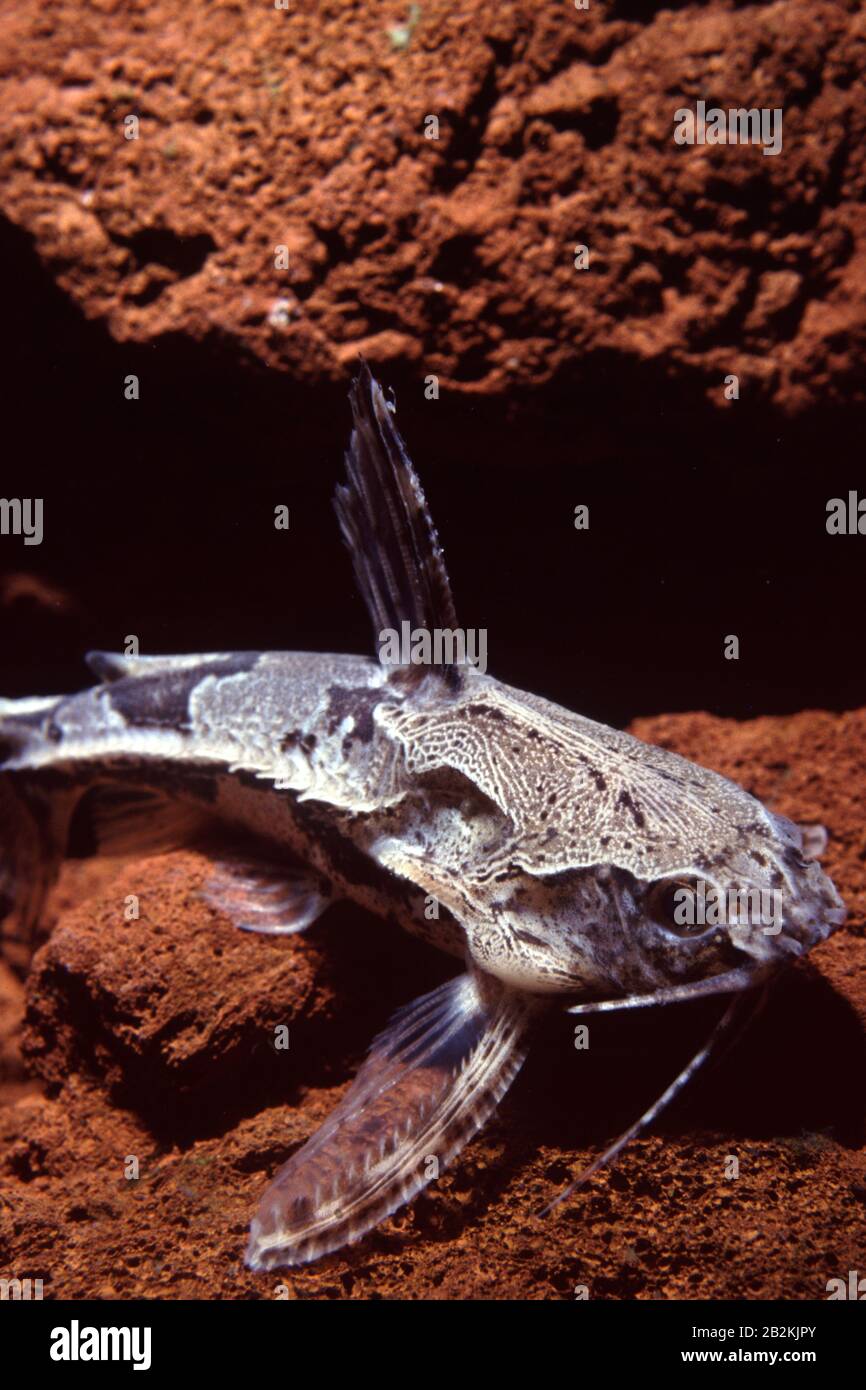
At a glance: Hancock's catfish care
Compiled reference information. Review the care notes and original sources below.
What temperature is listed for Hancock's catfish?
The compiled profile lists 23.0–28.0 °C for Hancock's catfish (Amblydoras hancockii). Check the original sources below for context and differing recommendations.
What tank size is listed for Hancock's catfish?
The profile lists a minimum tank volume of 14.0 US gallons (54.0 liters). Volume alone does not establish suitability; consider dimensions, group size and other inhabitants alongside the full care notes.
What pH is listed for Hancock's catfish?
The compiled profile lists a pH of 5.5–7.5. Review the cited care sources alongside the other water parameters in this profile.
Where they are found
Taxonomy / trade note: Seriously Fish treats Amblydoras hancockii as synonymous with Platydoras hancockii, and states that fish commonly sold as Hancock's catfish / A. hancockii (also blue-eyed catfish) are usually Amblydoras nauticus. This page keeps Amblydoras hancockii as the listed scientific name; husbandry follows the trade animal typically sold under that label.
Aquarium care
Hardy doradid ('talking'/Hancock's catfish in trade) for a densely planted, dimly lit tank with soft sand and many hides. Nocturnal—often unseen by day. Keep at least three. Offer catfish pellets/algae wafers plus live/frozen foods at lights-out. Mind sharp spines when netting.
Feeding
Accepts proprietary catfish pellets, algae wafers, and live/frozen foods; feed primarily after lights out.
Compatibility
Peaceful with medium tetras, peaceful cichlids, Corydoras, and loricariids; may eat very small fishes. Prefers conspecific company.
Sources
Compiled from multiple independent care sheets — not copied from a single site.