Catalog / fish / Half-black betta
fish · Osphronemidae
Half-black betta
Betta dimidiata
Wild range: Southeast Asia (Asia)
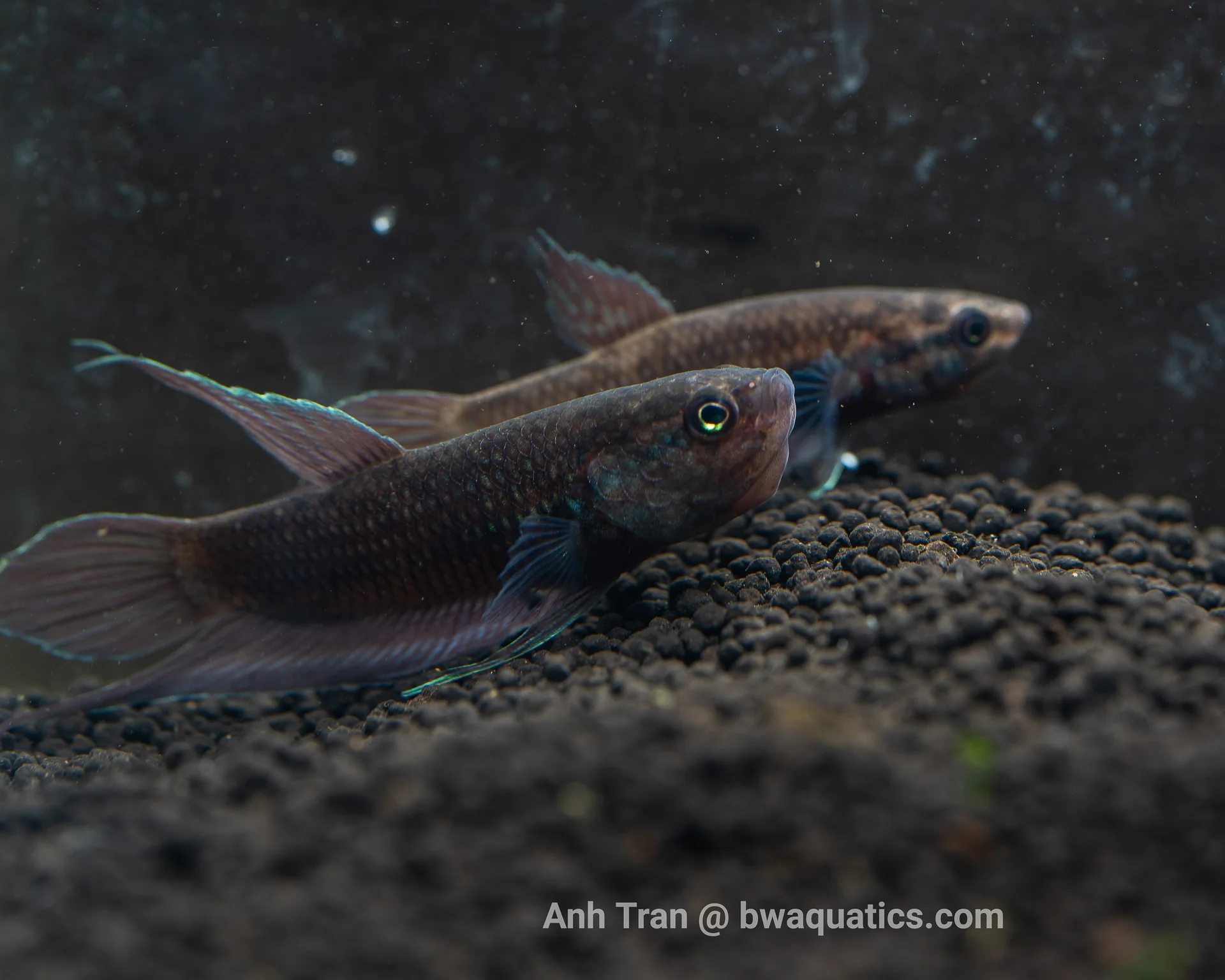
At a glance: Half-black betta care
Compiled reference information. Review the care notes and original sources below.
What temperature is listed for Half-black betta?
The compiled profile lists 20.5–28.0 °C for Half-black betta (Betta dimidiata). Check the original sources below for context and differing recommendations.
What tank size is listed for Half-black betta?
The profile lists a minimum tank volume of 1.0 US gallons (3.8 liters). Volume alone does not establish suitability; consider dimensions, group size and other inhabitants alongside the full care notes.
What pH is listed for Half-black betta?
The compiled profile lists a pH of 6.5–8.0. Review the cited care sources alongside the other water parameters in this profile.
Natural habitat
Black Orchid Bettas are native to freshwaters in Southeast Asia, primarily found in the Mekong and Phraya river basins in Thailand. They inhabit stagnant, shallow waters, adapting well to environments with limited oxygen.
Where they are found
These fish are not found in puddles, as commonly believed, but prefer larger bodies of water that allow them to exhibit less territorial behavior compared to their confined aquarium environments.
Aquarium care
Maintain a gentle filtration system to prevent strong currents, and ensure regular water changes to keep the habitat clean. Provide plenty of hiding spots and decorations to reduce stress.
Feeding
These fish are omnivores and thrive on a varied diet that includes high-quality pellets, live or frozen foods like bloodworms and mosquito larvae. It's critical to avoid overfeeding to prevent health issues; a feeding routine of once or twice daily is recommended, allowing a fasting day each week.
Compatibility
Male bettas are territorial and should not be placed with other males or similar-looking fish. They can coexist with peaceful community fish, but females may be kept together in groups if the tank is large enough.
Breeding
Breeding Betta fish involves placing a male and a female in a breeding tank prepared with hiding spots and plants. After spawning, the female should be removed to prevent aggression from the male, who will care for the eggs and fry.
Sources
Compiled from multiple independent care sheets — not copied from a single site.