Catalog / fish / Salt-and-pepper corydoras
fish · Callichthyidae
Salt-and-pepper corydoras
Corydoras habrosus
Wild range: Venezuela and Colombia (South America)
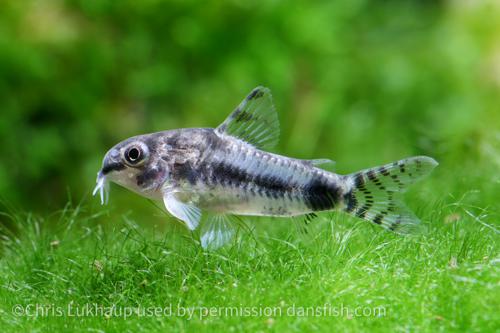
At a glance: Salt-and-pepper corydoras care
Compiled reference information. Review the care notes and original sources below.
What temperature is listed for Salt-and-pepper corydoras?
The compiled profile lists 21.0–26.0 °C for Salt-and-pepper corydoras (Corydoras habrosus). Check the original sources below for context and differing recommendations.
What tank size is listed for Salt-and-pepper corydoras?
The profile lists a minimum tank volume of 10.0 US gallons (38.0 liters). Volume alone does not establish suitability; consider dimensions, group size and other inhabitants alongside the full care notes.
What pH is listed for Salt-and-pepper corydoras?
The compiled profile lists a pH of 5.5–7.5. Review the cited care sources alongside the other water parameters in this profile.
Natural habitat
Corydoras habrosus inhabit slow-moving rivers and ponds in the Apure and Arauca river systems of Venezuela and Colombia. They are often found in areas with dense plant coverage and low water flow, typically in shallow waters that are sometimes left behind during the dry season as the monsoon recedes.
Where they are found
They are native to the Amazon river system which stretches through Brazil, Peru, and Colombia. Here, they are commonly found in small streams and flooded forests.
Aquarium care
In an aquarium setting, salt and pepper catfish thrive in groups of at least six. They are suitable for community tanks with smaller fish, preferring a gentle water flow and plenty of hiding places.
Feeding
Salt and Pepper Corys are easy to feed, accepting a variety of food types, particularly sinking pellets and small live foods such as brine shrimp and tubifex worms. Ensuring the food is small enough for these tiny fish is crucial for their health.
Compatibility
Salt and pepper catfish are peaceful and compatible with most smaller community fish, making them ideal for a community aquarium setting.
Breeding
Breeding Dwarf Corydoras is relatively straightforward. They will lay eggs on flat surfaces, often separating from the group to do so. Fry are best raised in a separate rearing tank with infusoria or specially formulated fry foods until they are large enough for standard fare.
Sources
Compiled from multiple independent care sheets — not copied from a single site.