Catalog / plants / Guppy grass
plant · Potamogetonaceae
Guppy grass
Najas guadalupensis
Wild range: United States (North America)
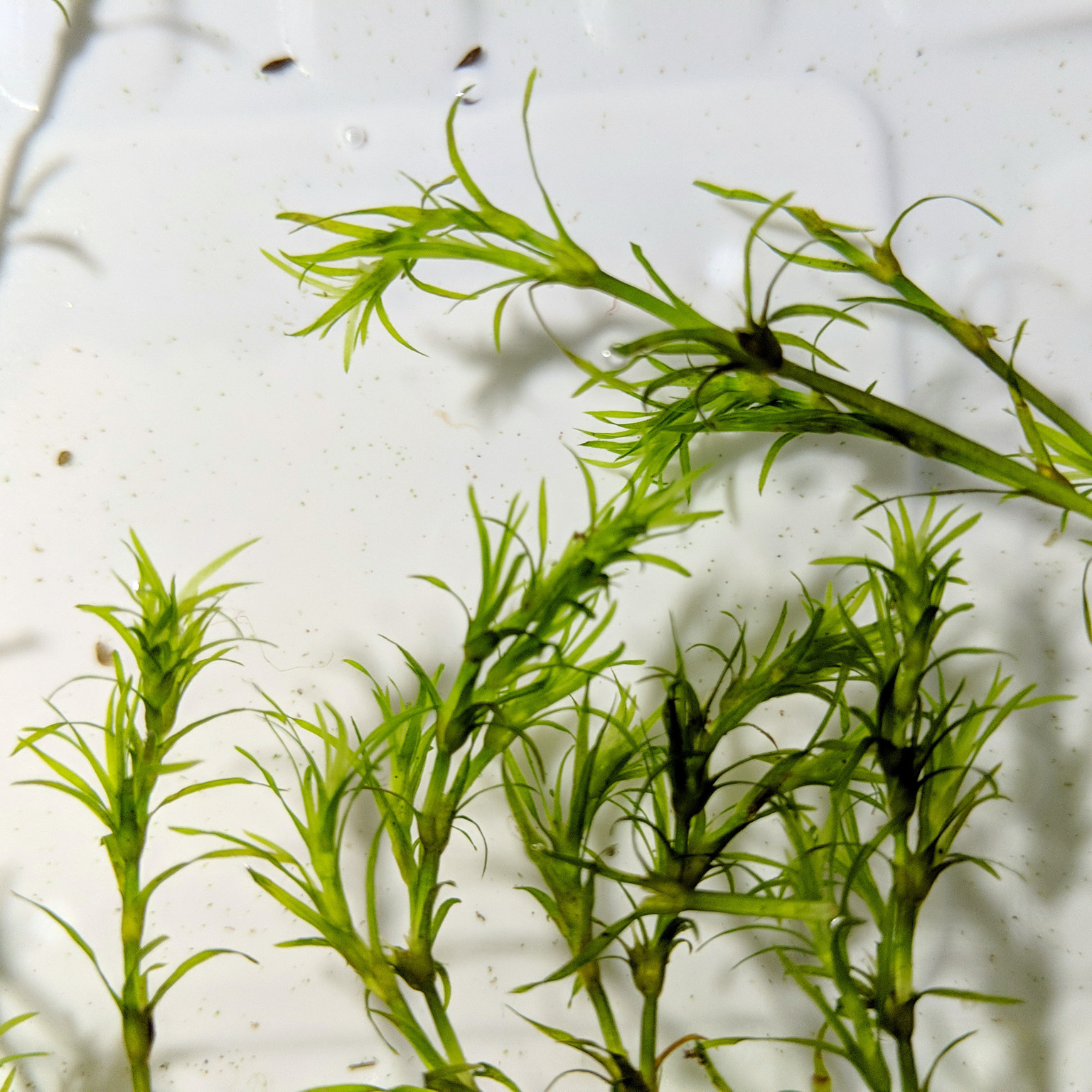
At a glance: Guppy grass care
Compiled reference information. Review the care notes and original sources below.
What temperature is listed for Guppy grass?
The compiled profile lists 15.0–28.0 °C for Guppy grass (Najas guadalupensis). Check the original sources below for context and differing recommendations.
What tank size is listed for Guppy grass?
The profile lists a minimum tank volume of 2.5 US gallons (10.0 liters). Volume alone does not establish suitability; consider dimensions, group size and other inhabitants alongside the full care notes.
What pH is listed for Guppy grass?
The compiled profile lists a pH of 6.5–8.0. Review the cited care sources alongside the other water parameters in this profile.
Natural habitat
Guppy Grass thrives in shallow freshwater environments such as lakes and rivers, often found floating on the water's surface. It flourishes in low nutrient conditions and is commonly associated with slow-moving water.
Where they are found
The natural range of Guppy Grass includes varied freshwater habitats, often alongside other aquatic vegetation that benefits from similar ecological conditions. These habitats support a range of aquatic organisms, making Guppy Grass a vital component of the ecosystem.
Aquarium care
Guppy Grass is ideal for both beginners and seasoned aquarists due to its low maintenance requirements. It thrives in moderate light and can grow submerged or floating. Regular trimming promotes healthy growth and prevents overgrowth in the aquarium.
Feeding
As a non-vascular plant, Guppy Grass does not require traditional feeding, but it benefits from a nutrient-rich substrate.
Compatibility
This plant is safe for community aquariums, providing shelter to different species while improving overall water quality. It works especially well with fry and smaller fish species, contributing positively to their environment.
Breeding
Guppy Grass is particularly useful in breeding setups, providing excellent shelter for newly born fry and shrimplets. It can be introduced into breeding tanks before the fry are released, ensuring they have a safe place to hide immediately after birth.
Sources
Compiled from multiple independent care sheets — not copied from a single site.