Catalog / fish / Green-throat betta
fish · Osphronemidae
Green-throat betta
Betta chloropharynx
Wild range: Southeast Asia (Asia)
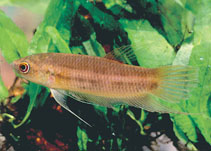
At a glance: Green-throat betta care
Compiled reference information. Review the care notes and original sources below.
What temperature is listed for Green-throat betta?
The compiled profile lists 23.0–29.0 °C for Green-throat betta (Betta chloropharynx). Check the original sources below for context and differing recommendations.
What tank size is listed for Green-throat betta?
The profile lists a minimum tank volume of 5.0 US gallons (19.0 liters). Volume alone does not establish suitability; consider dimensions, group size and other inhabitants alongside the full care notes.
What pH is listed for Green-throat betta?
The compiled profile lists a pH of 3.5–7.5. Review the cited care sources alongside the other water parameters in this profile.
Natural habitat
Betta chloropharynx is native to the leaf litter pools of Sumatra, Indonesia, where it resides in water with low pH and minimal hardness. The species prefers gentle water flow and thrives in natural habitats with plenty of vegetation, conducive to both its feeding and breeding behavior.
Where they are found
Betta splendens is primarily found in the rice paddies and swampy areas of Thailand, Cambodia, and Vietnam. This species often inhabits slow-moving waters, where they can find plenty of cover and an abundance of food sources, such as insects and other invertebrates.
Aquarium care
For optimum care, provide a well-decorated tank with smooth stones and driftwood, along with live plants that mimic their natural habitat. Keep the water parameters stable, performing regular water changes to maintain low levels of nitrate and other toxins.
Feeding
Betta chloropharynx are voracious feeders, accepting a variety of foods. They should be offered a balanced diet comprised of high-quality flakes, pellets, and live or frozen foods to promote health and vibrancy.
Compatibility
As an aggressive species, Betta chloropharynx is not suitable for community tanks but should be kept in species-specific setups to minimize stress and territorial disputes. A small group of five individuals can be maintained in a suitably sized aquarium.
Breeding
Breeding bettas requires careful management as males can be territorial. They create bubble nests to attract females, and the spawning process involves a "nuptial embrace" where the male wraps around the female. Ensure the breeding tank has plenty of plants and that the male is separated from the female after spawning to avoid aggression.
Sources
Compiled from multiple independent care sheets — not copied from a single site.