fish · Cichlidae
Green terror
Andinoacara rivulatus
Wild range: Tropical River Basins of Peru and Ecuador (South America)
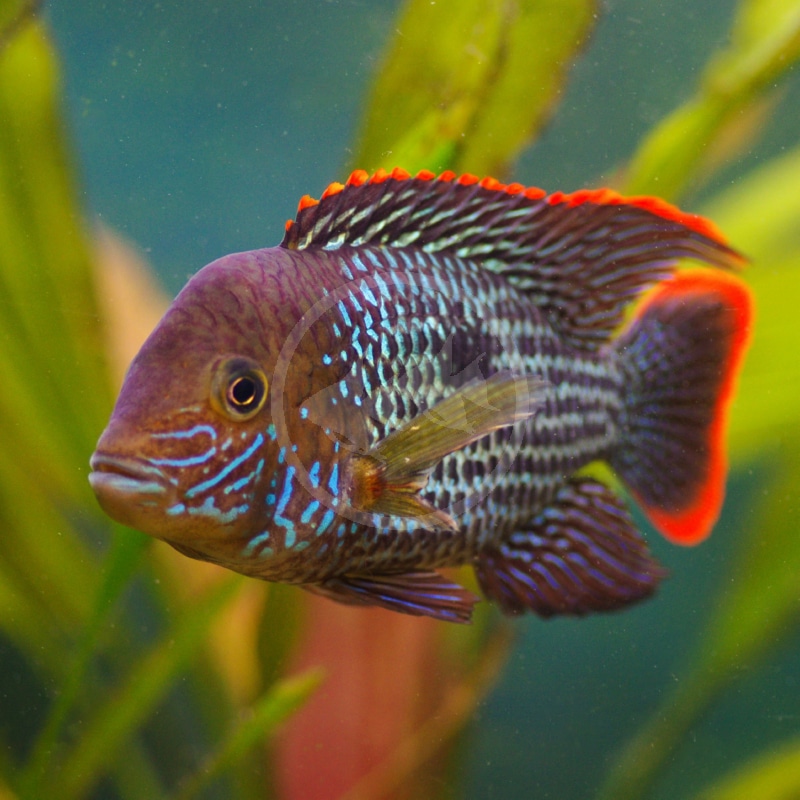
At a glance: Green terror care
Compiled reference information. Review the care notes and original sources below.
What temperature is listed for Green terror?
The compiled profile lists 20.0–28.0 °C for Green terror (Andinoacara rivulatus). Check the original sources below for context and differing recommendations.
What tank size is listed for Green terror?
The profile lists a minimum tank volume of 26.4 US gallons (100.0 liters). Volume alone does not establish suitability; consider dimensions, group size and other inhabitants alongside the full care notes.
What pH is listed for Green terror?
The compiled profile lists a pH of 6.5–7.5. Review the cited care sources alongside the other water parameters in this profile.
Natural habitat
The Green Terror is native to the tropical river basins of Peru and Ecuador. This fish thrives in a habitat characterized by warm, slow-moving waters with plenty of hiding spots provided by rocks and driftwood. They prefer areas that offer both open swimming spaces and covered regions to retreat, especially during breeding periods.
Where they are found
In their native habitats, rainbow sharks are often seen scouring the substrate for food and are known to be territorial, especially as they mature. They thrive in stable environments with adequate cover.
Aquarium care
Provide a well-planted aquarium with gentle filtration to create a comfortable environment. Regular water changes are important to maintain water quality, and adding leaf litter can mimic their natural habitat.
Feeding
Green Terrors are carnivorous and benefit from a varied diet, including high quality pellets, frozen foods like shrimp and krill, fresh options such as tilapia and scallops, and live food that is disease-free. It is essential to provide a balanced diet that meets their nutritional needs to promote optimal health and color vibrancy.
Compatibility
This species is generally community-safe and can be kept with various peaceful species, but should not be housed with overly aggressive tank mates.
Breeding
Breeding in captivity can be challenging. It’s best to keep a group of several individuals and allow them to pair off naturally. Providing spacious breeding tanks with smooth substrates can encourage spawning but may not guarantee success.
Sources
Compiled from multiple independent care sheets — not copied from a single site.