Catalog / invertebrates / Great pond snail
invertebrate · Lymnaeidae
Great pond snail
Lymnaea stagnalis
Wild range: Ponds rich in chalk and limestone (Europe, North America, Asia)
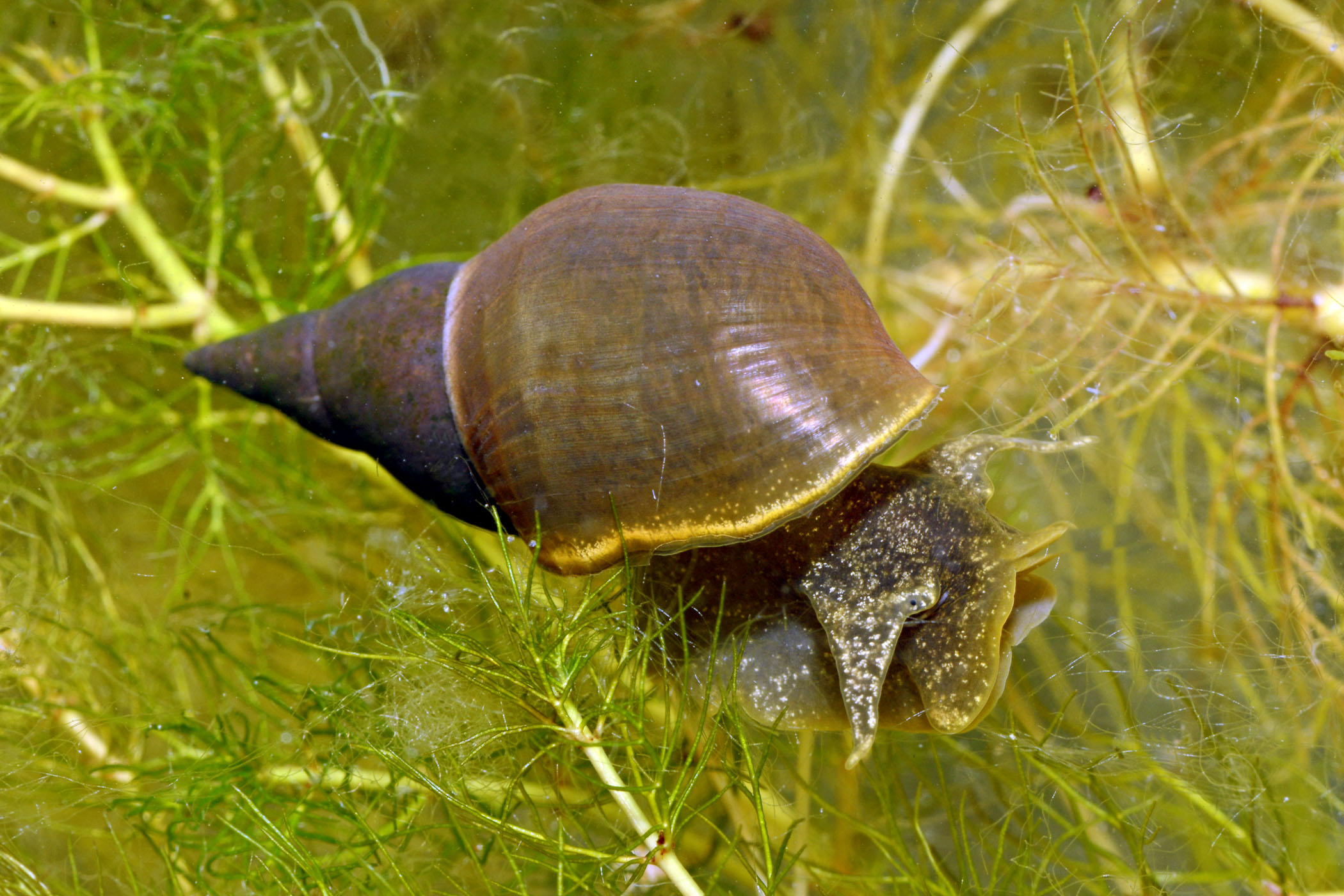
At a glance: Great pond snail care
Compiled reference information. Review the care notes and original sources below.
What temperature is listed for Great pond snail?
The compiled profile lists 10.0–25.0 °C for Great pond snail (Lymnaea stagnalis). Check the original sources below for context and differing recommendations.
What tank size is listed for Great pond snail?
The profile lists a minimum tank volume of 4.0 US gallons (15.0 liters). Volume alone does not establish suitability; consider dimensions, group size and other inhabitants alongside the full care notes.
What pH is listed for Great pond snail?
The compiled profile lists a pH of 6.0–8.0. Review the cited care sources alongside the other water parameters in this profile.
Natural habitat
Lymnaea stagnalis thrives in freshwater habitats, particularly in slowly flowing or stagnant waters, often near vegetation where it feeds on algae and decaying plant matter. It can exhibit carnivorous behavior, occasionally preying on newts, small fish, or other snails. The species is also able to adapt to low-oxygen environments, using both aquatic respiration and aerial respiration.
Where they are found
This species is commonly found in regions with clean, slow-moving waters, where it can easily access its primary food sources. Its ability to adapt to various freshwater habitats contributes to its widespread presence.
Aquarium care
Great pond snails are easy to care for in both coldwater and tropical setups. They can thrive on their scavenging habits alone but will benefit from occasional supplementary feeding such as algae wafers or fish food.
Feeding
These snails primarily feed on algae and decaying plant matter, favoring lettuce and commercial fish food as they mature. Regular feeding should occur to ensure their health and well-being, with adjustment based on tank conditions and snail activity level.
Compatibility
They are generally peaceful and can be kept with a variety of fish. However, their size makes them better suited for tanks with larger fish that won't predate on them.
Breeding
This hermaphroditic species requires a mate to fertilize its eggs. After mating, a female can lay about 300 fertilized eggs, which are laid in a sticky band attached to aquatic plants. Ensure suitable conditions for egg development to encourage successful hatching.
Sources
Compiled from multiple independent care sheets — not copied from a single site.