fish
Gold barb
Barbodes semifasciolatus
Wild range: Southeast Asia (Asia)
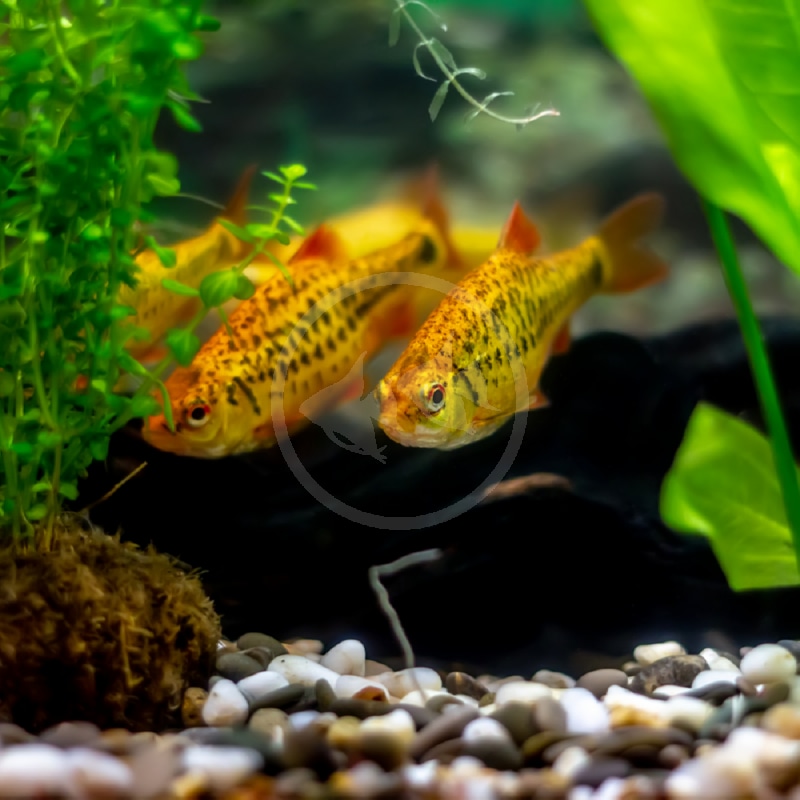
At a glance: Gold barb care
Compiled reference information. Review the care notes and original sources below.
What temperature is listed for Gold barb?
The compiled profile lists 18.0–24.0 °C for Gold barb (Barbodes semifasciolatus). Check the original sources below for context and differing recommendations.
What tank size is listed for Gold barb?
The profile lists a minimum tank volume of 20.0 US gallons (75.7 liters). Volume alone does not establish suitability; consider dimensions, group size and other inhabitants alongside the full care notes.
What pH is listed for Gold barb?
The compiled profile lists a pH of 6.0–7.5. Review the cited care sources alongside the other water parameters in this profile.
Natural habitat
The Gold Barb is a vibrant species native to the rivers and streams of Southeast Asia, specifically in Myanmar and the Malay Peninsula. They thrive in freshwater environments characterized by moderate to high flow rates, soft substrates, and lush vegetation, which provide shelter and breeding grounds. In their natural habitat, they prefer clear to slightly turbid waters, typically maintaining temperatures around 24 to 28°C with a neutral to slightly acidic pH.
Where they are found
Gold Barbs are found in rivers and streams with a mix of rocky substrate and dense plant life. This environment offers ample opportunities for exploration and interaction, which is crucial for their social behavior and foraging habits.
Aquarium care
To maintain optimal health, Gold Barbs should be kept in a minimum 20-gallon aquarium with plenty of space for them to school. Fine gravel or sand substrate is recommended to prevent injury and facilitate digging. Regular water changes of 20-25% weekly are essential to maintain water quality, with pH levels kept between 6.0 to 7.5 and hardness within 5 to 15 dGH.
Feeding
Gold Barbs are omnivorous and thrive on a diet that includes high-quality flake foods, micro-pellets, and live or frozen options like daphnia, brine shrimp, and bloodworms. Incorporating vegetable matter such as spirulina or blanched spinach can enhance their diet, and feeding small portions 2-3 times daily is advisable to mimic their natural foraging behavior.
Compatibility
Gold Barbs are peaceful and make excellent community fish. They should be housed with other peaceful schooling fish like tetras, danios, and rasboras. It is best to avoid aggressive or larger species to ensure a harmonious community tank.
Breeding
Breeding Gold Barbs is achievable in a separate breeding tank with spawning mops or fine-leaf plants. The water temperature should be 28°C, with the pH kept neutral to slightly acidic. Males display courtship behaviors, and after spawning, it's essential to remove the eggs promptly to prevent the adults from consuming them.
Sources
Compiled from multiple independent care sheets — not copied from a single site.