Catalog / fish / Glass catfish
fish · Siluridae
Glass catfish
Kryptopterus vitreolus
Wild range: Southeast Asia (Asia)
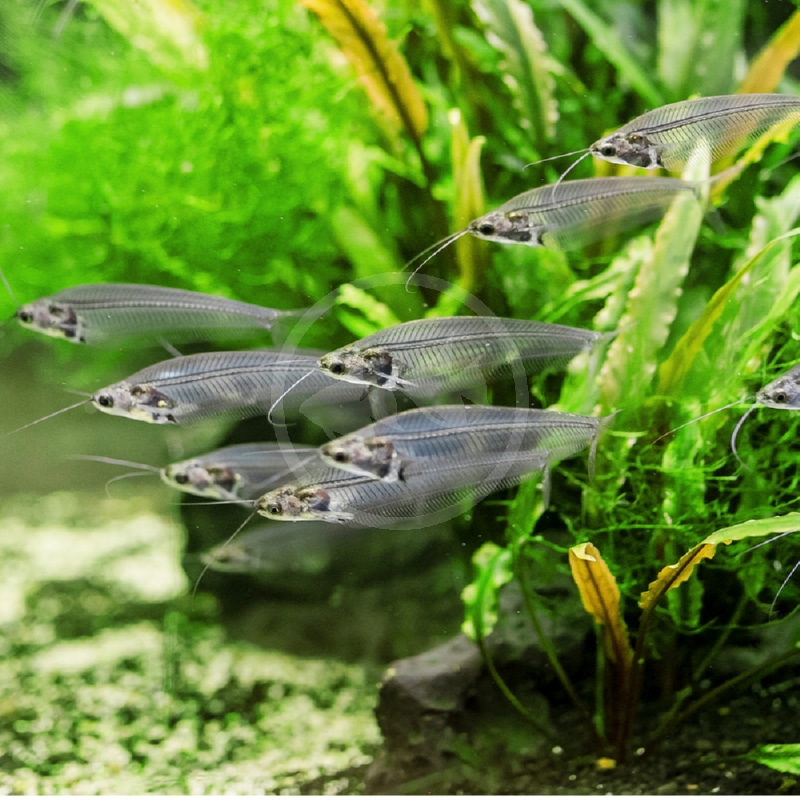
At a glance: Glass catfish care
Compiled reference information. Review the care notes and original sources below.
What temperature is listed for Glass catfish?
The compiled profile lists 22.0–28.0 °C for Glass catfish (Kryptopterus vitreolus). Check the original sources below for context and differing recommendations.
What tank size is listed for Glass catfish?
The profile lists a minimum tank volume of 20.0 US gallons (76.0 liters). Volume alone does not establish suitability; consider dimensions, group size and other inhabitants alongside the full care notes.
What pH is listed for Glass catfish?
The compiled profile lists a pH of 6.5–8.0. Review the cited care sources alongside the other water parameters in this profile.
Natural habitat
The Ghost Glass Catfish is native to freshwater habitats in Southeast Asia, particularly in Thailand, and is commonly found in rivers that flow into the Gulf of Thailand. They thrive in various habitats including stagnant, slow, and fast-moving waters with rich plant life.
Where they are found
Initially reported from Sumatra and Borneo, those records pertain to a different species, K. bicirrhis, which is larger and opaque. The true K. vitreolus is solely recognized in Thai waters, emphasizing the importance of habitat accuracy in aquaristic discussions.
Aquarium care
To maintain health, it's best to keep Ghost Glass Catfish in groups of six or more in a minimum 20-gallon tank. They require dim lighting, gentle water flow, and a variety of hiding spots to feel secure. Stable water parameters are crucial as they are sensitive to ammonia and nitrites.
Feeding
In aquariums, glass catfish adapt well to high-quality flake foods and micro-pellets. However, they significantly benefit from the inclusion of live or frozen foods such as daphnia, brine shrimp, and bloodworms. It is vital to feed them multiple small portions throughout the day to ensure all individuals in the school have adequate access to food, as they often are shy eaters and may struggle against larger, more aggressive fish.
Compatibility
Glass catfish are peaceful and best suited to a community tank with other small, non-aggressive species like rasboras and peaceful barbs. They should be kept away from fin-nippers and excessively large or predatory fish, which could stress them further. Their schooling nature means they require companions to feel secure in their environment.
Breeding
Breeding in captivity is rare. They do not exhibit parental care; eggs are scattered and can number between 100 to 700. Successful breeding has been documented under laboratory conditions using hormonal techniques.
Sources
Compiled from multiple independent care sheets — not copied from a single site.