Catalog / invertebrates / Giant tower cap snail
invertebrate · Pachychilidae
Giant tower cap snail
Brotia herculea
Wild range: Southeast Asia, rivers of Thailand and Burma (Asia)
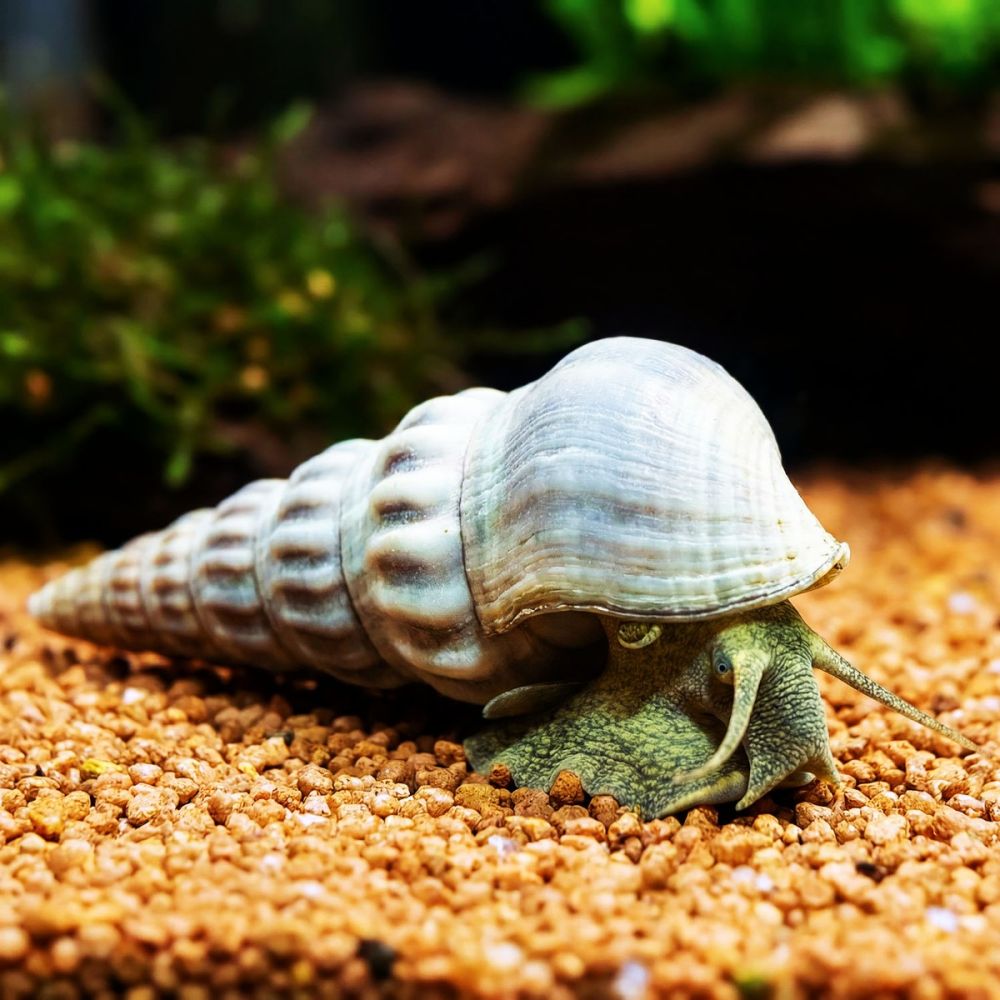
At a glance: Giant tower cap snail care
Compiled reference information. Review the care notes and original sources below.
What temperature is listed for Giant tower cap snail?
The compiled profile lists 22.0–28.0 °C for Giant tower cap snail (Brotia herculea). Check the original sources below for context and differing recommendations.
What tank size is listed for Giant tower cap snail?
The profile lists a minimum tank volume of 10.6 US gallons (40.0 liters). Volume alone does not establish suitability; consider dimensions, group size and other inhabitants alongside the full care notes.
What pH is listed for Giant tower cap snail?
The compiled profile lists a pH of 6.5–8.0. Review the cited care sources alongside the other water parameters in this profile.
Natural habitat
The Hercules snail (Brotia herculea) is native to the rivers of Southeast Asia, particularly in Thailand and Burma. It thrives in a gentle flow environment and is generally found in waters with a pH ranging from 7.2 to 8 and hardness between 8 to 25.
Where they are found
While specific native countries are not documented, these snails are prevalent in Southeast Asian freshwater habitats, where they thrive in diverse aquatic environments.
Aquarium care
Giant Tower Cap Snails are suitable for community tanks and can coexist with various species as they are not aggressive. They prefer gentle water flow and well-planted tanks, where they can graze on algae and plant matter. Proper care includes maintaining water quality, providing a varied diet, and ensuring regular tank maintenance.
Feeding
Hercules snails have a diverse diet that includes algae, blanched vegetables like cucumber and lettuce, and specially formulated snail and fish food. It's essential to provide sufficient green food to prevent them from damaging softer-leaved plants in the aquarium.
Compatibility
These snails are generally safe for planted tanks and can share the aquarium with other peaceful species. However, avoid keeping them with aggressive fish that may harm them.
Breeding
These snails are livebearers and can produce a substantial number of offspring, typically ranging from 60 to 100 babies at a time, several times a year. Achieving mature size (around 6 cm) is important for breeding potential, which typically occurs after about two years.
Sources
Compiled from multiple independent care sheets — not copied from a single site.