Catalog / invertebrates / Giant ramshorn snail
invertebrate · Ampullariidae
Giant ramshorn snail
Marisa cornuarietis
Wild range: Central America to Brazil (South America)
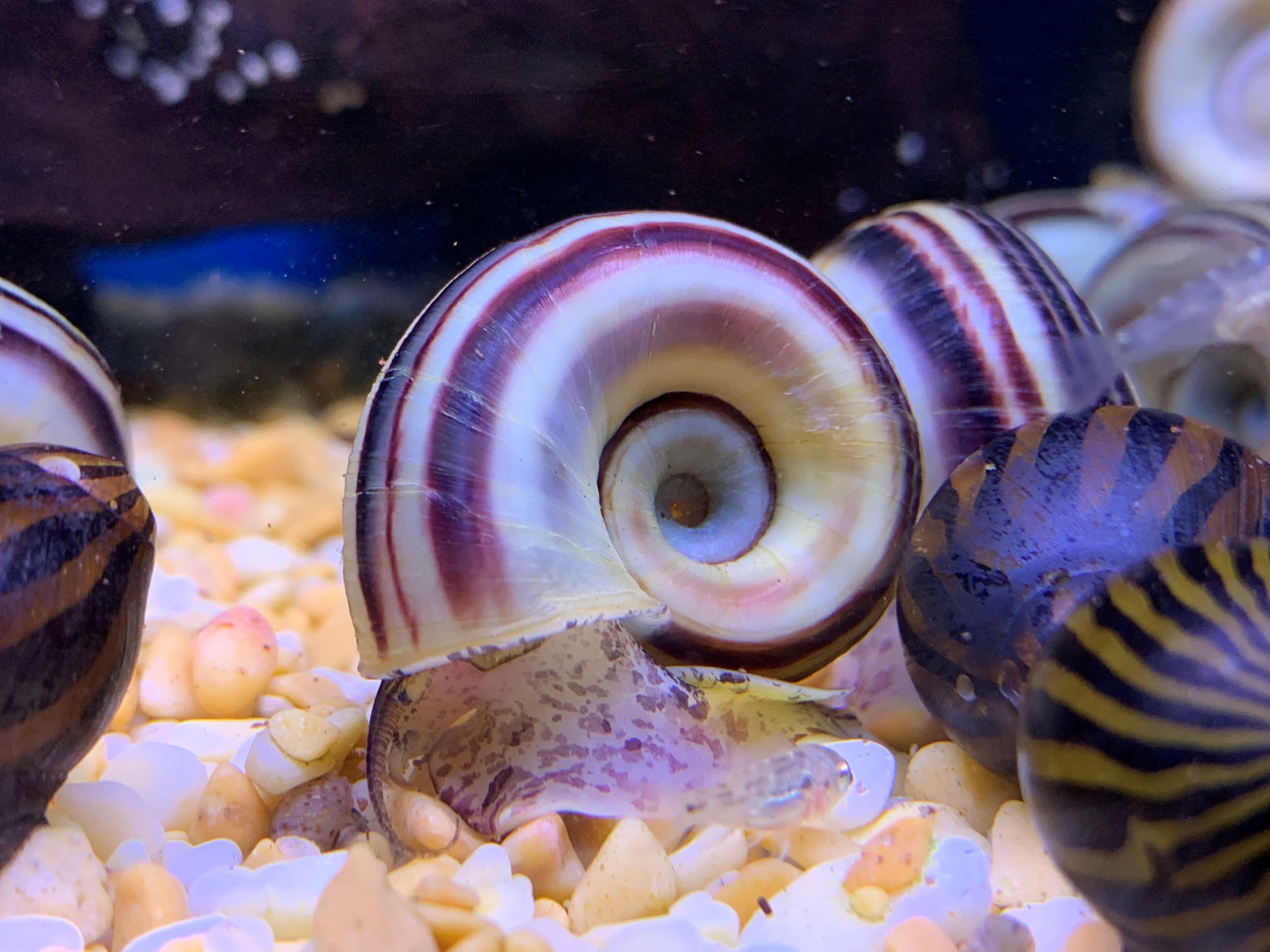
At a glance: Giant ramshorn snail care
Compiled reference information. Review the care notes and original sources below.
What temperature is listed for Giant ramshorn snail?
The compiled profile lists 13.0–35.5 °C for Giant ramshorn snail (Marisa cornuarietis). Check the original sources below for context and differing recommendations.
What tank size is listed for Giant ramshorn snail?
The profile lists a minimum tank volume of 10.0 US gallons (40.0 liters). Volume alone does not establish suitability; consider dimensions, group size and other inhabitants alongside the full care notes.
What pH is listed for Giant ramshorn snail?
The compiled profile lists a pH of 6.0–8.0. Review the cited care sources alongside the other water parameters in this profile.
Natural habitat
Marisa cornuarietis is found in shallow waters characterized by dense vegetation, including swamps, rivers, canals, lakes, and irrigation systems. It can tolerate a range of salinities (up to 4 PSU) and is predominantly herbivorous, feeding on aquatic plants and algae.
Where they are found
Originally native to Northern South America and the Caribbean, this species has found its way into various regions of the U.S., notably in areas with abundant aquatic vegetation.
Aquarium care
These crabs require a well-planted aquarium with plenty of hiding spots, like driftwood or rocks. They also benefit from a varied diet, including both plant matter and protein sources. Regular water changes are necessary to maintain water quality, as they are sensitive to pollutants.
Feeding
This species is primarily herbivorous and will consume a range of aquatic plants including Najas, Myriophyllum, Elodea, and Cabomba, along with filamentous algae and some terrestrial plants. Care should be taken as they can exhibit considerable appetite for aquarium plants.
Compatibility
Vampire crabs are generally peaceful and can coexist with small, non-aggressive fish and invertebrates. However, they may show aggression towards their kind, so it’s advisable to house them alone or in a group of at least three to avoid stress and territorial disputes.
Breeding
Reproductive efforts involve laying gelatinous egg masses that contain between 100 to 200 eggs. With its rapid reproduction ability, there is potential for quick population increases under favorable conditions.
Sources
Compiled from multiple independent care sheets — not copied from a single site.