Catalog / fish / Giant kuhli loach
fish · Cobitidae
Giant kuhli loach
Pangio myersi
Wild range: Southeast Asia (Asia)
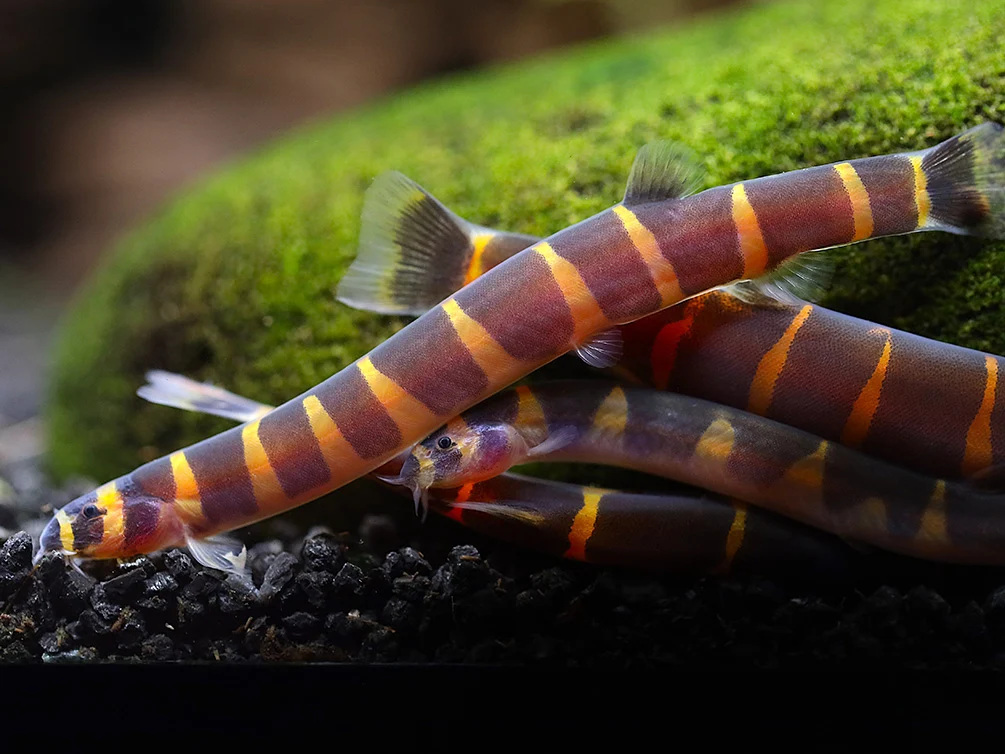
At a glance: Giant kuhli loach care
Compiled reference information. Review the care notes and original sources below.
What temperature is listed for Giant kuhli loach?
The compiled profile lists 22.0–29.0 °C for Giant kuhli loach (Pangio myersi). Check the original sources below for context and differing recommendations.
What tank size is listed for Giant kuhli loach?
The profile lists a minimum tank volume of 10.0 US gallons (18.5 liters). Volume alone does not establish suitability; consider dimensions, group size and other inhabitants alongside the full care notes.
What pH is listed for Giant kuhli loach?
The compiled profile lists a pH of 6.0–7.5. Review the cited care sources alongside the other water parameters in this profile.
Natural habitat
Kuhli Loaches inhabit shallow waters in rivers and floodplains across Southeast Asia, preferring areas with soft sandy substrates and plenty of vegetation. They tend to hide amongst plants and decorations, making them well-suited for densely planted aquarium setups.
Where they are found
The natural range of Kuhli Loaches includes various tropical river systems across Malaysia, Indonesia, Thailand, Singapore, Java, Borneo, and Sumatra, indicating their adaptability to different freshwater environments in that region.
Aquarium care
In an aquarium setting, the Giant Kuhli Loach requires a well-maintained environment with plenty of fine sand substrate to accommodate its burrowing instincts. Aquarium decorations like driftwood and caves provide essential cover and help replicate its natural habitat. Regular water changes and appropriate filtration are necessary to maintain water quality, and gentle water flow is ideal to keep the environment safe and comfortable for the loaches.
Feeding
A balanced diet for Kuhli Loaches should include high-quality pellets, live or frozen foods, and blanched vegetables. They enjoy protein-rich foods like bloodworms and brine shrimp, as well as soft vegetables such as zucchini and spinach. Scavenging for snails provides an additional source of nutrients.
Compatibility
Giant Kuhli Loaches are ideally kept in groups and coexist peacefully with many tank mates. They do well with larger tetras, rasboras, and peaceful bottom dwellers like Corydoras. Their calm temperament makes them suitable for community tanks, but it’s best to avoid aggressive species that may intimidate them.
Breeding
Breeding Kuhli Loaches is not widely studied, but it occurs sporadically in home aquariums. They typically spawn in dense vegetation or hiding spots, laying eggs that hatch within 24 hours. Young loaches can be fed infusoria and later transitioned to baby brine shrimp and daphnia as they grow.
Sources
Compiled from multiple independent care sheets — not copied from a single site.