fish · Cyprinidae
Giant danio
Devario aequipinnatus
Wild range: South and Southeast Asia (Asia)
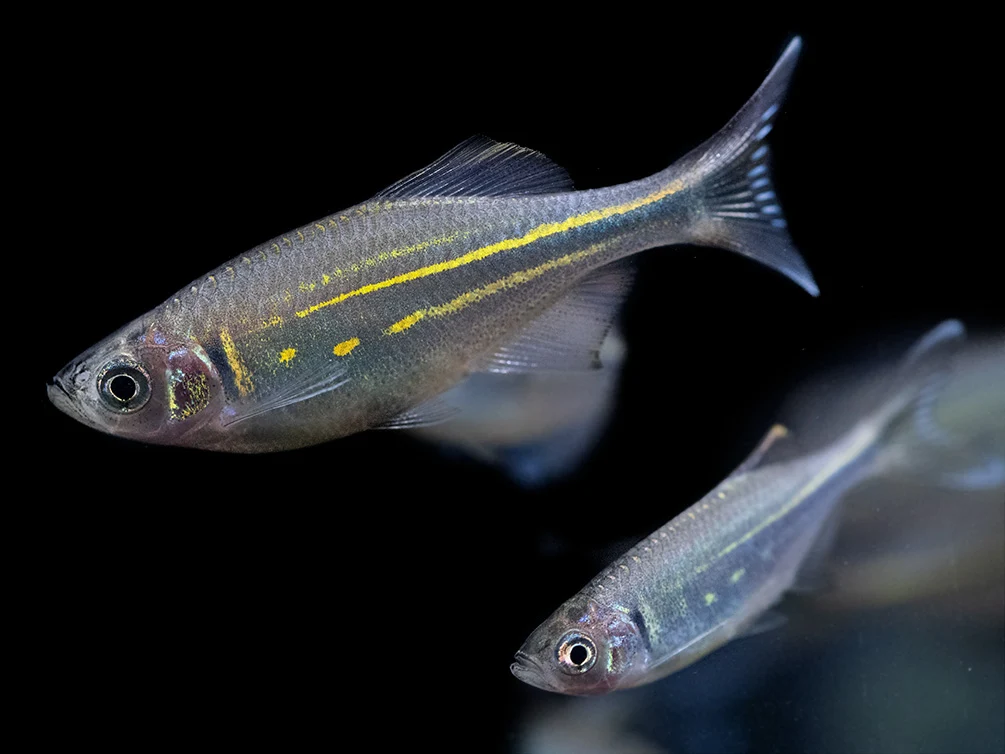
At a glance: Giant danio care
Compiled reference information. Review the care notes and original sources below.
What temperature is listed for Giant danio?
The compiled profile lists 18.0–26.0 °C for Giant danio (Devario aequipinnatus). Check the original sources below for context and differing recommendations.
What tank size is listed for Giant danio?
The profile lists a minimum tank volume of 13.2 US gallons (50.0 liters). Volume alone does not establish suitability; consider dimensions, group size and other inhabitants alongside the full care notes.
What pH is listed for Giant danio?
The compiled profile lists a pH of 6.5–7.5. Review the cited care sources alongside the other water parameters in this profile.
Natural habitat
Zebra Danios are typically found in fast-flowing streams and slow-moving rivers across South and Southeast Asia. They thrive in varied conditions, often inhabiting areas with fine substrates and abundant vegetation. Their adaptability enables them to modify well to various habitats, making them resilient and popular in aquarium settings.
Where they are found
These fish originated from a diverse range of freshwater environments in India, Bangladesh, Myanmar, and Himalayan regions. They can be spotted in both temperate and tropical waters, exhibiting a wide tolerance to different aquatic conditions.
Aquarium care
For optimal care, maintain stable water parameters and ensure regular cleaning and filtration to prevent waste buildup. Water changes of 10-20% weekly are recommended to ensure a healthy environment. Provide ample swimming space, along with hiding spots and plants, to enhance their comfort and mimic their natural habitat.
Feeding
Zebra Danios are omnivores and appreciate a balanced diet that includes high-quality flakes, pellets, and occasional live or frozen foods. Feed them small portions 1-2 times daily to prevent overfeeding and ensure they consume all food within a few seconds.
Compatibility
These fish are generally peaceful and do well in community tanks with other non-aggressive species. Avoid larger or aggressive fish that might pose a threat to the small, active Danios. They thrive in schools and prefer to be kept in groups of at least six for best behavior.
Breeding
Breeding Zebra Danios is relatively straightforward; they are egg layers that do not exhibit parental care. Provide a separate breeding tank with suitable substrate and vegetation, and the parents can be removed after spawning to prevent them from eating the eggs.
Sources
Compiled from multiple independent care sheets — not copied from a single site.